
TL;DR:
- Evaluating operational, technological, locational, and sustainability amenities early prevents costly mistakes.
- Modern industrial spaces incorporate smart technology, sustainable features, and flexible design to meet rising tenant expectations.
- Prioritizing core operational needs and future scalability over trendy upgrades ensures long-term facility value.
Choosing the wrong industrial space in the Greater Toronto Area is not just an inconvenience. It can cost your business months of lost productivity, expensive retrofits, and the kind of operational friction that compounds daily. With vacancy rates tightening across Mississauga, Brampton, Vaughan, and the Durham Region, every leasing decision carries more weight than ever before. The amenities baked into a facility, from loading dock configuration to power supply capacity, will shape how efficiently your team works for the entire lease term. This article breaks down the amenities that matter most, compares your options, and gives you a practical framework for making the right call.
Table of Contents
- How to evaluate industrial space amenities in the GTA
- Must-have operational amenities for high-performing facilities
- Smart technology and modernisation: the new standard in industrial amenities
- Sustainability and wellness: value-driving amenities for the next decade
- Location, accessibility, and emerging amenities for tenants
- What GTA tenants should really demand from industrial amenities
- Find your ideal industrial space with expert guidance
- Frequently asked questions
Key Takeaways
| Point | Details |
|---|---|
| Foundation matters | Core operational amenities like loading docks and clear heights are essential for industrial efficiency. |
| Technology drives value | Smart building upgrades can offer meaningful ROI and future flexibility to GTA tenants. |
| Sustainability pays off | Green upgrades and wellness features directly impact tenant satisfaction and property value. |
| Location is critical | Proximity to infrastructure and emerging amenities now help attract and retain tenants. |
| Demand expert guidance | Working with local experts simplifies navigating complex GTA market amenities. |
How to evaluate industrial space amenities in the GTA
Before you tour a single building, you need a clear picture of what your operation genuinely requires. Many tenants skip this step and end up chasing square footage and rent per square foot, only to discover that the facility cannot support their actual workflow. Evaluating amenities systematically is one of the most valuable things you can do early in a site search.
The industrial real estate benefits available to GTA businesses vary significantly depending on the submarket, building vintage, and landlord investment philosophy. A 1990s bay in an older Etobicoke industrial park will offer a very different amenity profile than a purpose-built Class A logistics facility in the Brampton Airport Corporate Centre or a modern Markham flex building.
The four primary amenity categories to assess are:
- Operational amenities: Loading docks, clear height, column spacing, floor load capacity, and truck court depth
- Technological amenities: Connectivity infrastructure, automation-readiness, building management systems, and security technology
- Locational amenities: Highway proximity, transit access, site circulation, and parking ratios
- Sustainability amenities: Energy-efficient systems, EV charging, LEED certification, and waste management infrastructure
The types of industrial properties you are considering will largely dictate which amenity categories are most relevant. A last-mile logistics operator needs a high dock-to-door ratio and strong highway access above almost everything else. A precision manufacturer might care far more about power supply, column-free floor areas, and climate control.
"Recent trends show that amenity expectations in industrial real estate are rising sharply, with tenants demanding features that were considered premium just three to five years ago." This reflects a shift in industrial property trends that every GTA tenant should track closely before signing a lease.
One of the most common mistakes businesses make is evaluating amenities based on their current operation rather than their projected needs over the full lease term. If you are signing a seven-year lease today, you need to think about what your workflows, team size, equipment, and technology requirements will look like in 2030 and beyond. Failing to do this leads to expensive mid-lease negotiations or, worse, being locked into a space that actively limits your growth.
Another mistake is treating all amenities as equally weighted. They are not. A cold storage tenant who ignores refrigeration infrastructure in favour of high-end office finishes is making a costly error in priorities. Always anchor your evaluation to your core operational requirements first, then layer in nice-to-have features.
A useful exercise is to rank your top ten operational needs and then score each prospective facility against that list before any financial analysis begins. This keeps your team focused on function rather than aesthetics during the touring process.
Must-have operational amenities for high-performing facilities
Once you've established your evaluation criteria, it's time to identify the operational necessities that support day-to-day business. These are the features that will directly affect throughput, safety, labour efficiency, and your ability to meet customer commitments every single day.
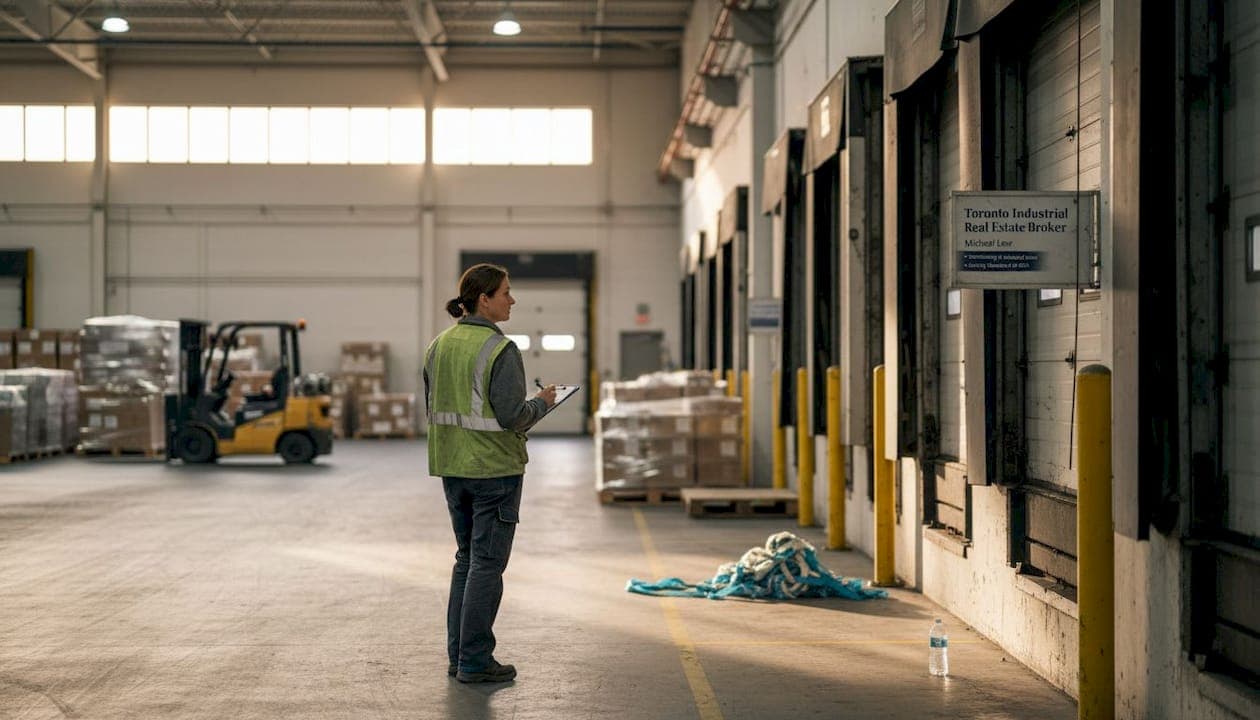
Loading docks and drive-in doors are the starting point for any logistics, warehousing, or distribution operation. The number of dock doors relative to your square footage, the dock leveller quality, the truck court depth (typically a minimum of 130 feet for 53-foot trailers), and whether the facility offers drive-in doors for smaller vehicles all matter enormously. A warehouse running a single shift with ten dock doors may seem well-equipped today, but if you scale to 24-hour operations, that same building could become a serious constraint.
Clear height is another non-negotiable for most industrial users. Modern logistics facilities in the GTA are increasingly built to 36-foot or 40-foot clear heights, allowing for high-bay racking and maximising every square foot of your lease footprint. Older buildings often top out at 18 to 24 feet, which can force you to expand laterally rather than vertically. That lateral expansion costs money you may not need to spend.
Column spacing affects how flexibly you can configure racking, assembly lines, or manufacturing equipment. Wider column bays give you more layout options and accommodate larger equipment without workarounds. Tight column grids from older buildings can mean lost square footage and compromised workflow design.
Key operational amenities to prioritise:
- Dock doors with hydraulic levellers and weather seals
- Drive-in doors sized for your largest vehicles
- Minimum 28-foot clear height (32 to 36 feet for modern logistics)
- Wide-bay column spacing (40 by 40 feet or greater)
- Adequate electrical capacity (600V, 3-phase for manufacturing)
- ESFR (Early Suppression Fast Response) sprinkler systems
- Modern access control, CCTV, and perimeter security
- Energy-efficient LED lighting with motion sensors
- Robust HVAC systems that maintain consistent temperatures
The importance of well-equipped industrial spaces becomes especially clear when you look at tenant retention rates. Buildings that invest in these core operational features consistently attract and keep quality tenants. According to proven value-maximising strategies, features and amenities that directly support operational performance are the most reliable drivers of industrial property value.
Statistic to note: Nearly 40% of industrial tenants across the GTA report that temperature control and air quality are among their top facility concerns, particularly in facilities that house both warehouse and office functions.
Pro Tip: Reassess your facility requirements at least once every two years, even mid-lease. Your operational needs will shift as your business grows or pivots, and identifying gaps early gives you time to negotiate with your landlord rather than scrambling at renewal.
Real-world examples from industrial property tenants across the GTA show that companies who skip thorough operational due diligence at lease signing often find themselves investing tens of thousands of dollars in tenant improvements that could have been avoided with better upfront planning.
Smart technology and modernisation: the new standard in industrial amenities
With foundational operational features covered, let's examine how technology is raising the bar for industrial amenities in GTA properties. The definition of a "smart" industrial building has expanded quickly, and what was once a premium offering is rapidly becoming the baseline expectation.
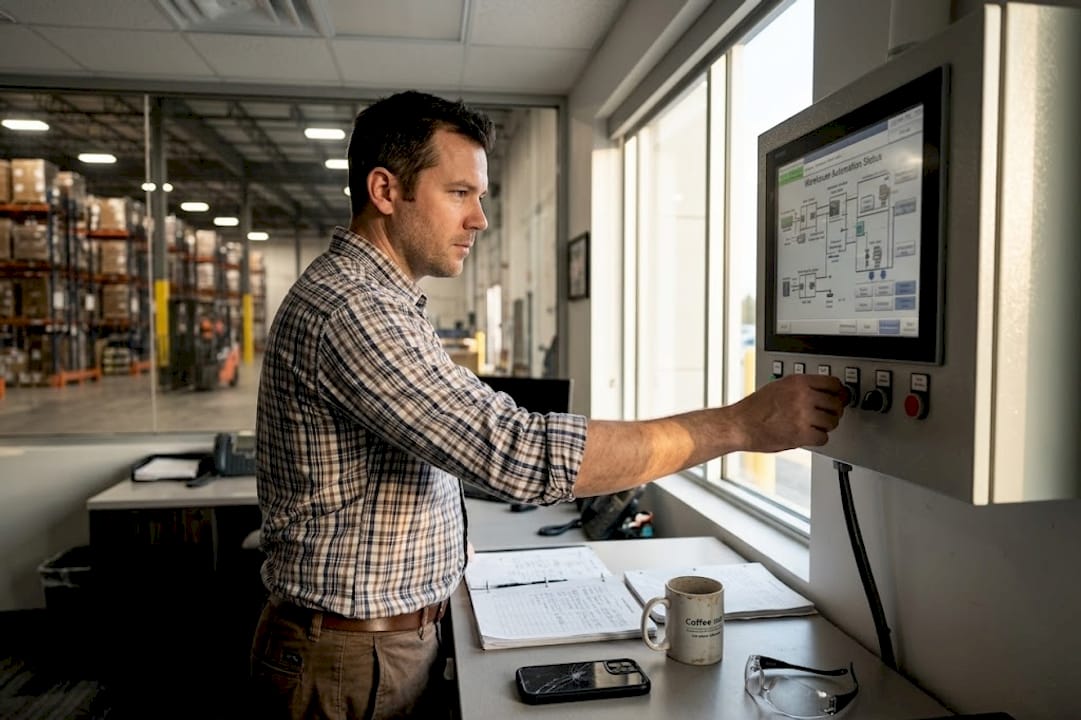
A smart industrial facility integrates automation, Internet of Things (IoT) devices, and remote monitoring systems that collect and act on real-time data from across the building. Think of sensors that track forklift traffic patterns, lighting systems that adjust to occupancy levels automatically, and building management platforms that allow facilities managers to monitor energy consumption, temperature zones, and equipment performance from a single dashboard.
How technology amenities reshape tenant value:
| Technology feature | Operational benefit | Typical impact |
|---|---|---|
| Fibre-optic connectivity | High-speed data transfer, low latency | Enables real-time inventory and tracking systems |
| IoT sensors and monitoring | Predictive maintenance, energy control | Reduces downtime and utility costs |
| Automated access control | 24/7 secure entry, audit trails | Improves security and reduces staffing needs |
| LED with smart controls | Energy efficiency, adaptive lighting | Can cut lighting energy use by up to 50% |
| Building management system | Centralised HVAC, security, and power | Faster response to facility issues |
Fibre-optic connectivity is no longer optional for most industrial tenants. E-commerce fulfilment, advanced manufacturing, and logistics operations all depend on fast, reliable data infrastructure. When touring a GTA facility, always ask whether fibre is available in the building and who the service provider is. Legacy copper infrastructure creates a hidden bottleneck that will frustrate your team and cap your technological capabilities.
"Technological advancements integrated as amenities in modern industrial facilities are not just conveniences. They are operational multipliers that affect speed, safety, and scalability." This insight on industrial property upgrades reflects how quickly the GTA market is moving.
Modern security technology deserves its own conversation. Access control systems that use keycards, biometrics, or mobile credentials, combined with high-definition CCTV and remote monitoring, reduce shrinkage and liability while supporting compliance requirements in regulated industries. For tenants handling high-value goods, pharmaceuticals, or sensitive materials, these features are not optional extras.
Keeping pace with industrial real estate trends means understanding that technology amenities are also a future-proofing mechanism. A building wired for automation today will support robotics, autonomous guided vehicles (AGVs), and advanced warehouse management systems (WMS) as they become standard. A building without that infrastructure will require costly retrofits or cap your operational ceiling.
Pro Tip: Not every technology upgrade delivers an immediate return on investment. Focus first on the technologies that directly improve your core daily operation, such as connectivity and building management systems, before investing in more sophisticated automation that may take years to pay back.
Sustainability and wellness: value-driving amenities for the next decade
Technological innovation is only part of the picture. Today, sustainability and employee wellness are equally critical drivers of industrial facility value. What was once considered a bonus feature for environmentally conscious tenants is now a mainstream expectation that affects recruitment, operating costs, and property value.
Energy-efficient infrastructure is the most immediate sustainability amenity most tenants will notice. Modern GTA industrial facilities are increasingly fitted with LED lighting across warehouse and office areas, upgraded building envelope insulation to reduce heating and cooling loads, and smart thermostats that maintain comfort without waste. Some newer facilities in Burlington, Milton, and Brampton feature rooftop solar arrays that can meaningfully offset common area electricity costs.
EV charging stations are growing rapidly in importance across the GTA, driven by provincial incentives and the steady electrification of commercial vehicle fleets. Tenants with delivery fleets, service vehicles, or a workforce that commutes by electric vehicle will find EV charging infrastructure increasingly non-negotiable. Landlords who install charging stations are seeing stronger tenant interest and, in many cases, commanding premium rents as a result.
Sustainability and wellness amenity comparison:
| Feature | Traditional industrial building | Green-certified facility |
|---|---|---|
| Lighting | Metal halide or fluorescent | LED with smart controls |
| Insulation | Standard code minimum | Enhanced envelope, cool roofing |
| Energy monitoring | Manual meter reading | Real-time energy dashboards |
| EV charging | Absent or minimal | Level 2 and DC fast charging |
| Air quality | Basic ventilation | Enhanced filtration, CO2 sensors |
| Certification | None | LEED, BOMA BEST, or equivalent |
Wellness amenities are a newer but fast-growing priority in industrial real estate. Natural lighting through skylights and translucent wall panels reduces eye strain and improves mood across warehouse floors. Better air filtration and ventilation directly reduce sick days and improve concentration. Safe, clean common areas, including properly equipped washrooms, break rooms, and outdoor rest spaces, affect how your employees feel about coming to work every day.
The value-building amenities found in green-certified or wellness-forward industrial facilities have a measurable impact on recruitment and retention. In a tight labour market, the quality of your facility is part of your employer brand. Workers choose employers who invest in their environment.
Statistic worth noting: Green-certified industrial buildings in Canada can command 5 to 15 percent higher rents compared to non-certified peers in the same submarket, while also experiencing lower vacancy rates and longer average lease terms.
Careful tenant fit-out planning that incorporates sustainability goals from the start can significantly reduce the cost of upgrades later. When you negotiate your lease, ensure that your tenant improvement allowance supports wellness and efficiency features, not just cosmetic finishes. This is where many tenants leave real value on the table.
Recycling and waste management infrastructure is another overlooked sustainability amenity. Facilities with dedicated recycling bays, organics collection, and on-site compactors reduce your operational waste costs and help you meet increasingly stringent ESG (environmental, social, and governance) reporting requirements if your business has stakeholders tracking those metrics.
Location, accessibility, and emerging amenities for tenants
Beyond the building itself, location and evolving amenities are determining factors in tenant satisfaction. A technically superior facility in the wrong location, or one without the site features your workforce and fleet require, will underperform no matter how good the loading docks are.
Highway and transit proximity is the most foundational locational amenity in the GTA. Being within minutes of Highways 400, 401, 407, 410, or 427 is not just a convenience; it directly affects delivery windows, driver hours, and transportation costs. The GTA's freight network is built around these corridors, and sites that sit well away from major interchanges face a real competitive disadvantage in last-mile and distribution contexts.
The types of tenants attracted to industrial properties in different GTA submarkets illustrate this clearly. Mississauga Airport area attracts air freight handlers and time-sensitive logistics operators because of proximity to Pearson International Airport. Brampton and Vaughan draw large 3PL (third-party logistics) operators because of their access to multiple highway systems. The Durham Region municipalities of Pickering, Ajax, Whitby, and Oshawa are increasingly popular for east-GTA distribution due to lower land costs and improving 401-corridor access.
The key locational and site amenities to evaluate are:
- Distance and drive time to major highways (target under five minutes from 400-series)
- Truck court depth and turning radius for 53-foot trailers
- Trailer parking and staging area capacity
- Employee parking ratios relative to your headcount
- Transit access for non-driving employees (GO bus, TTC, Brampton Transit, YRT)
- Site security including fencing, lighting, and controlled access points
- Proximity to supplier or customer networks
Emerging amenities are reshaping what top-tier industrial facilities look like. On-site cafeterias or catered food service, once exclusively found in large corporate campuses, are appearing in multi-tenant industrial parks in Mississauga and Brampton. Collaborative office spaces and on-site meeting rooms give tenants flexibility without requiring them to lease additional office space. Flexible fit-outs with modular interior systems let businesses reconfigure their space as their operations evolve.
"The amenities that make industrial rental properties attractive to prospective tenants are broadening well beyond the traditional operational checklist." Insights from GTA industrial property tenants confirm that forward-thinking operators now evaluate the full facility experience, not just the building specs.
Last-mile logistics tenants are particularly sensitive to these location and site factors. Urban infill industrial sites in the inner suburbs of Toronto, Mississauga, and Scarborough are seeing surging demand precisely because of their last-mile advantages, even when their building specs are less impressive than newer suburban facilities. This reflects a broader trend where locational amenities can outweigh building-level features depending on your specific operation.
Employee satisfaction is closely tied to these site-level and emerging amenities. When your team has access to quality food, transit options, clean common areas, and a well-maintained site, turnover decreases. In industrial operations where labour is both a major cost and a competitive advantage, facility amenities are genuinely a human resources tool, not just a real estate consideration.
What GTA tenants should really demand from industrial amenities
Here is an uncomfortable reality that comes from working through hundreds of GTA industrial lease transactions. Many tenants get dazzled by premium finishes and high-profile technology features that add cost without meaningfully improving their operation. They negotiate hard for a stunning reception area while accepting inadequate electrical capacity. They prioritise rooftop aesthetics over truck court depth. The result is a beautiful space that fights them every single day.
The truth is that upgrades that genuinely add value are almost always rooted in workflow. Can your forklifts move without restriction? Can your people work in a comfortable, well-lit environment without fatigue? Can your trucks load and unload efficiently without queuing? These unglamorous questions matter more than any technology showcase.
Flexibility is the most underrated amenity of all. When you evaluate a facility, ask yourself three questions before anything else. Could you scale up your operation here if demand doubles? Could you reconfigure the interior without a major capital investment? Could you sublease a portion of the space if your needs contract? If the answer to any of these is no, you are accepting hidden risk regardless of how impressive the building looks on a tour.
The tenants who fare best over a long lease term are those who prioritise electrical capacity, ceiling height, access flexibility, and basic operational robustness, then layer in technology and wellness features once the foundation is solid. Chasing trends without anchoring to operational fundamentals is one of the most expensive mistakes in industrial real estate.
Find your ideal industrial space with expert guidance
Navigating the GTA industrial market and accurately assessing facility amenities takes more than a checklist. It takes market knowledge, transaction experience, and a clear understanding of how different amenity profiles translate into real-world operational outcomes.
Michael Law Commercial Real Estate brings deep GTA industrial expertise to every tenant mandate, helping businesses across logistics, manufacturing, and e-commerce identify facilities that genuinely match their operational requirements. From Hamilton to Oshawa, and everywhere along the 401 and 400 corridors, the team has the submarket knowledge to match your needs to the right facility. Browse the featured industrial properties on the platform, or reach out directly for a tailored assessment of your space requirements, lease timeline, and amenity priorities. Your next facility should work as hard as your team does.
Frequently asked questions
What are the most critical amenities for industrial tenants in the GTA?
Loading docks, modern security, energy-efficient lighting, and strong connectivity are frequently the highest priorities for GTA industrial tenants, as these features directly shape operational performance and property value.
How do smart amenities impact industrial property values?
Smart amenities like automation and IoT systems can substantially increase both operational efficiency and property value, primarily by reducing maintenance and utility costs as shown in studies of modern industrial upgrades.
Are sustainability features worth the investment for landlords and tenants?
Yes, sustainability features are increasingly in demand and can justify higher rents and lower vacancy rates for GTA industrial landlords, with green-certified buildings demonstrating measurable advantages in value and functionality across the region.
What emerging amenities are becoming more popular for industrial tenants?
Flexible fit-outs, shared collaborative spaces, and wellness features like on-site cafeterias and EV charging stations are gaining strong traction, driven by the evolving expectations of GTA industrial tenants across all major submarkets.