
TL;DR:
- The GTA industrial market has a low availability rate of 4.3% and rising rents at $16.56 per square foot.
- Selecting the right industrial space depends on location, ceiling height, loading, power, and intended use.
- Tenants can negotiate better lease terms in 2026 due to market softening and increased landlord flexibility.
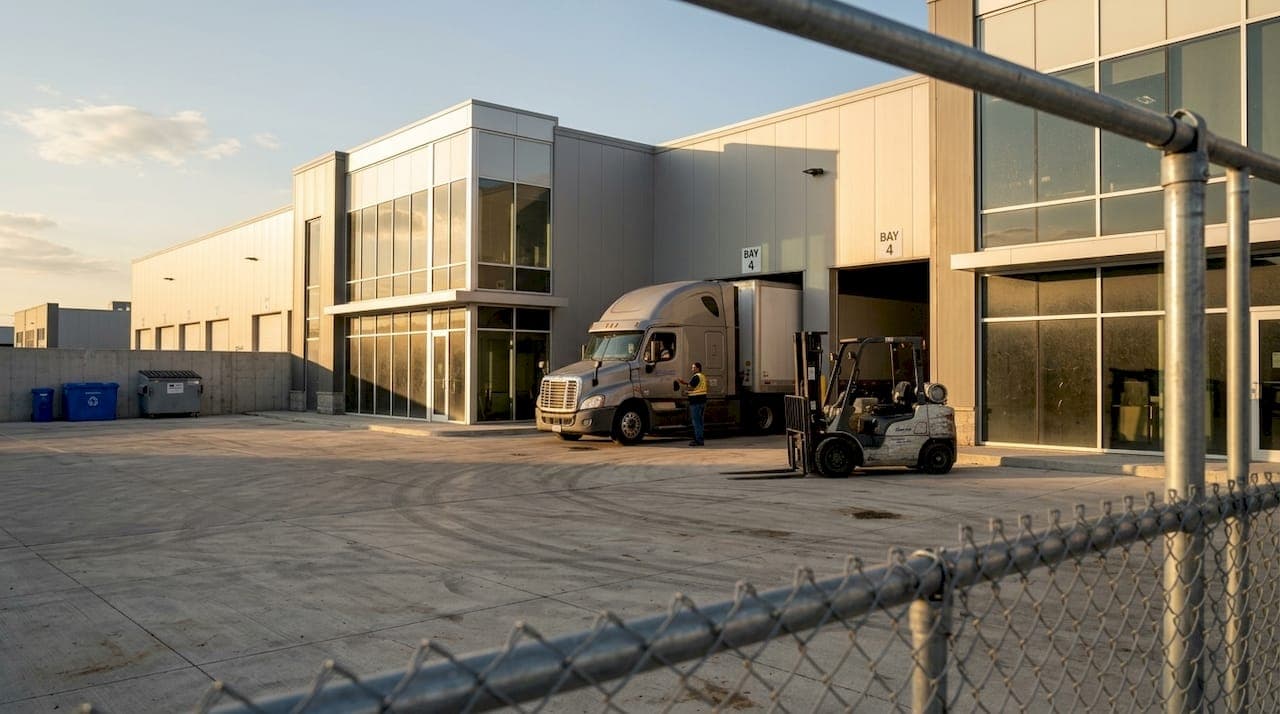
The Greater Toronto Area's industrial market is one of the most competitive in Canada, with an availability rate of 4.3% in Q4 2025 and average net rents climbing to $16.56 per square foot. For logistics operators, manufacturers, and e-commerce businesses, choosing the wrong facility type can cost far more than just rent. It can slow your supply chain, limit your growth, and lock you into terms that don't match your operations. This article breaks down the main types of industrial spaces available in the GTA, who benefits most from each, and what to look for before you sign anything.
Table of Contents
- How to assess industrial space options in the GTA
- Distribution centres: Optimising logistics for GTA businesses
- Warehouse and flex spaces: Versatile solutions for growing needs
- Manufacturing facilities: Power and infrastructure for production
- Which industrial space is right for your GTA business?
- Our take: Navigating industrial space choices in a tight GTA market
- Explore GTA industrial solutions with expert support
- Frequently asked questions
Key Takeaways
| Point | Details |
|---|---|
| Space type matters | Choosing the right industrial space type dramatically impacts costs, logistics, and future flexibility. |
| Market is competitive | The GTA's low vacancy and rising rents make it essential to act strategically and negotiate effectively. |
| Flexibility is leverage | Tenants can gain an edge by negotiating escalations, improvements, and future-proofing lease terms. |
| Operational fit is key | Match your company’s workflow and growth plans to the unique strengths of each industrial property type. |
How to assess industrial space options in the GTA
With demand at a record high, knowing what sets different industrial spaces apart is the first step to making a sound decision. Not all square footage is equal, and in a market this tight, the wrong choice is an expensive one.
Start with these core criteria before you tour a single property:
- Location relative to logistics hubs: Proximity to Highway 400, 401, 407, and 410 corridors, as well as rail access, directly affects your delivery speed and freight costs.
- Ceiling clear height: Modern logistics operations typically require 28 to 36 feet of clear height. Older buildings may offer only 18 to 22 feet, which limits racking and automation.
- Loading configuration: Dock-level doors versus grade-level doors change everything for inbound and outbound freight. Count the ratio carefully.
- Power supply: Light assembly needs differ vastly from heavy manufacturing. Know your amperage requirements before you shortlist properties.
- Column spacing: Wide-bay layouts (40 by 40 feet or greater) allow more flexible racking and equipment placement.
- Office ratio: Some facilities allocate 10 to 15% of space to offices. If you need more or less, factor in the cost of reconfiguration.
The GTA industrial market recorded positive net absorption of 4.2 million square feet in Q4 2025, which signals active demand from tenants across all sectors. That means good spaces move quickly. Understanding the various industrial property types in Toronto before you start your search puts you in a far stronger position.
For the latest data on rents and submarket trends, the GTA industrial insights blog is updated regularly with market intelligence.
Pro Tip: Always negotiate expansion options and sublet rights into your lease from day one. In a tight market, these clauses are worth more than a rent discount because they protect your flexibility as your business grows.
Distribution centres: Optimising logistics for GTA businesses
Once you understand your needs, distribution centres are often top of mind for GTA logistics businesses. They are purpose-built for speed, volume, and throughput, and the GTA's highway network makes them especially powerful.
A distribution centre (DC) is a large-format industrial facility designed primarily to receive, sort, store briefly, and ship goods outward. Key features typically include:
- Multiple dock-level loading doors (often one door per 5,000 to 10,000 sq ft of space)
- Clear ceiling heights of 30 feet or more
- ESFR (Early Suppression Fast Response) sprinkler systems for high-pile storage
- Ample trailer staging and truck court depth (ideally 130 feet or more)
- Proximity to major 400-series highways
- Automation-ready power and floor flatness specifications
The ideal tenants for distribution centres include third-party logistics (3PL) providers, large e-commerce fulfilment operations, grocery and food distributors, and national retailers with regional hubs. These users value speed above all else.
Operational benefits are significant. A well-located DC in Mississauga or Brampton can reach over 60% of Canada's population within a one-day drive. That reach is a competitive advantage you simply cannot replicate with a smaller or poorly located facility.
That said, distribution centres are not for everyone. If your operation is office-heavy, requires significant showroom space, or involves specialised manufacturing processes, a DC's layout will feel wasteful and costly. Tenant types for industrial spaces vary widely, and matching your use to the building type is critical.
On pricing, average net rent sits at $16.56 per square foot, up 65% over five years. For premium DCs with modern specs, you may pay above that benchmark. Understanding 2026 GTA industrial trends helps you gauge whether a quoted rent is fair or inflated.
Warehouse and flex spaces: Versatile solutions for growing needs
For businesses with shifting requirements or plans for growth, warehouse and flex units may provide the ideal mix of scale and adaptability. These two space types are often grouped together but serve distinctly different purposes.
| Feature | Standard warehouse | Flex space |
|---|---|---|
| Typical size | 20,000 to 200,000+ sq ft | 2,000 to 20,000 sq ft |
| Clear height | 22 to 30 feet | 14 to 22 feet |
| Office ratio | 5 to 15% | 20 to 50% |
| Loading | Dock and grade level | Primarily grade level |
| Best for | Storage, bulk logistics | Light assembly, showroom, office hybrid |
| Typical lease term | 5 to 10 years | 3 to 5 years |
Standard warehouses suit businesses that need raw storage volume: importers, wholesalers, and seasonal retailers managing inventory surges. Flex spaces, on the other hand, work well for tech firms, medical device companies, contractors, and small manufacturers who need a blend of workspace and storage under one roof.
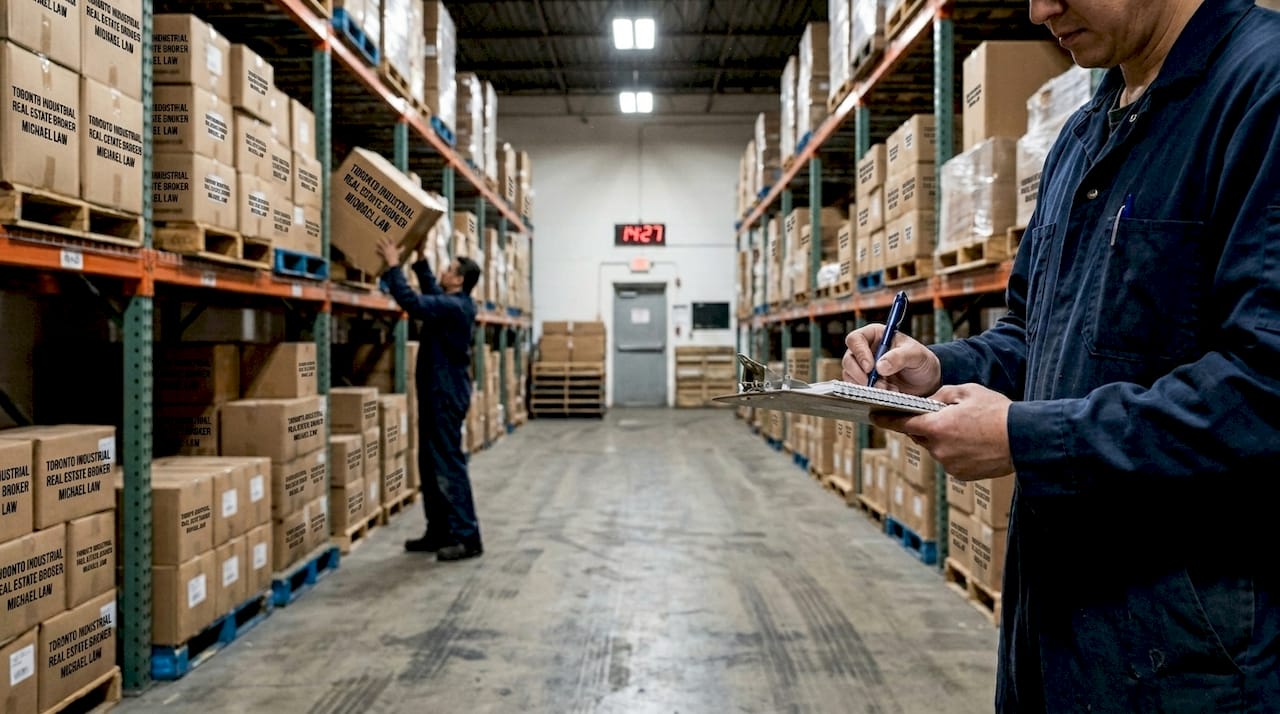
The GTA industrial market is seeing rents, availability rates, and tenant leverage shift across submarkets. This creates real opportunity for informed tenants. The key is knowing which lease clauses to push for.
In a net-net-net (NNN) lease, where tenants pay base rent plus operating costs, taxes, and insurance, you should negotiate CPI-linked escalations rather than fixed annual increases, push for tenant improvement allowances (TIAs) over free rent, and secure sublet rights so you can exit or share space if circumstances change.
Pro Tip: When the market softens even slightly, use it. Landlords who were firm on terms six months ago may now accept a TIA or a capped escalation clause. Your industrial leasing expertise matters most in these windows. Stay current on lease market trends so you know when to push.
Manufacturing facilities: Power and infrastructure for production
When advanced production or industry-specific compliance is required, manufacturing facilities become mission-critical. These are not interchangeable with standard warehouses. The infrastructure requirements are fundamentally different.
Manufacturing facilities in the GTA typically feature heavy three-phase electrical power (sometimes 2,000 amps or more at 600 volts), reinforced concrete floors rated for heavy equipment loads, optimised production-flow layouts, robust HVAC and ventilation systems for fumes or temperature control, and overhead cranes or crane-ready structural bays.
| Facility type | Power supply | Typical location | Key buildout feature |
|---|---|---|---|
| Light manufacturing | 200 to 600A, 600V | Vaughan, Markham | Flexible open floor, grade doors |
| Heavy manufacturing | 1,000 to 2,000A+ | Hamilton, Oshawa | Crane bays, reinforced slab |
| Food processing | 400 to 800A, 600V | Mississauga, Brampton | Washdown floors, cold storage |
Regulatory and permitting considerations in the GTA include:
- Zoning compliance (Employment Industrial or Prestige Industrial designations)
- Environmental assessment requirements for certain production types
- Building code compliance for fire suppression and ventilation
- Municipal noise and emissions bylaws
- Electrical Safety Authority (ESA) sign-off for heavy power upgrades
These facilities are scarce. GTA net absorption and availability rates confirm that specialised space is among the hardest to find. When a suitable manufacturing facility does come to market, it rarely stays available long. Businesses considering ESG upgrades in GTA manufacturing or exploring investing in GTA manufacturing assets should act decisively.
Which industrial space is right for your GTA business?
Now that you've seen the primary space types in detail, making the right pick comes down to fit and negotiation. Here is a quick reference to guide your decision.
| Business type | Best space type | Key priority |
|---|---|---|
| 3PL / e-commerce | Distribution centre | Dock doors, highway access |
| Wholesaler / importer | Standard warehouse | Storage volume, clear height |
| Light manufacturer / tech firm | Flex space | Office ratio, adaptability |
| Heavy manufacturer | Manufacturing facility | Power, floor load, zoning |
| Food / pharma producer | Specialised manufacturing | Compliance, cold storage, HVAC |
Revisit the criteria checklist from the first section and map each item to your shortlisted properties. If a building scores well on location and loading but falls short on power, get a contractor's estimate for an upgrade before you walk away. Sometimes the gap is smaller than it appears.
"Softening rents are creating slightly more leverage for tenants despite overall tight GTA conditions. Businesses that understand the market can negotiate meaningfully better terms than those who simply accept the first offer."
The softening rents in certain GTA submarkets are a real opportunity. Tenants who move with data and a clear brief tend to secure better deals. If you're also weighing ownership versus leasing, understanding GTA industrial investment sales can help frame that decision with the right financial context.
Our take: Navigating industrial space choices in a tight GTA market
Here's something most market overviews won't tell you: urgency is often the tenant's biggest enemy. When a business feels pressure to secure space quickly, it tends to accept terms that a more patient, better-advised operator would never agree to. We've seen tenants lock into above-market rents with aggressive fixed escalations simply because they didn't engage early enough.
The GTA market does favour landlords in many pockets. But it is not uniformly tight. Certain submarkets in the East GTA and outer 905 belt are showing more availability, and landlords there are more motivated. Knowing where those pockets are requires real-time intelligence, not just published reports.
Our advice: treat your space search like a procurement exercise. Define your specs, know your walk-away terms, and engage a specialist who tracks navigating GTA property choices daily. The tenants who win in this market aren't the ones who move fastest. They're the ones who move smartest.
Explore GTA industrial solutions with expert support
Finding the right industrial space in the GTA is rarely straightforward, especially when availability is tight and lease terms carry long-term financial consequences. Whether you're a logistics operator searching for a modern distribution centre in Mississauga, a manufacturer needing heavy-power infrastructure in Hamilton, or a growing firm exploring flex options in Vaughan, local expertise makes a measurable difference.
Michael Law Real Estate provides tenant representation, lease negotiation, and market intelligence across every major GTA industrial corridor. Browse GTA industrial properties or see available GTA spaces to start your search with an adviser who knows this market from the inside out. The right space, at the right terms, is within reach.
Frequently asked questions
What is the availability rate for industrial spaces in the GTA?
The availability rate in the Greater Toronto Area was 4.3% in Q4 2025, signalling limited supply across most submarkets.
How much is the average rent for industrial properties in the GTA?
The average net rent is $16.56 per square foot, reflecting a 65% increase over the past five years.
What features should I look for in a GTA manufacturing facility?
Prioritise high power capacity, reinforced floors, efficient production layouts, strong HVAC, and zoning approval for your intended production type.
Can tenants negotiate lease terms in a tight GTA industrial market?
Yes. With rents softening in select submarkets in 2026, tenants have real leverage to negotiate escalations, TIAs, and sublet rights into their agreements.
What is a flex space and who should use it?
Flex spaces combine warehouse, office, and sometimes light manufacturing under one roof, making them ideal for companies that need adaptability as their operations evolve.