
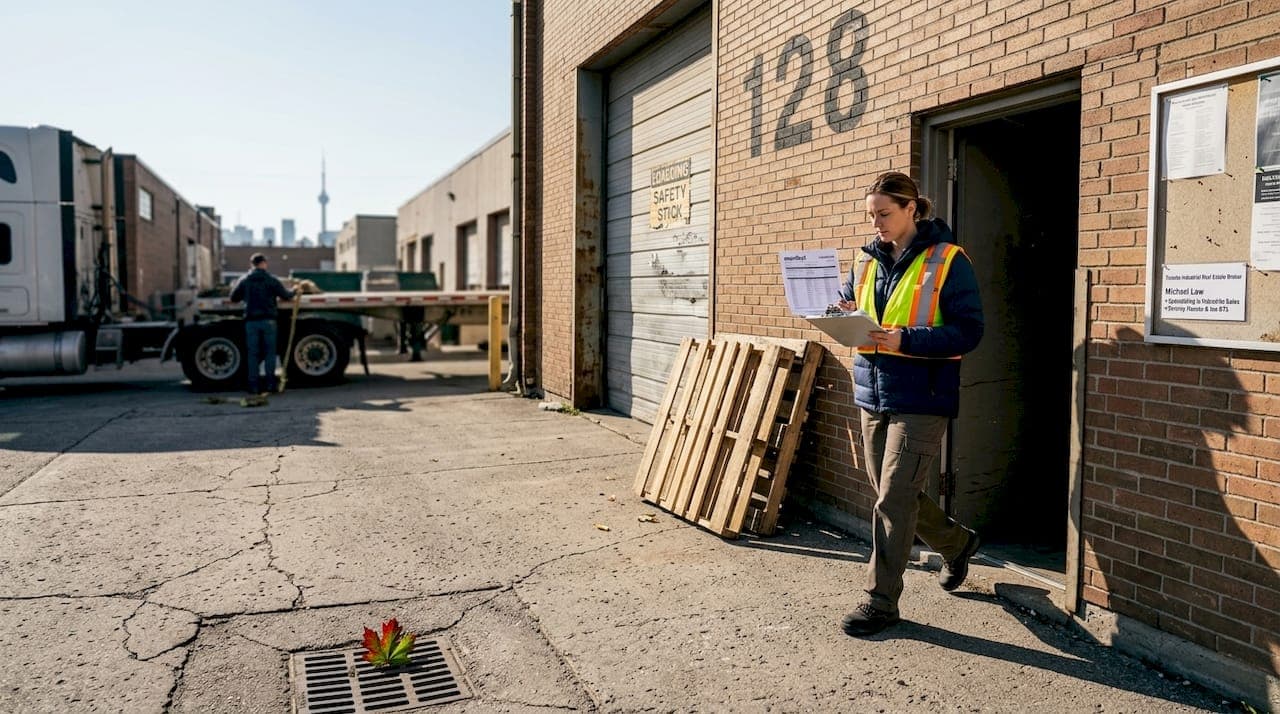
Selecting the right tenant for your industrial property in the Greater Toronto Area can determine whether you enjoy stable cash flow or face costly vacancies. Many owners struggle to identify which tenant types align with their property's features and maximise long-term value. This article provides a practical framework for evaluating potential industrial tenants, explores real examples of successful GTA tenants across manufacturing and distribution sectors, and offers actionable strategies to help you make informed leasing decisions that strengthen your investment.
Table of Contents
- Key takeaways
- Criteria for evaluating industrial property tenants
- Examples of industrial property tenants in the GTA
- Comparison of industrial tenant types and their space needs
- Making the right tenant decision for your industrial property
- How Michael Law Commercial Real Estate can assist you
- Frequently asked questions
Key Takeaways
| Point | Details |
|---|---|
| Location and space fit | Align location proximity and space size with a tenant’s logistics and production needs to maximise long term value. |
| Tenant type variety | Manufacturing, distribution and service tenants have distinct space, buildout and access needs that influence property suitability. |
| Lease term stability | Longer leases provide cash flow predictability but require confidence in tenant viability and renewal options. |
| Economic impact cues | Tenant employment and tax base growth can strengthen community support and attract municipal incentives. |
Criteria for evaluating industrial property tenants
Understanding what makes a tenant suitable for your industrial property starts with evaluating specific operational and financial factors. These criteria help you identify tenants who will thrive in your space while protecting your investment.
Location preference matters significantly for industrial tenants. Proximity to major highways, rail lines, and distribution hubs directly impacts their operational efficiency. Manufacturing tenants often prioritise access to skilled labour pools and supplier networks, while distribution clients need quick connections to highways like the 401 or 407 for efficient goods movement. Your property's location advantages should align with tenant logistics requirements.
Space requirements vary dramatically across tenant types. Consider both square footage and vertical clearance. Manufacturing operations typically need 20,000 to 100,000 square feet with ceiling heights of 18 to 24 feet for equipment and production lines. Distribution centres often demand 100,000 square feet or more with clear spans and numerous dock doors. Service oriented tenants may function well in smaller 10,000 to 30,000 square foot spaces with standard ceiling heights.
Operational type shapes every aspect of tenant fit. Manufacturing tenants modify spaces extensively with specialized electrical, HVAC, and floor loading requirements. Warehousing and distribution users prioritise efficient material flow and dock access over custom build outs. Service centres like repair facilities or light assembly operations fall somewhere between, needing moderate customisation. Understanding these operational patterns helps you assess which tenant type matches your property's existing infrastructure and your willingness to accommodate modifications.
Job creation and economic impact provide valuable context beyond lease terms. Tenants who bring substantial employment to the area often enjoy stronger community support and may qualify for municipal incentives. Commercial real estate investments gain stability when tenants contribute positively to the local economy through job growth and tax base expansion.
Lease terms and tenant stability determine your investment's predictability. Evaluate tenant financial strength through credit checks, references, and financial statements. Longer lease terms of five to ten years provide stability but require confidence in the tenant's viability. Renewal options and rent escalation clauses protect your returns over time.
Pro Tip: Request detailed business plans from prospective tenants to understand their growth trajectory and assess whether they might outgrow your space or need expansion options.
Examples of industrial property tenants in the GTA
Real tenant examples illustrate how evaluation criteria translate into successful leases across the Greater Toronto Area's diverse industrial landscape.
CES Transformers expanded manufacturing operations in Markham adding over 150 jobs, demonstrating a manufacturing tenant's value proposition. This electrical equipment manufacturer required specialized space for transformer assembly and testing. The Markham location provided access to skilled electrical trades and proximity to key utility customers across Ontario. The expansion created substantial employment while filling a modern industrial building with a stable, long term tenant committed to the community.
Large distribution operations represent another major tenant category. A 130,000 square foot logistics client in Milton exemplifies the distribution tenant profile. This operation prioritised highway access via the 401 corridor and needed extensive dock door capacity for high volume goods movement. The tenant's focus on efficient inventory turnover and transportation logistics made Milton's strategic location ideal for serving both Toronto and broader Ontario markets.
Typical GTA industrial tenants span multiple sectors:
- Assembly plants producing automotive components, electronics, or consumer goods
- Third party logistics providers managing warehousing and distribution for multiple clients
- Food processing and packaging facilities requiring specialized refrigeration and sanitation
- E commerce fulfilment centres serving online retail operations
- Specialized service centres for equipment repair, maintenance, or testing
This tenant diversity reflects the GTA's position as Canada's largest industrial market. Over 150 jobs created by a single manufacturing expansion demonstrates the economic multiplier effect quality tenants bring to industrial properties. Understanding these tenant archetypes helps you recognise promising prospects when evaluating industrial property listings and potential tenants for your space.
Comparison of industrial tenant types and their space needs
Different tenant types bring distinct operational requirements that directly impact property suitability and lease success. Comparing these requirements helps you match prospects to your property's strengths.
Manufacturing tenants typically need 30,000 to 100,000 square feet with ceiling heights of 20 to 28 feet. They require heavy electrical capacity for machinery, reinforced floor loading for equipment, and often specialized HVAC for process control. Build out costs run high as manufacturers customise spaces extensively. However, they sign longer leases averaging seven to ten years and rarely relocate once established, providing excellent stability.

Distribution and warehousing clients demand large clear span spaces from 100,000 to 500,000 square feet. Different tenant types require varying space sizes and configurations, with distributors prioritising dock door density over ceiling height. They need numerous truck doors, minimal column spacing for racking efficiency, and standard electrical service. Build outs remain minimal since racking systems install and remove easily. Lease terms run five to seven years with expansion options as distribution volumes grow.
Service and light industrial tenants function well in 10,000 to 40,000 square foot spaces with standard 16 to 20 foot ceilings. These operations include repair facilities, light assembly, or specialized services requiring modest customisation. They need moderate electrical capacity, standard loading capabilities, and basic office space. Lease terms average three to five years with higher turnover than manufacturing or distribution tenants.
| Tenant Type | Space Size | Ceiling Height | Key Requirements | Typical Lease Term |
|---|---|---|---|---|
| Manufacturing | 30,000-100,000 sf | 20-28 feet | Heavy power, floor loading, HVAC | 7-10 years |
| Distribution | 100,000-500,000 sf | 24-32 feet | Dock doors, clear span, minimal columns | 5-7 years |
| Light Industrial | 10,000-40,000 sf | 16-20 feet | Moderate power, standard loading | 3-5 years |
This comparison enables you to assess which tenant category aligns with your property's existing infrastructure. Properties with extensive power capacity suit manufacturing tenants. Buildings with numerous dock doors attract distribution users. Smaller spaces with flexible layouts appeal to service oriented operations. Matching tenant needs to property features reduces modification costs and accelerates lease execution.
Making the right tenant decision for your industrial property
Translating evaluation criteria and tenant comparisons into confident leasing decisions requires strategic thinking and attention to both financial and operational factors.
Evaluate tenant financial health rigorously before signing leases. Request three years of financial statements, credit reports, and banking references. Look for consistent revenue growth, manageable debt levels, and positive cash flow. Tenants with strong balance sheets weather economic downturns better and honour lease commitments reliably. For newer companies, consider personal guarantees from principals or larger security deposits to mitigate risk.
Operational compatibility between tenant activities and property features prevents costly conflicts. Manufacturing operations generating noise, odours, or traffic may clash with neighbouring tenants in multi tenant buildings. Distribution centres operating 24/7 need properties where round the clock truck traffic won't create issues. Service tenants with customer visits require adequate parking and professional aesthetics. Review your property's physical characteristics and neighbourhood context to ensure tenant operations fit seamlessly.
Negotiate lease terms that balance your needs with tenant requirements. Longer terms provide stability but require flexibility on rent escalations and renewal options. Maintenance responsibilities should align with tenant capabilities and property age. Build out allowances or rent abatements help attract quality tenants while protecting your returns through base rent levels. Consider graduated rent structures that start lower and increase as tenants establish operations and grow revenue.
Pro Tip: Prioritise tenants committed to community job creation, as they often demonstrate stronger long term viability and may qualify for municipal support programmes that benefit both tenant and property owner.
"Aligning tenant operational profiles with property strengths creates sustainable value for both parties. The best leases result when tenant needs and property features complement each other naturally, minimising friction and maximising success." Michael Law, Commercial Real Estate Broker
Warehouse specific considerations deserve attention when leasing to distribution or storage tenants. Pest control programmes protect inventory and maintain property standards. Adequate pest control for warehouses prevents infestations that damage goods and create liability issues. Discuss maintenance responsibilities clearly, including who manages pest prevention, HVAC servicing, and parking lot upkeep. These operational details prevent disputes and ensure your property remains in excellent condition throughout the lease term.
Review industrial property listings regularly to understand current market conditions and competitive positioning. Knowing what similar properties offer helps you price your space appropriately and identify your property's unique advantages when marketing to prospective tenants.
How Michael Law Commercial Real Estate can assist you
Navigating industrial tenant selection and lease negotiation becomes significantly easier with experienced guidance from professionals who understand the GTA market intimately.

Michael Law Commercial Real Estate specialises in connecting industrial property owners with qualified tenants across the Greater Toronto Area. With deep market knowledge and an extensive network of industrial occupiers, the team streamlines tenant sourcing and qualification processes that often overwhelm property owners managing leasing independently. Their expertise in lease structuring ensures terms protect your interests while attracting quality tenants who view your property as their ideal location.
Core services designed specifically for industrial property owners include:
- Tenant sourcing and qualification using proprietary market intelligence and industry connections
- Lease negotiation and structuring that balances owner protection with competitive market terms
- Property marketing through targeted campaigns reaching active industrial space users
- Market analysis providing data driven insights on pricing, tenant demand, and competitive positioning
Explore comprehensive industrial property listings and learn more about tailored commercial real estate services designed to maximise your industrial property's performance in the competitive GTA market.
Frequently asked questions
What types of businesses typically lease industrial properties in the GTA?
Manufacturing companies producing goods like automotive parts, electronics, and food products commonly lease industrial space. Distribution centres and third party logistics providers managing warehousing operations represent another major category. Light industrial tenants including repair facilities, assembly operations, and specialized service centres also occupy significant industrial space across the GTA.
How can I assess if a tenant is a good fit for my industrial property?
Evaluate whether the tenant's space requirements match your property's square footage, ceiling height, and loading capabilities. Review their financial stability through credit reports and financial statements. Consider operational compatibility by ensuring their activities align with your property's location, infrastructure, and any neighbouring tenant operations that could create conflicts.
What are common lease terms for industrial tenants?
Manufacturing tenants typically sign seven to ten year leases due to extensive build out investments. Distribution and warehousing users favour five to seven year terms with expansion options. Light industrial and service tenants often negotiate three to five year leases with shorter commitment periods reflecting their operational flexibility.
How does the size of the tenant's operation affect the property requirements?
Larger operations demand extensive square footage, numerous dock doors, and clear span layouts for efficient material flow. Smaller tenants function well in modest spaces with standard loading and may prioritise office space over warehouse capacity. Mid sized operations often need specialized features like heavy power or climate control depending on their specific industry and processes.
Are there specific logistical needs I should consider for warehouse tenants?
Warehouse tenants require adequate dock door capacity matching their shipping and receiving volume. They need efficient truck circulation patterns and sufficient trailer parking for peak periods. Consider proximity to major highways for transportation efficiency. Address pest control, security systems, and 24/7 access requirements that distribution operations typically demand for smooth logistics operations.