

Selecting the right industrial property type is critical for investors and corporate tenants navigating the Greater Toronto Area's competitive real estate market. Each category offers distinct features tailored to specific operational and investment goals. Understanding warehouse configurations, manufacturing facilities, flex spaces, and distribution centres helps you align property characteristics with your business requirements. This guide breaks down the main industrial property types available in the GTA, compares their key attributes, and provides actionable insights to simplify your decision-making process.
Table of Contents
- Key takeaways
- Criteria to evaluate types of industrial properties
- Main types of industrial properties in the Greater Toronto area
- Comparison of industrial property types
- Choosing the right industrial property type for your needs
- Explore commercial real estate services tailored for industrial properties
- FAQ about types of industrial properties
Key Takeaways
| Point | Details |
|---|---|
| Main property types | The GTA market features four main industrial types including warehouses, manufacturing facilities, flex spaces and distribution centres, each with distinct operational fits. |
| Key evaluation criteria | Ceiling height, loading facilities, location, and cost determine suitability and potential returns. |
| Location matters | Proximity to highways and labour pools drives lease rates and access to markets. |
| Type specific uses | Warehouses suit bulk storage while manufacturing focuses on production workflows and equipment needs. |
| Practical tips | Request detailed property surveys listing power, column spacing and truck turning radii to avoid surprises. |
Criteria to evaluate types of industrial properties
Industrial properties are classified by several defining attributes that determine their suitability for specific uses. Building size typically ranges from compact flex units under 5,000 square feet to massive distribution centres exceeding 500,000 square feet. Ceiling height is crucial for storage efficiency, with modern warehouses offering 24 to 36 feet of clear height to accommodate racking systems. Loading infrastructure varies from ground-level doors for small operations to multiple dock-high bays with levellers for high-volume logistics.
Zoning regulations govern permissible activities, separating light industrial uses from heavy manufacturing or hazardous material storage. Industrial property classification depends on attributes such as ceiling height, loading docks, and location, which directly influence operational workflows and investment returns. Functional uses span warehousing for inventory storage, manufacturing for production processes, and hybrid office spaces within industrial parks that support administrative teams alongside operational staff.
Location relative to transport networks is paramount in the GTA. Properties near Highway 401, 407, or major rail corridors command premium lease rates due to reduced shipping times and lower freight costs. Access to Pearson International Airport benefits e-commerce fulfillment operations requiring expedited delivery. Proximity to skilled labour pools in suburban nodes like Brampton or Vaughan also affects tenant demand and long-term property values.
These criteria shape leasing and investment decisions by determining operational costs, tenant appeal, and resale potential. Investors seeking stable income favour multi-tenant warehouse parks with long-term leases, while owner-users prioritise facilities that match production requirements. Tenants evaluate properties based on workflow efficiency, expansion capacity, and lease flexibility.
Pro Tip: Request detailed property surveys that include power capacity, column spacing, and truck turning radii to avoid costly surprises after signing a lease.
Main types of industrial properties in the Greater Toronto area
The GTA's industrial real estate market comprises four primary property types, each designed for distinct operational functions and tenant profiles.
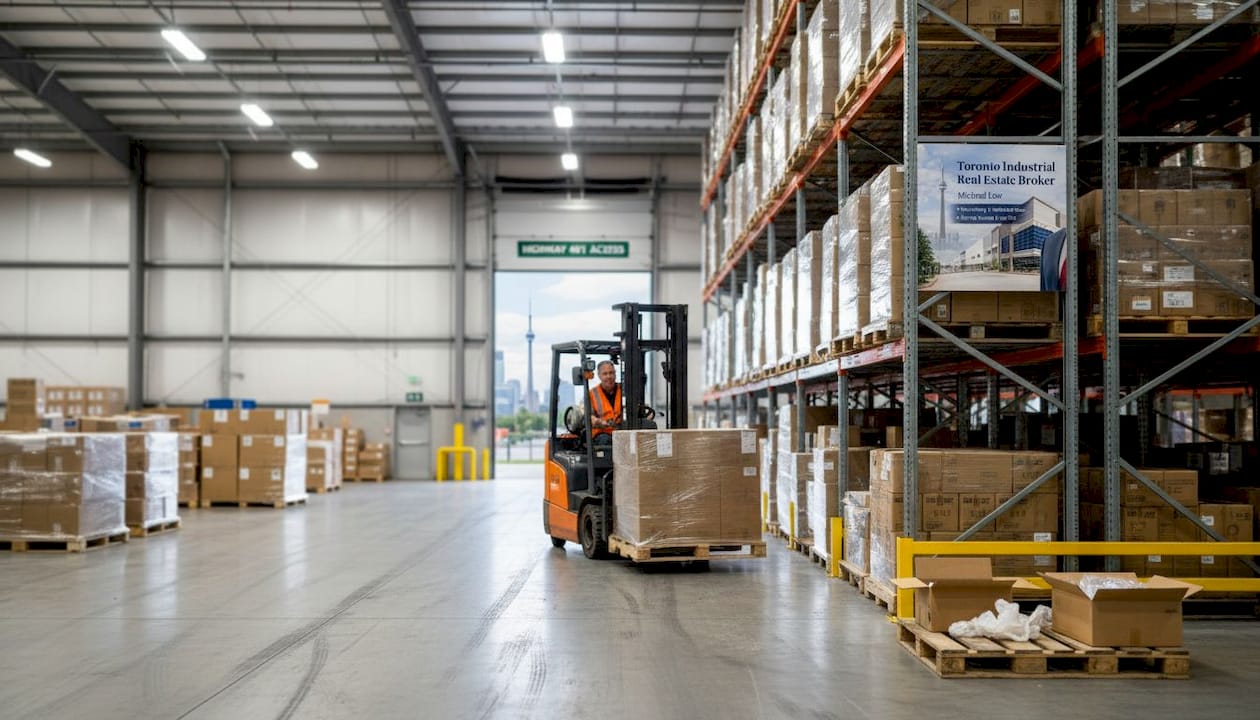
Warehouse properties dominate the market, offering large open floor plans with high ceilings for bulk storage and inventory management. Typical features include:
- Clear heights ranging from 24 to 36 feet to maximise vertical storage
- Multiple dock-high loading bays with levellers for efficient truck access
- Basic office space comprising 5 to 10 percent of total square footage
- Concrete floors rated for heavy forklift traffic and racking systems
- Minimal HVAC requirements focused on office areas rather than warehouse zones
Warehouse tenants include third-party logistics providers, e-commerce fulfillment operations, and distributors managing regional inventory. Lease rates average $10 to $14 per square foot annually in suburban GTA markets, with premium locations near major highways commanding higher rates.
Manufacturing facilities feature specialised layouts designed for production processes rather than storage. Key characteristics include:
- Heavy power infrastructure supporting machinery and equipment loads
- Reinforced floors capable of bearing concentrated equipment weight
- Overhead crane systems for moving materials and finished goods
- Segregated production zones with climate control for sensitive processes
- Larger office components to house engineering and administrative staff
Manufacturing properties suit automotive suppliers, food processors, and industrial fabricators. Warehouse and distribution centres differ primarily in loading facilities and operational scale, while manufacturing buildings prioritise power and process flow over storage volume.
Flex space combines office and light industrial functions within a single building, offering adaptability for businesses that require both administrative and operational areas. Features include:
- Office space comprising 20 to 50 percent of total square footage
- Lower ceiling heights around 16 to 20 feet suitable for light assembly
- Grade-level doors rather than dock-high bays
- Enhanced finishes and HVAC systems throughout
- Zoning that permits service businesses, showrooms, and research labs
Flex properties attract technology firms, medical device companies, and service contractors needing both office and workshop space. Lease rates range from $12 to $18 per square foot, reflecting higher finish quality and operational flexibility.
Distribution centres are purpose-built for rapid goods movement, emphasising loading efficiency and strategic location. Defining attributes include:
- Extensive dock infrastructure with ratios of one bay per 10,000 to 15,000 square feet
- Cross-dock configurations enabling direct transfer between inbound and outbound trucks
- Clear heights exceeding 32 feet to maximise storage density
- Proximity to highway interchanges and major transport corridors
- Advanced fire suppression and security systems for high-value inventory
Distribution centres serve regional fulfillment operations, parcel carriers, and national retailers. These properties command the highest lease rates, often $14 to $18 per square foot in prime GTA locations.
Pro Tip: Tour industrial property classifications during operational hours to observe loading patterns, traffic flow, and neighbouring tenant activities that may impact your business.
Comparison of industrial property types
A side-by-side comparison clarifies how each property type aligns with specific operational needs and investment criteria.
| Property type | Ideal use | Average ceiling height | Dock types | Typical lease rate range | Location suitability |
|---|---|---|---|---|---|
| Warehouse | Bulk storage, inventory management | 24-36 feet | Multiple dock-high bays | $10-$14 per sq ft | Suburban industrial parks near highways |
| Manufacturing | Production, assembly, fabrication | 18-28 feet | Limited docks, overhead cranes | $9-$13 per sq ft | Industrial zones with heavy power infrastructure |
| Flex space | Light assembly, offices, showrooms | 16-20 feet | Grade-level doors | $12-$18 per sq ft | Mixed-use corridors near residential areas |
| Distribution centre | Regional fulfillment, cross-docking | 32-40 feet | Extensive dock-high bays | $14-$18 per sq ft | Highway interchanges, airport proximity |
"Aligning property type with business needs is not optional. Mismatched facilities drive up operational costs, limit growth, and reduce competitiveness in the GTA's demanding industrial market."
A comparison table highlights practical differences aiding investment and leasing choices by presenting key attributes in a digestible format. Investors use this framework to assess tenant demand and rental income potential across property types. Tenants evaluate whether a property's infrastructure supports their operational workflows and expansion plans. For example, an e-commerce retailer requiring rapid order fulfillment prioritises distribution centres with extensive loading capacity, while a contract manufacturer focuses on power availability and production floor layout.
Ceiling height directly impacts storage efficiency and operational flexibility. Properties with 32-foot clear heights accommodate three levels of pallet racking, maximising usable volume without expanding the building footprint. Lower ceilings restrict storage density, forcing tenants to lease additional space or accept higher per-unit inventory costs.
Loading infrastructure determines throughput capacity. Distribution centres with one dock per 10,000 square feet handle high shipping volumes without congestion, while warehouses with limited bays experience bottlenecks during peak periods. Grade-level doors in flex spaces suit businesses with infrequent deliveries but cannot accommodate standard transport trailers efficiently.
Lease rates reflect both property features and location advantages. Industrial property classifications near Highway 401 or 407 command premiums due to reduced freight costs and faster delivery times. Properties in emerging submarkets like Milton or Whitby offer lower rates but require longer shipping routes to downtown Toronto or U.S. border crossings.
Choosing the right industrial property type for your needs
Selecting the optimal industrial property requires a systematic evaluation of your business requirements, budget constraints, and growth trajectory. Follow this process to match property types with your operational and investment goals.
-
Assess operational requirements. Document your workflow, including receiving, production, storage, and shipping activities. Calculate required square footage based on inventory volumes, equipment footprints, and employee workstations. Identify minimum ceiling heights for racking systems or production machinery.
-
Evaluate loading and logistics needs. Determine daily truck volumes and trailer sizes to establish dock requirements. Consider whether cross-docking or extended storage drives your facility design. Analyse shipping destinations to prioritise locations near key transport corridors.
-
Define budget parameters. Establish total occupancy costs including base rent, operating expenses, property taxes, and utilities. Compare lease rates across property types and submarkets to identify affordable options. Factor in tenant improvement allowances and lease incentives that reduce upfront costs.
-
Consider growth and flexibility. Project space requirements over the next three to five years to avoid premature relocations. Evaluate lease terms that permit expansion within the same building or park. Assess whether flex space allows you to adjust office-to-industrial ratios as your business evolves.
-
Investigate zoning and compliance. Verify that permitted uses align with your operations, especially for manufacturing or hazardous material storage. Review environmental assessments and building code compliance to avoid regulatory issues. Confirm that parking ratios meet employee and visitor needs.
-
Analyse location and market trends. Research vacancy rates, absorption trends, and planned developments in target submarkets. Tailoring your property choice to specific operational or investment goals improves financial and logistical outcomes by aligning real estate decisions with business strategy. Evaluate proximity to labour pools, suppliers, and customer bases that affect operational efficiency.
Common pitfalls include underestimating loading capacity, overlooking power requirements for equipment, and ignoring future area developments that may increase traffic congestion or property taxes. Tenants often focus solely on lease rates while neglecting operating expenses that significantly impact total occupancy costs. Investors sometimes chase high rental yields without assessing tenant quality or lease term stability.
Pro Tip: Request market intelligence reports covering vacancy rates, rental trends, and absorption data for your target submarkets to identify emerging opportunities before they become widely recognised. Check municipal planning documents for proposed transit expansions or highway improvements that enhance property values over time.
Explore commercial real estate services tailored for industrial properties
Navigating the GTA's industrial real estate market requires specialised expertise and comprehensive market intelligence. Michael Law Real Estate delivers strategic guidance for investors and tenants seeking warehouse, manufacturing, flex, and distribution properties across Toronto, Mississauga, Brampton, Vaughan, and surrounding industrial corridors. Our commercial real estate services include site selection, lease negotiation, investment sales, and market analysis tailored to your operational and financial objectives.
Whether you're securing your first industrial lease, expanding operations, or building an investment portfolio, our team provides data-backed insights and transaction support. Access real estate services overview to explore leasing, acquisition, and advisory solutions. Browse industrial property listings across the GTA to identify opportunities that match your criteria.
FAQ about types of industrial properties
What is the difference between a warehouse and a distribution centre?
Warehouses prioritise long-term storage with moderate loading capacity, while distribution centres emphasise rapid goods movement through extensive dock infrastructure and cross-dock configurations. Distribution centres typically feature higher ceilings and locations near major highways to support regional fulfillment operations.
Which industrial property type is best for small businesses?
Flex space suits small businesses requiring both office and light industrial functions within a compact footprint. These properties offer lower square footage minimums, enhanced finishes, and zoning that permits diverse uses including showrooms, assembly, and service operations.
How do lease rates vary among industrial property types in the GTA?
Lease rates range from $9 to $18 per square foot annually depending on property type and location. Manufacturing facilities average $9 to $13, warehouses $10 to $14, and distribution centres $14 to $18. Flex spaces command $12 to $18 due to higher finish quality and operational versatility. Premium locations near Highway 401 or Pearson Airport exceed these ranges.
Can industrial properties include office space?
Yes, most industrial properties incorporate office components ranging from 5 percent in warehouses to 50 percent in flex spaces. Office areas support administrative, sales, and engineering functions while maintaining proximity to operational activities. Zoning regulations govern the maximum office percentage permitted within industrial buildings.
What zoning considerations affect industrial property use?
Zoning designations separate light industrial uses like assembly and warehousing from heavy manufacturing, hazardous material storage, and outdoor operations. Municipalities regulate permitted activities, parking ratios, truck access, and operating hours. Verify that your intended use complies with local zoning bylaws before committing to a lease or purchase. Review industrial property listings that specify permitted uses and zoning classifications to streamline your search.