
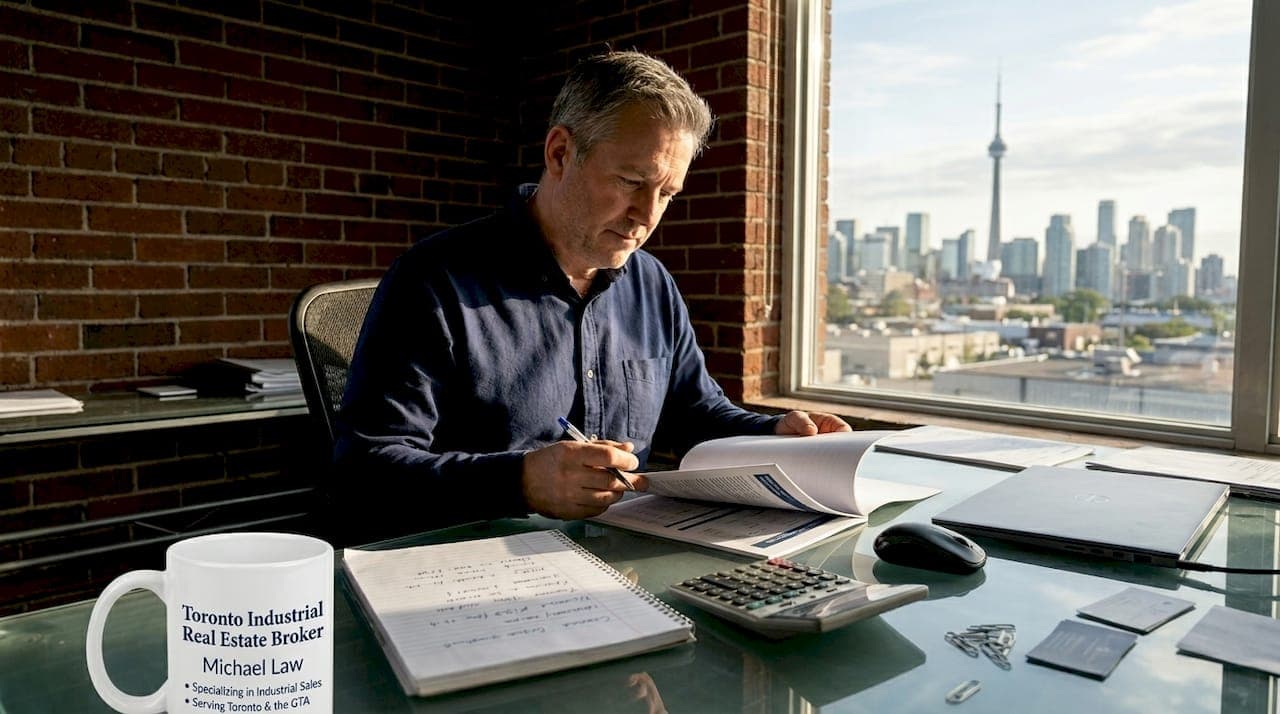
Operating costs are climbing, tenant turnover is expensive, and many GTA industrial property owners are quietly leaving money on the table. The difference between a property that performs and one that merely survives often comes down to a handful of deliberate decisions around leasing, upgrades, and ongoing management. If you own or manage industrial real estate in Toronto, Mississauga, Brampton, Vaughan, or anywhere across the GTA, this guide breaks down the practical steps you can take right now to increase your net operating income, attract stronger tenants, and build long-term asset value.
Table of Contents
- Assessing your property and the local market
- Optimising leases for higher returns
- Upgrading and modernising for operational efficiency
- Active management and continual improvement
- Our take on driving real value in GTA industrial property
- Unlock your property's full potential with expert support
- Frequently asked questions
Key Takeaways
| Point | Details |
|---|---|
| Review market position | Baseline your performance compared to other GTA industrial properties to reveal improvement areas. |
| Optimise lease terms | Choose triple net structures and negotiate longer, tenant-friendly agreements for better income. |
| Invest in upgrades | Modernise systems and build sustainably to command higher rents and lower operating expenses. |
| Practice proactive management | Regularly monitor and reinvest to sustain returns and stay ahead of market trends. |
Assessing your property and the local market
Before you can improve returns, you need an honest picture of where your property stands today. That means looking at three things: what your property earns, what it costs to operate, and how it compares to the market around it.
Start by pulling together your current occupancy rate, gross rental income, operating expenses, and net operating income (NOI). NOI is simply your rental income minus operating costs, and it is the number that buyers, lenders, and appraisers care about most. Once you have it, you can benchmark it against comparable properties in your submarket.
The GTA industrial market remains one of the most competitive in Canada, but conditions are shifting. Current GTA industrial market conditions are being shaped by rising e-commerce demand, infrastructure expansion, and tightening supply in key corridors like Mississauga Airport and Vaughan. Understanding these forces helps you set realistic rent targets and anticipate tenant demand. Staying current on industrial property trends in your specific node is not optional; it is the foundation of every good decision you will make.
Here is a simple baseline table to track your property's key performance indicators (KPIs):
| KPI | Your property | Market benchmark |
|---|---|---|
| Occupancy rate | % | 95%+ (GTA avg.) |
| Gross rent per sq ft | $ | $14 to $22/sq ft |
| Operating expense ratio | % | 30 to 40% of income |
| Net operating income | $ | Varies by submarket |
| Lease term remaining | Years | 3 to 7 years |
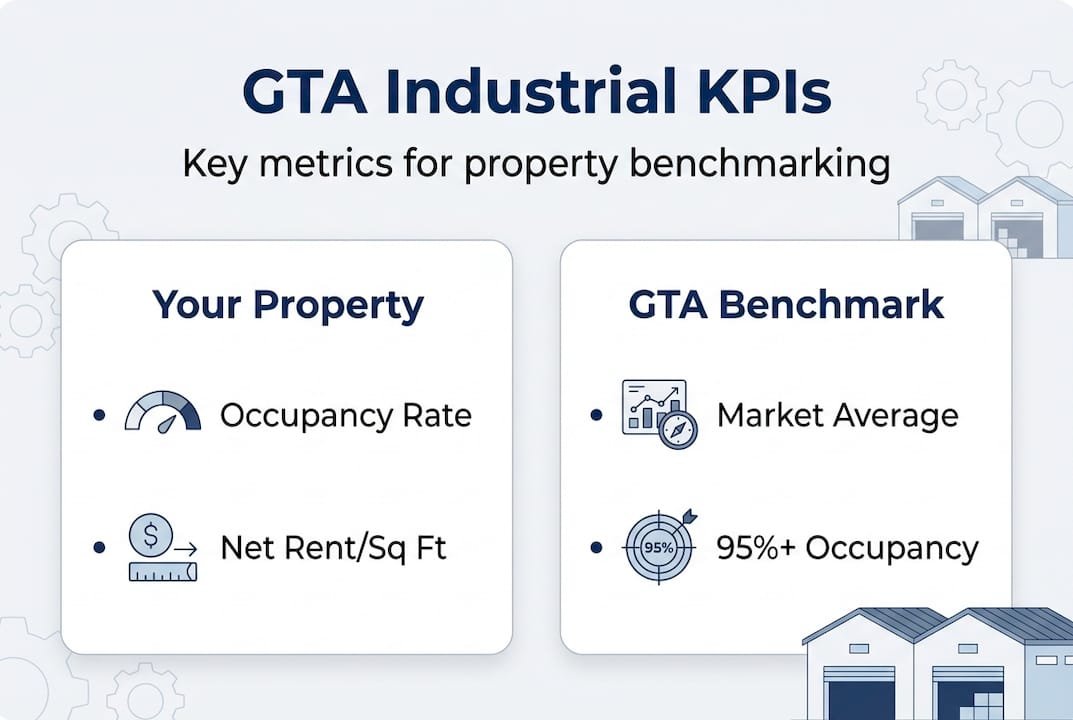
Once you have filled in your column, the gaps become obvious. A low occupancy rate signals a leasing problem. A high expense ratio signals an operational inefficiency. Both are fixable, but you need the data first.
Key areas to examine during your assessment include:
- Lease expiry schedule: Are multiple leases expiring at the same time? That is a cash flow risk.
- Deferred maintenance: Unaddressed repairs reduce tenant satisfaction and property value.
- Underutilised space: Mezzanine areas, excess yard space, or unused office square footage may represent untapped income.
- Submarket vacancy trends: Check 2026 GTA market insights to understand whether your area is tightening or softening.
Pro Tip: Do not rely solely on your own records. Pull recent comparable lease transactions in your submarket to see what tenants are actually paying. This gives you negotiating power and a clearer picture of your property's true market position.
Optimising leases for higher returns
Once you understand your market position, securing the right leases is key to steady, growing income.
The type of lease you use has a direct impact on how much income actually reaches your pocket. The two most common structures in GTA industrial real estate are gross leases and triple net (NNN) leases, and they are not equal.
| Lease type | Who pays operating costs | Owner's NOI predictability | Best suited for |
|---|---|---|---|
| Gross lease | Owner pays all costs | Lower, costs can erode income | Smaller tenants, short terms |
| Triple net (NNN) | Tenant pays taxes, insurance, maintenance | Higher, more predictable | Institutional tenants, long terms |
Triple net leases shift property taxes, insurance, and maintenance costs to the tenant, which means your NOI is cleaner and more predictable. In a market where operating costs are rising, this structure protects your returns significantly.
Here are the steps to strengthen your lease portfolio:
- Audit existing leases for gross versus NNN structure, escalation clauses, and renewal options.
- Negotiate longer terms when renewing. A five to seven year term with a creditworthy tenant is far more valuable than a two year deal.
- Include annual rent escalations tied to CPI or a fixed percentage (typically two to three percent). This protects you against inflation without renegotiating every year.
- Offer rights of first refusal on adjacent space or future vacancies. Corporate and logistics tenants value this flexibility and will often accept higher base rents in exchange.
- Vet tenant creditworthiness before signing. A tenant with strong financials is worth more than a marginal tenant paying slightly above market.
For guidance on structuring complex lease arrangements, the advisory services for leases available through experienced brokers can save you from costly mistakes. Understanding the range of tenant types in GTA industrial buildings also helps you target the right occupants for your asset class.
Pro Tip: Always include an escalation clause in new leases. Even a modest two percent annual increase compounds significantly over a seven year term and keeps your income ahead of rising costs.
Upgrading and modernising for operational efficiency
Solid leases set the stage, but your building itself can be a powerful driver of extra value.
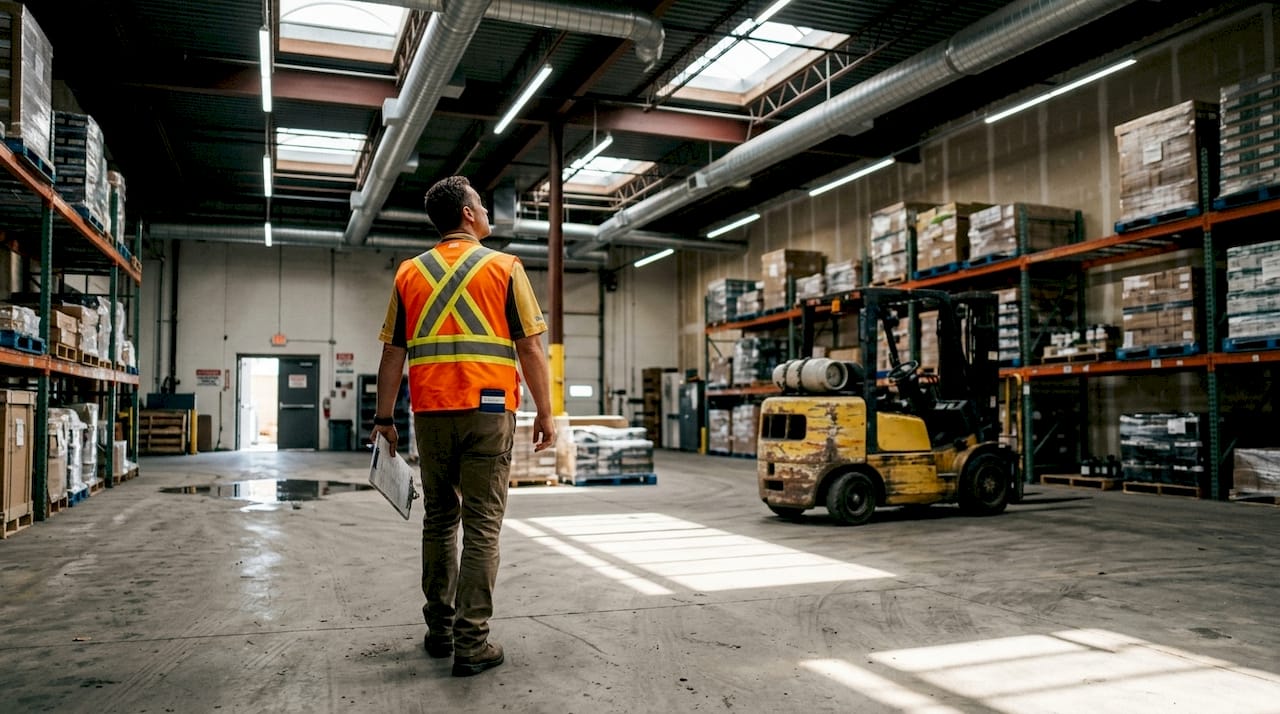
Tenants in 2026 are not just looking for square footage. They want buildings that are efficient, reliable, and aligned with their own operational and sustainability goals. Properties that deliver on these expectations command premium rents and see lower turnover. Those that do not are increasingly left behind.
Energy-efficient upgrades such as modern HVAC systems, LED lighting, upgraded electrical capacity, and solar panels reduce operating costs and make your building more attractive to logistics and manufacturing tenants who run high-energy operations. Properties with modern systems can see up to 15% higher lease rates compared to older, unimproved stock.
The upgrades that deliver the strongest return on investment include:
- LED lighting conversion: Reduces energy consumption by 40 to 60 percent and requires minimal maintenance.
- Modern HVAC systems: Critical for temperature-sensitive logistics and pharmaceutical tenants.
- Upgraded power capacity: E-commerce and advanced manufacturing tenants often require 400 to 600 amp service or higher.
- Solar panel installation: Reduces common area energy costs and qualifies for federal and provincial incentives.
- Dock levellers and grade-level doors: Improve operational flow and reduce tenant complaints.
- Improved yard and truck court: Wider turning radii and better paving attract national logistics operators.
For owners interested in sustainability improvements, exploring ESG upgrades for value is worth the time. ESG-aligned buildings are increasingly prioritised by institutional tenants and investors, which has a direct impact on both lease rates and asset valuation.
If you are unsure where to start, working with experts who understand GTA industrial building standards can help you prioritise upgrades based on your tenant profile and budget.
Pro Tip: Before committing to a major upgrade, check eligibility for Canada Greener Buildings grants and Ontario energy efficiency incentives. These programmes can offset 20 to 30 percent of eligible project costs, improving your payback period considerably.
Active management and continual improvement
Upgrades bring results, but ongoing management is what keeps your returns optimised year after year.
Many owners invest in improvements and then step back, assuming the work is done. That is a mistake. Continuous improvement and regular reviews are what separate properties that appreciate steadily from those that plateau or decline.
'Regular reviews and upgrades are non-negotiable for sustained ROI.'
Active management means staying close to your numbers and your tenants. Here is what that looks like in practice:
- Monthly income and expense tracking: Catch cost overruns early before they erode NOI.
- Tenant communication: Schedule quarterly check-ins to identify issues before they become lease disputes or vacancies.
- Maintenance log reviews: Deferred maintenance compounds. A $2,000 roof repair ignored becomes a $20,000 problem.
- Market rent monitoring: If your rents are falling behind market, you are leaving income on the table at every renewal.
For reinvestment decisions, follow this sequence:
- Calculate free cash flow after debt service and reserves each quarter.
- Prioritise reinvestment into upgrades that directly support tenant retention or rent growth.
- Benchmark against comparable sales to understand how your improvements affect asset value, not just income.
- Review your overall portfolio position annually using a resource like the 2026 GTA sales guide to determine whether holding, refinancing, or selling makes the most sense.
The owners who consistently outperform are not necessarily the ones with the best buildings. They are the ones who pay attention, act quickly, and reinvest strategically.
Our take on driving real value in GTA industrial property
Here is something most articles on this topic will not tell you: the biggest gains in industrial property returns rarely come from any single action. They come from the compounding effect of doing several things well at the same time.
We see owners who upgrade their buildings but sign weak leases, and owners who have excellent tenants in buildings that are falling behind on infrastructure. Neither approach reaches its potential. The properties that truly outperform are those where market analysis, lease structuring, and physical improvements are treated as one integrated strategy, not three separate projects.
Many owners also underestimate how quickly they fall behind by not seeking outside perspective. The GTA industrial market moves fast. What was a competitive rent in 2023 may be significantly below market today. Accessing value-add advisory services from specialists who track transactions daily is not an added cost; it is how you avoid leaving tens of thousands of dollars per year on the table.
The strongest outcomes we have seen come from owners who treat their industrial property like a business, not a passive investment.
Unlock your property's full potential with expert support
You now have a clear framework for improving returns on your GTA industrial property. But knowing the strategy and executing it with precision are two different things.
At Michael Law Real Estate, we work with industrial property owners across Toronto, Mississauga, Brampton, Vaughan, Markham, and the broader GTA to develop tailored strategies that increase NOI, attract quality tenants, and build long-term asset value. Whether you need lease structuring advice, an upgrade assessment, or a full investment review, our team brings the market intelligence and transaction experience to move the needle on your property. Explore our expert industrial property services or browse available GTA industrial properties to see what opportunities exist in today's market.
Frequently asked questions
What is the best lease structure for maximising industrial property returns?
Triple net leases, where tenants cover property taxes, insurance, and maintenance, typically deliver the highest and most predictable net operating income for industrial property owners.
Which upgrades most impact GTA industrial property value?
Modern HVAC, LED lighting, upgraded electrical capacity, and sustainability features reduce operating expenses while attracting higher-quality, longer-term tenants willing to pay premium rents.
How can I reduce tenant turnover in my industrial building?
Negotiate longer lease terms with rights of first refusal, and keep your building's infrastructure current so tenants have no operational reason to relocate.
How often should I review my industrial property's performance?
Review income, expenses, and market position at least annually. Regular property reviews help you catch underperformance early and identify reinvestment opportunities before they become urgent.