

TL;DR:
- Rising vacancy and softer rents increase risks; cash flow stability is now essential.
- Buy-and-hold with long-term tenants remains the safest, most predictable strategy.
- Sale-leaseback enables unlocking capital while maintaining operational control.
Choosing the right investment strategy for GTA industrial property is genuinely difficult right now. Vacancy rates have climbed to 4.5% across the region, yet average sale prices remain elevated and long-term demand drivers like e-commerce growth and reshoring continue to reshape tenant needs. Speculative plays that worked during the low-vacancy boom years carry more risk today. At the same time, patient, income-focused investors are finding real opportunity if they know where to look. This article walks through the most effective GTA industrial investment strategies, the criteria for evaluating them, and a direct comparison to help you match the right approach to your goals.
Table of Contents
- How to evaluate industrial investment strategies in the GTA
- Buy-and-hold: Maximising stable cash flow
- Value-add repositioning: Upgrading industrial properties
- Sale-leaseback: Unlocking capital while retaining control
- Comparing strategies: Which approach suits your GTA goals?
- Our take: Why cash flow trumps speculation in today's GTA market
- Find your ideal industrial investment strategy in the GTA
- Frequently asked questions
Key Takeaways
| Point | Details |
|---|---|
| Prioritize cash flow | Stable long-term leases are safest as rent volatility rises in the GTA. |
| Consider value-add opportunities | Upgrades and repositioning can attract better tenants and improve returns. |
| Sale-leasebacks offer flexibility | Unlock capital without losing operational control by leasing back your property. |
| Compare strategies carefully | Align your chosen strategy with your risk tolerance and market outlook. |
| Monitor GTA market trends | Stay updated on vacancy rates, cap rates, and tenant shifts for the best results. |
How to evaluate industrial investment strategies in the GTA
Before committing capital, every investor needs a clear set of criteria. The GTA industrial market has shifted meaningfully since 2022. Rents that seemed destined to climb forever have softened, and GTA industrial real estate trends show that what worked in a near-zero vacancy environment does not automatically work today.
Here are the core factors to assess before selecting any strategy:
- Cash flow stability: Can the property generate reliable net income regardless of short-term market fluctuations?
- Lease type and duration: Triple-net leases with long terms offer predictability; shorter leases leave you exposed to re-leasing risk.
- Vacancy and absorption: The vacancy rise to 4.5% signals softening rents but ongoing resilience driven by e-commerce and reshoring activity.
- Cap rates: Rising cap rates compress asset values even when rental income holds steady. Track where cap rates are heading in your target submarket.
- Tenant quality: Creditworthy tenants in logistics, manufacturing, and distribution anchor income far better than short-term or speculative users.
Market callout: GTA vacancy reached 4.5% in 2025, up significantly from the historic lows of prior years, yet strong structural demand from e-commerce and reshoring continues to support the market.
The distinction between speculative and income-focused strategies matters more now than it did three years ago. Speculation relies on future price appreciation; income-focused investing relies on the rent cheque arriving every month. In a market where appreciation has moderated, that distinction is everything. Understanding these criteria sets the foundation for choosing among the three primary approaches we cover below.
Buy-and-hold: Maximising stable cash flow
Buy-and-hold is the bedrock industrial investment strategy. You acquire a property, secure a tenant, and collect income over a long holding period. Simple in concept, powerful in execution when done correctly.
The advantages are real. Predictability is built into the model. A five- or ten-year triple-net lease with a creditworthy tenant means your income is largely fixed, your operating costs are manageable, and your planning horizon is clear. Following industrial property trend monitoring confirms that properties with long-dated leases consistently command premium valuations because investors pay for certainty.
The drawbacks are worth naming honestly. In a softening rent environment, buy-and-hold assets can feel static. If rents fall and your lease rolls over, you face the risk of re-leasing at lower rates. Cap rate expansion also compresses valuations, which matters if you plan to sell within a shorter window.
In the current GTA context, sales averaging $275/sf in 2025 means entry prices remain elevated. The practical implication: your yield at entry is critical. Overpaying in the hope of appreciation is the exact trap that income-focused investors must avoid.
Strengths of buy-and-hold in the GTA:
- Stable, predictable monthly income
- Lower management intensity with triple-net leases
- Strong fit for private investors and REITs prioritising yield
- Defensive posture in volatile markets
Limitations to consider:
- Limited upside if rents soften at lease expiry
- Requires careful cap rate analysis at entry
- Best suited for stable, established submarkets
Pro Tip: When acquiring buy-and-hold assets, prioritise tenants in logistics, food distribution, or light manufacturing. These sectors have shown the most resilient demand in GTA submarkets. For a full breakdown of asset selection, the GTA industrial investment sales guide is a strong starting point.
"In the current cycle, securing a creditworthy tenant on a long-term lease is worth more than squeezing for an extra dollar of rent today."
Value-add repositioning: Upgrading industrial properties
Value-add investing is more hands-on. You acquire an underperforming or functionally dated property and invest in upgrades that raise its income potential. The bet is that your improvements will attract better tenants, command higher rents, and increase the asset's overall value beyond what you spent.
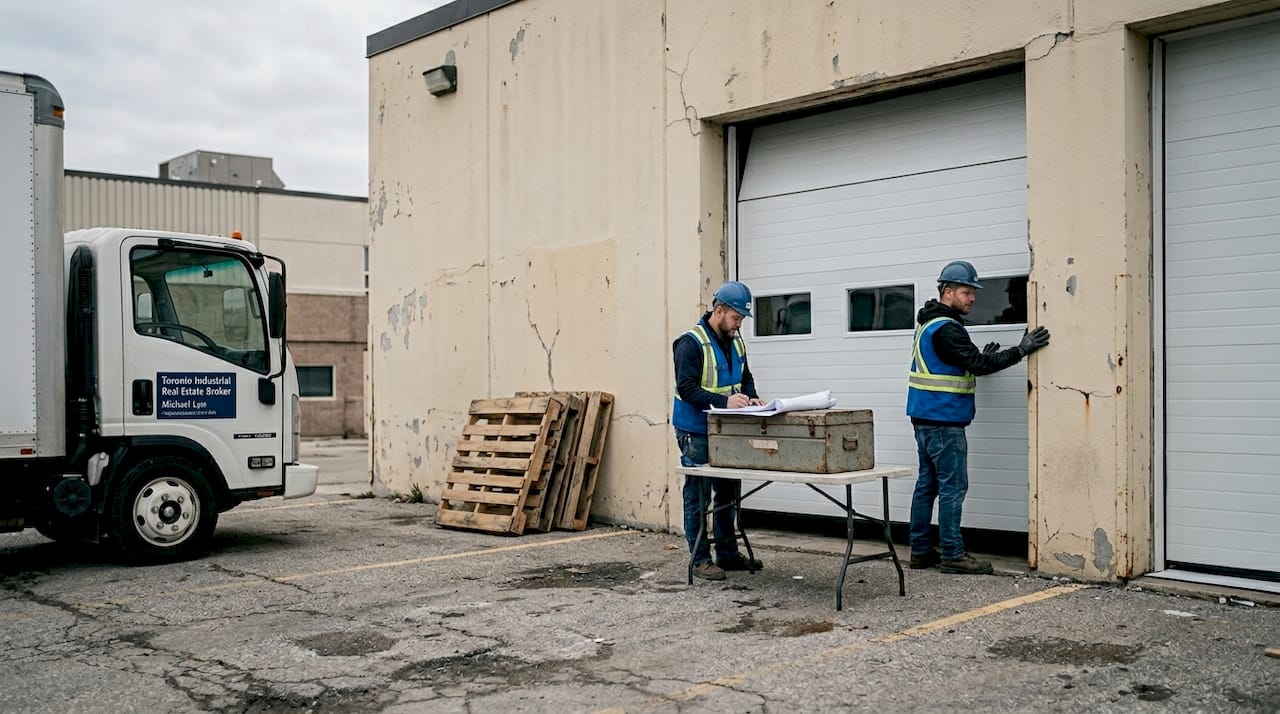
This approach works when rents soften because you are not relying on market rent growth to generate returns. Instead, you are creating your own value by improving the asset. The vacancy rise driven by e-commerce and reshoring means that well-upgraded properties targeting modern logistics tenants still lease quickly even when overall vacancy climbs.
Common upgrades in GTA industrial properties include retrofitting loading dock configurations, improving clear heights, adding energy-efficient lighting and HVAC systems, and converting underutilised office space to productive warehouse or production area.
Here is a practical value-add process:
- Assess the asset: Identify functional obsolescence, deferred maintenance, or layout inefficiencies relative to market demand.
- Plan the scope: Prioritise upgrades with the highest tenant appeal relative to cost. Dock doors and clear height improvements typically deliver the strongest rent lift.
- Execute efficiently: Delays between acquisition and re-leasing are costly. Budget for realistic timelines.
- Reposition the offering: Market the upgraded asset to the tenant categories most active in your submarket, typically logistics and last-mile distribution.
- Secure a long-term lease: The goal is not just a higher rent; it is a higher rent locked in for five or more years.
For more inspiration on what drives the strongest ROI, industrial property upgrade ideas covers the most impactful improvements in depth.
Pro Tip: Green upgrades are not just good for the environment. ESG-focused corporate tenants, particularly large logistics operators and retailers with sustainability mandates, actively seek energy-efficient facilities. Explore ESG value in GTA industrial real estate to understand why this is becoming a leasing differentiator.
Sale-leaseback: Unlocking capital while retaining control
A sale-leaseback is a different kind of strategy. Rather than buying an investment property, you sell a property you already own and then lease it back from the new owner under a structured agreement. The result: you unlock the capital tied up in the asset while continuing to operate your business from the same location.
This strategy suits owner-operators and businesses more than pure investors. It is particularly relevant in a market where GTA industrial sale prices average $275/sf, meaning a single well-located property can release millions in capital that would otherwise sit idle in bricks and concrete.
For a comprehensive overview of structuring these transactions, industrial sale-leaseback strategies outlines the key considerations.
Pros of a sale-leaseback:
- Immediate capital released for business growth or debt reduction
- Operational continuity with no need to relocate
- Cleaner balance sheet for businesses and institutional operators
- Stable occupancy for the investor/buyer
Cons to weigh carefully:
- You give up long-term asset appreciation
- Long-term lease obligations can constrain future flexibility
- If your business contracts, you are still committed to the lease payments
| Factor | Sale-leaseback | Traditional refinancing |
|---|---|---|
| Capital unlocked | High (full equity) | Moderate (loan-to-value limited) |
| Asset control | Lost (sold to investor) | Retained |
| Balance sheet impact | Asset removed, lease added | Liability added |
| Occupancy security | High (leaseback guaranteed) | High (owned) |
| Best for | Capital-hungry operators | Owners wanting asset retention |
Sale-leasebacks are not speculative tools. They work best when the motivation is genuine business capital need, not market timing.
Comparing strategies: Which approach suits your GTA goals?
Now that each strategy is clear, putting them side by side helps you decide. The right choice depends on your capital position, risk tolerance, and what you need the investment to do for you over the next five to ten years.
Despite the resilience of GTA industrial demand from structural drivers, rising vacancies and softer rents mean strategy selection has real consequences. Getting this wrong costs you both income and capital.
| Strategy | Cash flow | Control | Risk level | Best fit |
|---|---|---|---|---|
| Buy-and-hold | High and stable | Full | Low to moderate | Income investors, REITs |
| Value-add | Improving over time | Full during ownership | Moderate | Active investors with capital |
| Sale-leaseback | N/A (you become tenant) | Lost | Low for operator | Owner-operators needing capital |
Key decision factors:
- If stability is your priority, buy-and-hold with creditworthy tenants wins.
- If you have appetite for hands-on work and a dated asset, value-add can outperform.
- If your business needs capital and you own your facility, sale-leaseback deserves serious analysis.
For further guidance on aligning strategy to returns, maximum returns on GTA industrial property offers a detailed framework. And if you want context on how vacancy is actually playing out across asset types, examples of GTA industrial spaces is a useful reference.
Our take: Why cash flow trumps speculation in today's GTA market
We have seen both sides of the GTA industrial cycle. During the low-vacancy boom, almost any industrial acquisition looked brilliant. Rents surged, cap rates compressed, and values climbed. Investors who bought purely for appreciation were rewarded, and some concluded that industrial property was easy money.
That cycle has corrected. Cash flow is now king amid rising vacancies and real uncertainty in rent growth. The investors who are best positioned today are the ones who never stopped asking: what does this asset generate, not just what could it be worth?
Speculation is not dead in GTA industrial real estate, but it carries substantially more risk than it did two years ago. A long-term, triple-net lease with a logistics tenant in Mississauga or Brampton generates reliable income regardless of whether market rents soften another five percent. Speculation on appreciation does not. Understanding types of industrial properties in Toronto also helps investors select asset classes with the most durable income profiles. Our clear recommendation: anchor your strategy in cash flow first, and treat appreciation as a bonus rather than a plan.
Find your ideal industrial investment strategy in the GTA
Selecting the right strategy requires more than reading an article. It requires knowing current submarket vacancy, understanding what tenants in Vaughan, Pickering, or Burlington actually want, and having the transaction experience to negotiate from a position of strength.

At Michael Law Real Estate, we provide industrial property owners and investors across the GTA with data-backed advisory tailored to your capital goals and risk profile. Whether you are evaluating a buy-and-hold acquisition, planning a value-add repositioning, or exploring a sale-leaseback, we bring the market intelligence and deal experience to guide your decision. Browse current GTA industrial property listings or reach out directly to start building a strategy that fits your market position.
Frequently asked questions
What is the safest industrial investment strategy in the GTA currently?
Buy-and-hold with a focus on long-term stable leases is considered the safest approach in 2026, given ongoing market volatility and moderating rent growth across most GTA submarkets.
How does a sale-leaseback work for industrial properties?
A sale-leaseback lets you sell your property to an investor while securing a lease to continue operating from the same location, effectively unlocking capital as tenant without disrupting your business.
Is value-add investing risky in the current market?
Value-add strategies carry moderate risk, particularly with softening rents and 4.5% vacancy, but targeted renovations focused on logistics tenant needs can still generate strong re-leasing outcomes.
What factors should investors monitor in 2026?
Track vacancy rates, net asking rents, cap rate movement, and tenant industry activity, since cap rates rising with high prices means entry timing and asset selection are more consequential than ever.