

Online retail requires three times more warehouse space than traditional retail for the same sales volume, transforming industrial real estate from overlooked to premium investment territory. This shift has positioned the Greater Toronto Area as a hotspot for industrial investment sales, yet many investors remain unclear about what these transactions involve and how to navigate their unique complexities. This guide unpacks the GTA market context, investment sales mechanisms, tax considerations, and practical strategies to help you capitalise on opportunities while avoiding costly pitfalls in 2026.
Table of Contents
- Understanding Industrial Investment Sales In The GTA
- Market Trends Shaping Industrial Sales In 2026
- Navigating Legal And Tax Complexities In Industrial Investment Sales
- Practical Steps For Successful Industrial Investment Sales
- Explore Industrial Real Estate Opportunities With Michael Law
- Frequently Asked Questions
Key takeaways
| Point | Details |
|---|---|
| Industrial investment sales defined | Transactions involving warehouses, manufacturing facilities, and distribution centres used for production and logistics operations. |
| GTA strategic advantage | Nearly half of Canada's population lives within a day's drive, creating sustained demand regardless of economic cycles. |
| Tax clarity is critical | Unclear HST allocation in purchase agreements can trigger expensive disputes, especially for mixed-use properties. |
| Online retail drives demand | Ecommerce growth requires significantly more warehouse space, boosting property values and investment appeal. |
| Expert guidance matters | Legal, tax, and market expertise help investors navigate complexities and maximise returns on industrial properties. |
Understanding industrial investment sales in the GTA
Industrial investment sales refer to transactions where investors buy or sell properties designated for manufacturing, warehousing, distribution, and logistics operations. These properties serve as the backbone of supply chains, housing everything from light manufacturing facilities to massive distribution centres that fulfil online orders. Unlike residential or office investments, industrial properties generate value through operational efficiency, location proximity to markets, and tenant stability.
The GTA offers unique advantages that make it a magnet for industrial investment. Nearly half of Canada's population lives within a day's drive of the region, creating unparalleled access to consumers and businesses. This geographic positioning means companies serving Canadian customers need warehouse space in or near Toronto, sustaining demand even during economic downturns. The region's extensive transportation infrastructure, including highways, rail networks, and proximity to the US border, further enhances its appeal for logistics operations.
Several factors drive sustained demand in the GTA industrial market. Ecommerce growth continues to reshape retail, requiring more warehouse space to manage inventory and fulfil orders quickly. Supply chain resilience has become a priority for businesses, prompting them to establish distribution centres closer to end customers rather than relying on distant hubs. Population growth in the GTA itself creates ongoing demand for goods and services, which translates directly into industrial space needs.
Industrial properties commonly involved in investment sales include light manufacturing facilities that produce goods, distribution centres that serve as regional fulfilment hubs, bulk warehouses for long-term storage, and flex spaces that combine warehouse and office functions. Each property type serves different operational needs and attracts distinct tenant profiles, affecting investment risk and return potential.
Pro Tip: When evaluating industrial properties, prioritise location accessibility, tenant creditworthiness, and building specifications like ceiling height and loading dock capacity. These factors directly influence rental income stability and long-term property value appreciation.
Understanding these fundamentals helps investors recognise why commercial real estate in the GTA, particularly industrial assets, continues to attract capital despite broader market uncertainties. The combination of strategic location, sustained demand drivers, and diverse property types creates a robust investment landscape for those who approach it with proper knowledge and due diligence.
Market trends shaping industrial sales in 2026
The industrial real estate market in 2026 reflects profound shifts driven by changing consumer behaviour and business strategies. Online retail requires three times more warehouse space than traditional retail for equivalent sales volumes, fundamentally altering demand patterns. This disparity stems from the need to store diverse inventory, manage returns, and enable rapid fulfilment that online shoppers expect. As ecommerce penetration deepens across Canada, warehouse space becomes increasingly valuable.
| Retail Model | Warehouse Space per $1M Sales | Fulfilment Speed |
|---|---|---|
| Traditional retail | 1,000 sq ft | 3-7 days |
| Online retail | 3,000 sq ft | Same-day to 2 days |
The pandemic accelerated trends that were already emerging, transforming how businesses and investors view industrial properties. What was once considered mundane warehouse space became recognised as critical infrastructure supporting modern commerce. This perception shift drove institutional capital into the sector, compressing cap rates and increasing property valuations across the GTA. Investors who previously focused exclusively on office or retail assets began allocating significant portions of their portfolios to industrial properties.
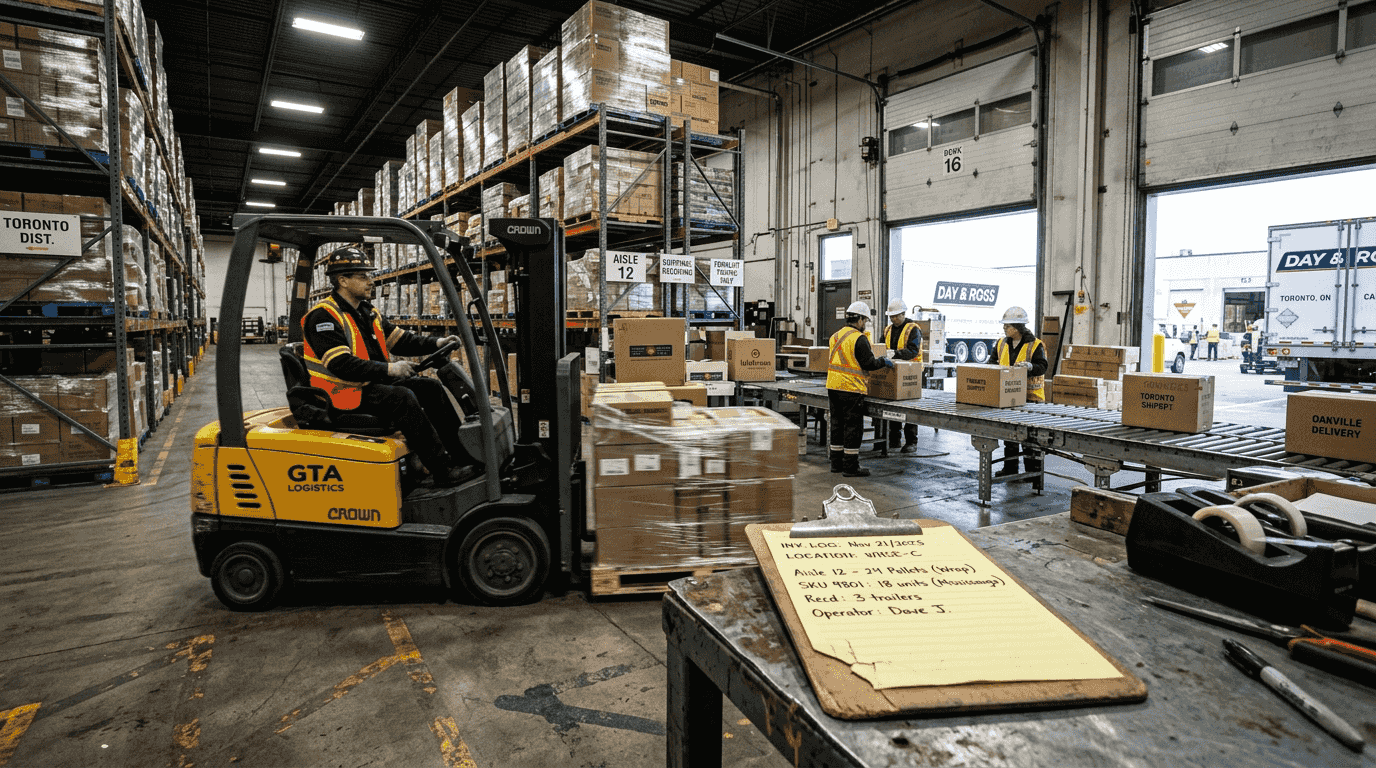
Supply chain resilience emerged as a strategic priority following global disruptions. Companies realised that relying on distant manufacturing and centralised distribution created vulnerabilities. This prompted a decentralisation trend, with businesses establishing regional distribution networks to reduce risk and improve service levels. The GTA benefits directly from this shift, as its population density and geographic position make it an essential node in any Canadian distribution strategy.
Expert insight reinforces these observations. As one industry analyst noted, the transformation of industrial real estate from overlooked to premium reflects fundamental changes in how goods move through the economy. The sector now attracts sophisticated investors who understand that warehouse space is not merely storage but a competitive advantage in delivering customer satisfaction.
These trends create sustained industrial investment demand in the GTA that transcends typical economic cycles. Even during periods of slower growth, companies need warehouse space to serve existing customers. The structural nature of ecommerce growth and supply chain evolution means industrial properties maintain relevance regardless of short-term market fluctuations, making them attractive for investors seeking stable, long-term returns.
Understanding industrial warehouse space demand dynamics helps investors time acquisitions and dispositions strategically. Properties in high-demand submarkets with strong transportation access command premium valuations, while emerging areas offer opportunities for value appreciation as infrastructure develops and tenant demand expands.
Navigating legal and tax complexities in industrial investment sales
Successful industrial investment sales require meticulous attention to legal and tax details that can significantly impact transaction outcomes. The Agreement of Purchase and Sale (APS) serves as the foundation for any property transaction, outlining terms, conditions, and obligations for both parties. In industrial sales, the APS must address unique considerations like environmental assessments, zoning compliance, tenant lease assignments, and critically, tax allocations.
Tax clarity in the APS is not merely administrative; it can determine whether a transaction proceeds smoothly or devolves into costly litigation. A recent Ontario case illustrates this risk vividly. Unclear HST allocation in an APS turned a substantial real estate transaction into a protracted tax dispute. The case involved a mixed-use property where the purchase agreement failed to clearly specify how the purchase price should be allocated between taxable and exempt components for HST purposes. This ambiguity created disagreement between buyer and seller about who bore the tax liability, ultimately requiring legal resolution.
Investors must ensure their APS includes specific clauses that eliminate ambiguity:
- Explicit HST allocation stating whether the purchase price includes or excludes HST and specifying the exact amount.
- Clear property use classification identifying whether the property is residential, commercial, mixed-use, or industrial for tax purposes.
- Price breakdown detailing how the total consideration is allocated among land, buildings, fixtures, and any other components.
- Responsibility assignment clarifying which party registers for HST, collects it, and remits it to tax authorities.
- Indemnification provisions protecting both parties if tax assessments arise from classification disputes.
| APS Clause Clarity | Potential Outcome | Risk Level |
|---|---|---|
| Clear, specific allocations | Smooth closing, no disputes | Low |
| Vague or ambiguous terms | Tax reassessments, litigation | High |
| Missing HST provisions | Transaction delays, liability uncertainty | Very High |
The complexity increases with mixed-use properties that combine industrial, office, and retail components. Each use category may have different HST treatment, requiring precise allocation in the purchase agreement. Failing to address these distinctions upfront creates exposure for both buyers and sellers, potentially resulting in unexpected tax liabilities that erode investment returns.
Pro Tip: Engage tax advisors and real estate lawyers specialising in legal aspects of industrial sales before signing an APS. Their expertise in drafting unambiguous clauses protects your interests and prevents disputes that can cost far more than professional fees.
The HST tax disputes case serves as a cautionary tale for industrial investors. Even sophisticated parties can find themselves in costly litigation when tax provisions lack precision. By prioritising clarity in purchase agreements and seeking expert guidance, investors protect themselves from avoidable complications that undermine transaction value and create ongoing legal exposure.
Practical steps for successful industrial investment sales
Executing successful industrial investment sales in the GTA requires systematic preparation and strategic decision making. Thorough due diligence forms the foundation of any sound investment, encompassing market research, property inspection, tenant analysis, and financial modelling. Understanding the specific GTA industrial submarket where a property is located, including vacancy rates, rental trends, and competing inventory, helps investors assess whether asking prices reflect true market value.
A structured approach to industrial investment sales includes several critical steps:
- Conduct comprehensive market analysis focusing on GTA industrial submarkets, identifying areas with strong demand fundamentals and limited new supply.
- Engage legal and tax professionals early to review purchase agreements, ensuring HST allocations and property classifications are explicit and accurate.
- Establish clear contract terms that address contingencies like environmental assessments, zoning confirmations, and tenant lease reviews.
- Evaluate tenant profiles including creditworthiness, lease terms, renewal probability, and operational fit with the property's specifications.
- Develop timing strategy based on market cycles, interest rate environments, and your investment horizon to optimise entry and exit points.
Monitoring evolving trends provides competitive advantage. Companies serving Canadian customers need warehouse space in or near Toronto, creating sustained demand that persists through economic fluctuations. However, specific demand drivers shift over time. Ecommerce continues growing but at varying rates across product categories. Supply chain strategies evolve as businesses balance cost efficiency with resilience. Staying informed about these dynamics helps investors anticipate which property types and locations will appreciate most.
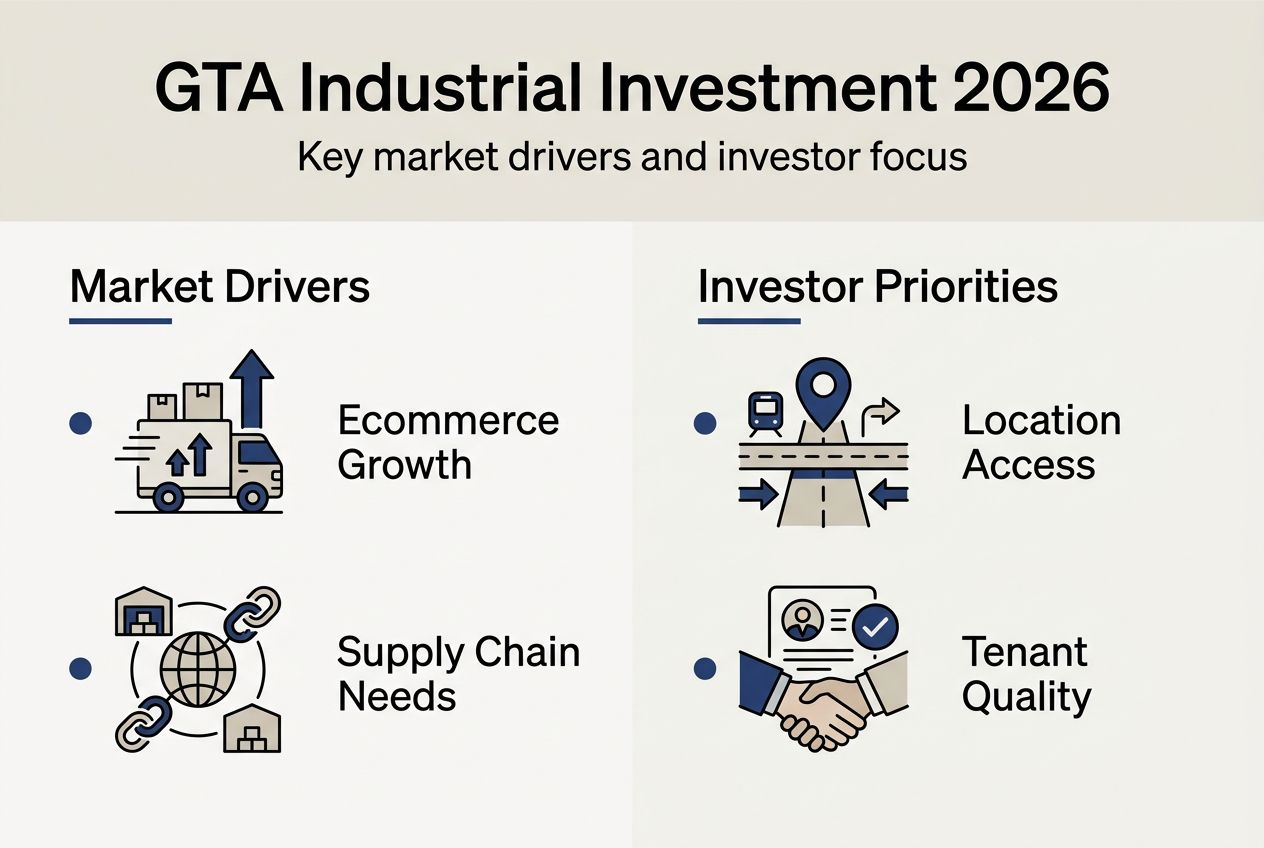
Pro Tip: Track ecommerce penetration rates, logistics company expansion plans, and infrastructure investments in the GTA. These indicators signal where industrial demand will strengthen, allowing you to position investments ahead of market recognition and price appreciation.
Working with experienced brokers who specialise in GTA industrial properties provides access to market intelligence that public data cannot capture. Seasoned professionals understand tenant requirements, landlord expectations, and transaction nuances that influence outcomes. They can identify off-market opportunities, negotiate favourable terms, and connect you with the legal and financial experts needed to execute complex transactions successfully.
Balancing risk and opportunity requires realistic assessment of your investment objectives, risk tolerance, and capital availability. Industrial properties offer stability through long-term leases and essential-use tenants, but they also require significant capital and specialised management. Understanding industrial property investment advice tailored to your situation helps you make informed decisions that align with your broader portfolio strategy.
Successful investors recognise that industrial investment sales are not passive endeavours. They demand active engagement with market conditions, property performance, and tenant relationships. By leveraging data, expert guidance, and systematic processes, you position yourself to capitalise on the GTA's robust industrial market while minimising the risks that catch unprepared investors off guard. Staying informed about industrial real estate market trends ensures your strategy evolves alongside the market, maintaining relevance and profitability over the long term.
Explore industrial real estate opportunities with Michael Law
Navigating the GTA industrial investment landscape becomes significantly easier with expert guidance tailored to your specific goals. Michael Law brings extensive experience in commercial and industrial real estate, helping investors identify opportunities, structure transactions, and maximise returns in the competitive Toronto market. Whether you are exploring your first industrial acquisition or expanding an existing portfolio, professional insight makes the difference between mediocre and exceptional outcomes.

Explore Michael Law's commercial real estate services to discover how specialised market knowledge translates into strategic advantages. Review current industrial property listings to identify assets that match your investment criteria, or discuss comprehensive real estate services that support every phase of your transaction. From initial market analysis through closing and beyond, having an experienced advisor ensures you approach industrial investment sales with confidence and clarity. Reach out today to discuss how professional guidance can help you capitalise on the GTA's dynamic industrial market.
Frequently asked questions
What exactly are industrial investment sales?
Industrial investment sales are transactions where investors purchase or sell properties used for manufacturing, warehousing, distribution, and logistics operations. These properties generate income through tenant leases and appreciate based on market demand, location quality, and operational efficiency. Unlike owner-occupied industrial buildings, investment sales focus on properties held primarily for income generation and capital appreciation.
How do industrial properties differ from other commercial real estate?
Industrial properties serve operational functions like production, storage, and distribution, requiring specific features like high ceilings, loading docks, and heavy floor loads. Commercial properties like offices and retail spaces focus on customer or employee experience with different design priorities. Mixed-use properties combine multiple functions, creating more complex management and tax considerations. Industrial tenants typically sign longer leases and require less frequent property modifications than office or retail tenants.
How long do industrial investment sales typically take?
Industrial transactions usually require 60 to 120 days from offer acceptance to closing, depending on due diligence complexity. Environmental assessments, tenant lease reviews, zoning confirmations, and financing arrangements extend timelines compared to simpler residential transactions. Complex properties with multiple tenants or environmental concerns may require additional time. Working with experienced professionals helps streamline the process and avoid unnecessary delays.
Why does HST allocation matter in industrial sales?
HST applies differently depending on property use and how the purchase price is allocated between land, buildings, and other components. Unclear allocations create disputes about who owes tax and how much, potentially triggering reassessments and penalties. Explicit HST clauses in the Agreement of Purchase and Sale protect both parties by establishing clear expectations and responsibilities. Professional tax advice ensures compliance and prevents costly surprises after closing.
What should first-time industrial investors prioritise?
Begin with comprehensive market research focused on GTA submarkets with strong demand fundamentals and limited new supply. Engage legal and tax professionals before making offers to ensure you understand all obligations and risks. Evaluate tenant quality carefully, as creditworthy tenants with long lease terms provide stable income and reduce vacancy risk. Start with properties that match your capital availability and management capabilities, avoiding overly complex assets until you gain experience. Working with a specialised broker provides access to market intelligence and transaction expertise that accelerates your learning curve and improves outcomes.