
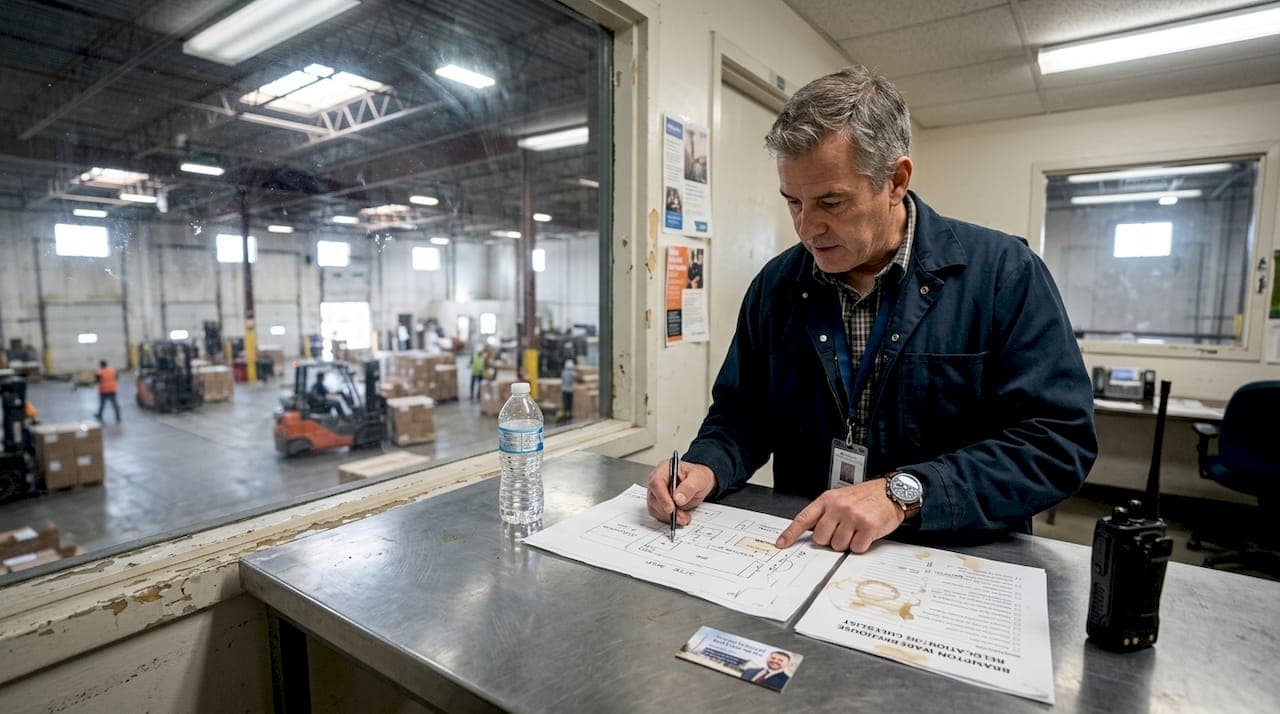
Relocating an industrial operation in the Greater Toronto Area is not a simple office move. You are shifting heavy machinery, reconfiguring utility connections, satisfying environmental regulations, and trying to keep production running the whole time. The stakes are real: unplanned downtime can cost manufacturers tens of thousands of dollars per day, and a poorly negotiated lease can lock your business into unfavourable terms for a decade. This guide walks you through a phased, strategic approach to GTA industrial relocations, from assembling the right team to executing the move with minimal disruption.
Table of Contents
- Assessing readiness and assembling your relocation team
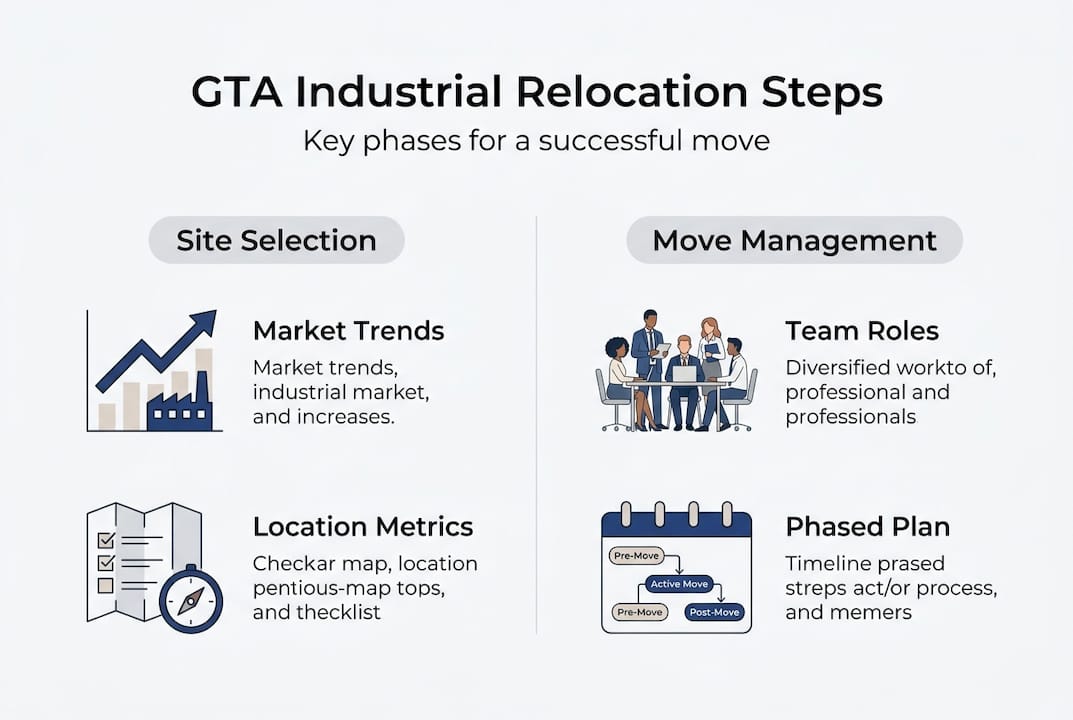
- Site selection and benchmarking: choosing the right GTA location
- Preparing sites: environmental, utility, and compliance essentials
- Lease negotiations and legal considerations for GTA relocations
- Phasing, move management, and ensuring minimal downtime
- Connect with GTA industrial relocation experts
- Frequently asked questions
Key Takeaways
| Point | Details |
|---|---|
| Phased relocations minimise downtime | Careful phasing ensures your operations continue and assets stay protected during industrial moves. |
| Site selection relies on benchmarks | Choosing your new location based on vacancy rates and property specs helps you secure optimal lease terms. |
| Compliance and legal review are critical | Regulatory and environmental assessments, plus lease review, safeguard your interests and prevent costly errors. |
| Engage industry professionals | Tenant rep brokers and relocation specialists streamline planning and negotiations for GTA industrial moves. |
Assessing readiness and assembling your relocation team
Before you book a single moving truck, you need an honest audit of where your operation stands. That means reviewing your current lease obligations, mapping your equipment inventory, identifying regulatory requirements, and setting a realistic timeline. Industrial relocations in the GTA involve a multi-phase process covering detailed planning, site preparation, expert movers, regulatory compliance, and minimal downtime. Skipping this audit is the single most common reason relocations go over budget.
Your relocation team should include at minimum:
- A tenant representation broker who knows GTA industrial submarkets and negotiates on your behalf
- A legal advisor experienced in commercial tenancies and Ontario real estate law
- A relocation specialist or project manager who coordinates logistics, movers, and timelines
- An environmental consultant if your operation involves hazardous materials or older sites
One question we hear often is whether to manage the relocation in-house or outsource it. Here is a quick comparison:
| Factor | In-house management | Outsourced management |
|---|---|---|
| Cost control | Higher risk of overruns | Predictable fees |
| Expertise | Relies on internal staff | Specialist knowledge |
| Speed | Slower coordination | Faster execution |
| Accountability | Shared internally | Single point of contact |
For most corporate tenants, outsourcing project management to specialists pays for itself in avoided delays. Your tenant representation guide is a strong starting point for understanding how a broker fits into this structure.
Pro Tip: Always engage an independent tenant rep broker. The landlord pays the commission, so your representation costs you nothing, and you gain a professional whose sole job is protecting your interests.
Site selection and benchmarking: choosing the right GTA location
After confirming your team's readiness, choosing the right site is the next critical step. The GTA industrial market is one of the most competitive in Canada, and location decisions made without data can haunt you for years.
Start with market benchmarks. Low vacancy submarkets command premium rents, while modern buildings with 30-plus-foot clear heights consistently outperform older stock in both value and rental terms. Submarkets like Mississauga Airport Corridor and Vaughan tend to carry tighter vacancy and higher asking rents, while East GTA nodes such as Pickering and Ajax can offer more competitive pricing for tenants with flexibility on location.
Key site selection criteria to evaluate:
- Clear ceiling height: 28 to 36 feet is the current standard for logistics and e-commerce users
- Truck court depth: Minimum 130 feet for 53-foot trailers
- Power supply: Confirm available amperage for your equipment load
- Zoning classification: Ensure the site permits your specific industrial use
- Proximity to labour pools and transportation corridors: Highways 400, 401, 410, and 427 are critical arteries
Use reports from Colliers, CBRE, JLL, and Cushman and Wakefield to benchmark asking rents and absorption rates by submarket. Our coverage of industrial real estate trends provides current data on where the GTA market is heading in 2026. Understanding the types of industrial properties available, from distribution centres to flex units, also helps you match the building to your operational model.
Statistic to note: Modern GTA industrial buildings with 30-plus-foot clear heights are commanding rental premiums over older stock, reflecting the market's shift toward logistics-optimised facilities.
Preparing sites: environmental, utility, and compliance essentials
Once a site is selected, attention shifts to getting it ready. This phase is where many tenants underestimate the complexity and timeline involved.
Here is a numbered checklist for site preparation:
- Commission a Phase I Environmental Site Assessment to identify contamination risks before signing any lease or purchase agreement
- Review utility capacity including electrical, gas, water, and telecommunications against your operational requirements
- Map existing utility lines on the property to avoid conflicts during fit-out or equipment installation
- Confirm OHSA compliance for all planned modifications, including racking systems, mezzanines, and loading dock equipment
- Engage specialist riggers for heavy machinery relocation, particularly for CNC equipment, presses, or large-format manufacturing tools
- Obtain all required building permits before commencing any tenant improvement work
Utility relocations must follow established guidelines, and environmental assessments are non-negotiable for contamination risk management. Heavy machinery moves require certified rigging specialists, and OHSA compliance must be maintained throughout the transition.
Common mistakes to avoid: Skipping the environmental assessment to save time is the most expensive shortcut in industrial real estate. Contamination discovered after lease execution can result in remediation costs that dwarf any savings on due diligence fees.
Reviewing tenant examples for site prep from comparable GTA operations gives you a realistic picture of what preparation timelines look like. For owner-users, site acquisition strategies add another layer of due diligence to consider.
Lease negotiations and legal considerations for GTA relocations
With site compliance addressed, it is time to focus on negotiating leases and fulfilling legal obligations. This is where the financial outcome of your relocation is largely determined.
Effective lease negotiation in the GTA industrial market relies on three pillars:
- Market benchmarking: Use current reports from Colliers, CBRE, JLL, and Cushman and Wakefield to establish what comparable tenants are paying per square foot in your target submarket
- Tenant representation: An independent broker negotiates free inducements, tenant improvement allowances, rent-free periods, and favourable renewal options on your behalf
- Legal review: Every lease must be reviewed under the Commercial Tenancies Act to ensure your rights are protected and obligations are clearly defined
Key lease clauses to scrutinise include assignment and subletting rights, demolition clauses, operating cost caps, and early termination provisions. In a market where vacancy rates fluctuate by submarket, understanding your leverage before entering negotiations is essential.
Pro Tip: Never sign a letter of intent without legal review. The LOI sets the commercial framework for the full lease, and concessions not captured at this stage are extremely difficult to recover later.
For a deeper look at how a legal advisor's role fits into your relocation strategy, our tenant representation resources cover the full negotiation process. When you are ready to move forward, expert lease advice from a specialist who knows the GTA market can make a measurable difference to your occupancy costs.
Phasing, move management, and ensuring minimal downtime
Once legal and lease issues are settled, executing the move and verifying a successful transition is paramount. A phased approach is the most reliable way to protect production continuity.
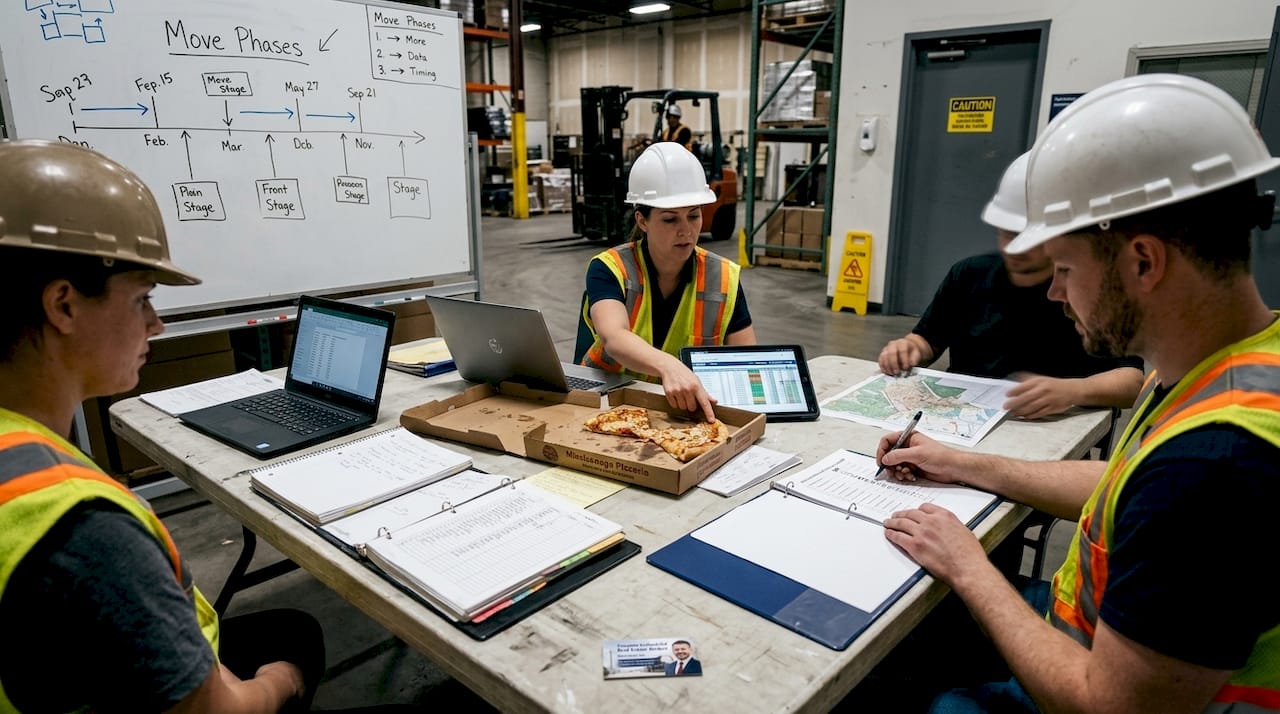
Here is a structured move management sequence:
- Finalise the move schedule at least 60 days before the target date, coordinating with your specialist movers and utility providers
- Phase non-critical equipment first to test the new facility's systems before committing production lines
- Run parallel operations where possible, maintaining output at the existing site while the new site comes online
- Coordinate utility cutover with your provider and the building's property manager to minimise service interruptions
- Conduct a full post-move audit within 48 hours to verify equipment function, utility connections, and safety compliance
- Decommission the old site according to your lease obligations, including restoring the premises to the required condition
A multi-phase relocation process covering planning, site preparation, expert movers, regulatory compliance, and minimal downtime is the industry standard for complex industrial moves.
Pro Tip: Schedule your primary equipment moves during low production periods, such as statutory holidays or scheduled maintenance shutdowns. This single decision can reduce downtime exposure by 40 to 60 percent.
Key considerations for move day execution:
- Confirm certified riggers are on-site for all heavy machinery lifts
- Have your environmental consultant available if any hazardous materials are being relocated
- Ensure your IT and telecommunications team is coordinating network cutover in parallel
- Keep your tenant rep broker informed throughout, as issues with the new landlord can arise during the transition period
Working with an industrial real estate expert who has managed GTA relocations before gives you access to a network of vetted specialists. Our industrial sales guide also covers how ownership structures can affect your relocation flexibility if you are considering an owner-user purchase rather than a lease.
Connect with GTA industrial relocation experts
Planning a GTA industrial relocation involves more moving parts than most corporate tenants anticipate. The difference between a smooth transition and a costly disruption often comes down to the quality of your advisory team.

Michael Law Real Estate provides end-to-end relocation strategy, site selection, and lease negotiation expertise across all major GTA industrial corridors, from Mississauga and Brampton to Vaughan, Markham, and the Durham Region. Whether you are searching for your next facility or preparing to negotiate a complex lease, our team brings institutional-grade market intelligence and a proven transaction track record to every mandate. Visit mlawrealestate.com to connect with our advisors, or browse available industrial properties across the GTA to start your site search today.
Frequently asked questions
What are the first steps for planning an industrial relocation in the GTA?
Begin with a detailed planning audit, assemble your expert team including a tenant rep broker and legal advisor, and map your operational and regulatory requirements before approaching the market.
How can I minimise production downtime during an industrial relocation?
A phased relocation approach, combined with specialist movers and moves scheduled during low production periods, is the most effective way to protect operational continuity.
What benchmarks should I use to select the best industrial site in the GTA?
Consult current market reports for vacancy rates, clear ceiling heights, and rental values by submarket. Modern GTA buildings with 30-plus-foot clear heights consistently command better lease terms and long-term value.
Do I need an environmental assessment for industrial relocations?
Yes. Environmental assessments are essential for identifying contamination risks and satisfying regulatory requirements before committing to any new industrial site.
How should GTA tenants approach lease negotiations during relocation?
Use benchmarking data from major market reports, engage an independent tenant rep broker, and ensure full legal review under the Commercial Tenancies Act before signing any agreement.