
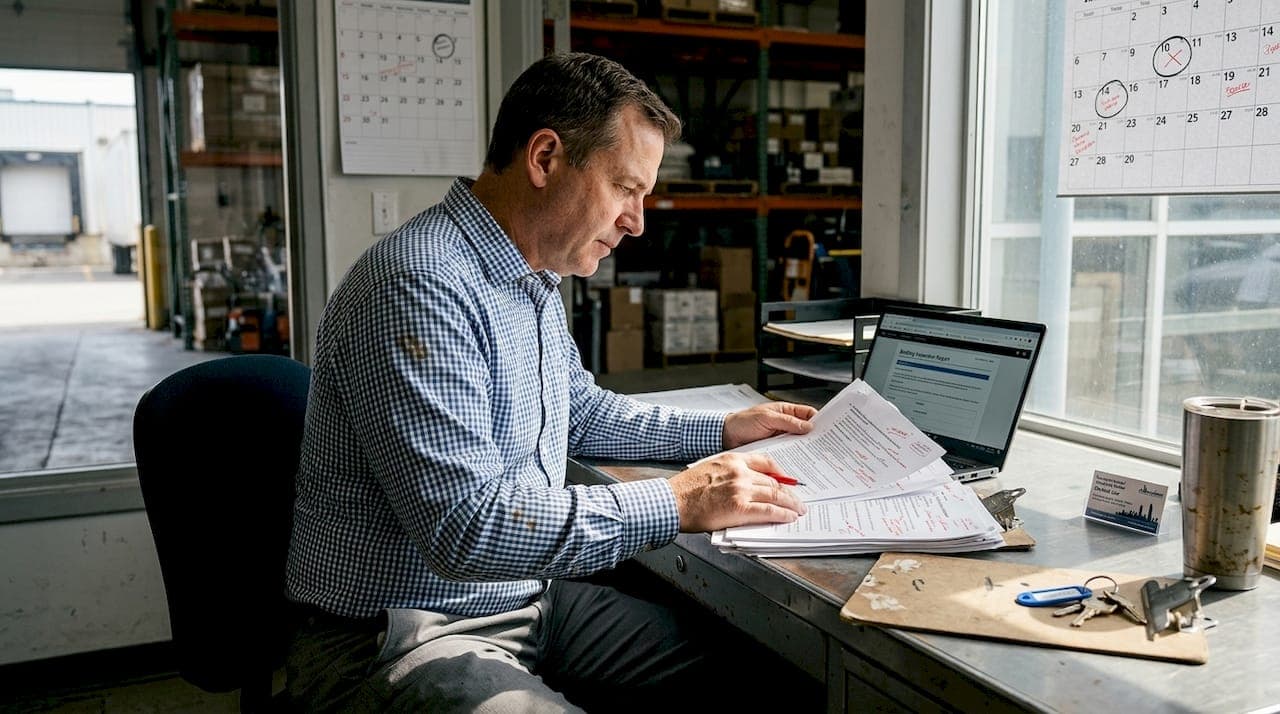
Acquiring industrial assets in the Greater Toronto Area demands more than capital and intent. Investors face layered challenges including environmental liabilities, zoning complexities, financing hurdles, and operational risks that can derail even well-funded transactions. A structured, informed approach transforms these obstacles into manageable steps, enabling you to secure high-performing assets that align with your investment goals. This guide walks you through preparation, execution, and verification phases, equipping you with actionable strategies to navigate industrial acquisitions confidently and maximise long-term returns.
Table of Contents
- Key takeaways
- Understanding requirements and prerequisites for industrial asset acquisition
- Step-by-step process for acquiring industrial assets
- Verifying and optimising your industrial asset investment
- Explore professional industrial real estate services
- Frequently asked questions
Key Takeaways
| Point | Details |
|---|---|
| Due diligence duration | Due diligence can extend to about 75 days when environmental assessments and site reviews are included, so plan the timeline accordingly. |
| Financing down payment | Financing typically requires a meaningful down payment and varies by loan type, so align your offer with lender expectations. |
| Structured acquisition process | Follow a preparation to verification sequence to improve outcomes and reduce risk across the deal lifecycle. |
| Start diligence early | Begin due diligence immediately after offer acceptance to preserve flexibility for negotiating repairs or price adjustments. |
Understanding requirements and prerequisites for industrial asset acquisition
Before submitting an offer, you must complete comprehensive groundwork that protects your investment and reveals hidden liabilities. Due diligence includes environmental site assessments, physical inspections, zoning review, and financial audits that collectively determine whether an asset meets your operational and financial criteria. Skipping or rushing these steps exposes you to contamination liabilities, structural defects, and regulatory non-compliance that can cost millions in remediation and lost opportunity.
Environmental site assessments form the cornerstone of industrial due diligence. Phase I Environmental Site Assessments cost between $2,000-$3,500 with 2-3 week timelines, providing historical research, site inspections, and preliminary contamination risk analysis. If Phase I identifies potential contamination, Phase II assessments involving soil and groundwater sampling become necessary, with costs ranging from $5,000 to $50,000 depending on site complexity and contamination severity. These assessments protect you from inheriting environmental liabilities that could trigger mandatory cleanup orders and regulatory penalties.
| Assessment type | Estimated cost | Typical duration | Purpose |
|---|---|---|---|
| Phase I ESA | $2,000-$3,500 | 2-3 weeks | Historical research and preliminary contamination risk |
| Phase II ESA | $5,000-$50,000 | 3-6 weeks | Soil and groundwater sampling for confirmed contamination |
| Structural inspection | $3,000-$8,000 | 1-2 weeks | Building integrity, roof condition, mechanical systems |
| Zoning review | $1,500-$3,000 | 1-2 weeks | Permitted uses, setback requirements, expansion potential |
| Title search | $500-$1,500 | 3-5 days | Ownership verification, liens, easements, encumbrances |
Zoning compliance and title searches prevent legal complications that could invalidate your intended use. Municipal zoning bylaws dictate permitted activities, loading dock requirements, parking ratios, and expansion possibilities. A commercial real estate overview helps you understand how local regulations impact operational flexibility. Title searches reveal ownership history, outstanding liens, easements, and encumbrances that could restrict property rights or require additional payments at closing. Discovering a utility easement bisecting your planned expansion area after closing creates costly redesign requirements and operational constraints.
Financial audits evaluate both property performance and seller viability. Review rent rolls, operating statements, tax assessments, and capital expenditure histories to verify income claims and identify deferred maintenance. Assess tenant creditworthiness, lease expiry schedules, and renewal probabilities to forecast cash flow stability. Understanding seller motivations and financial pressures helps you negotiate favourable terms and identify potential red flags indicating distressed assets or hidden problems.
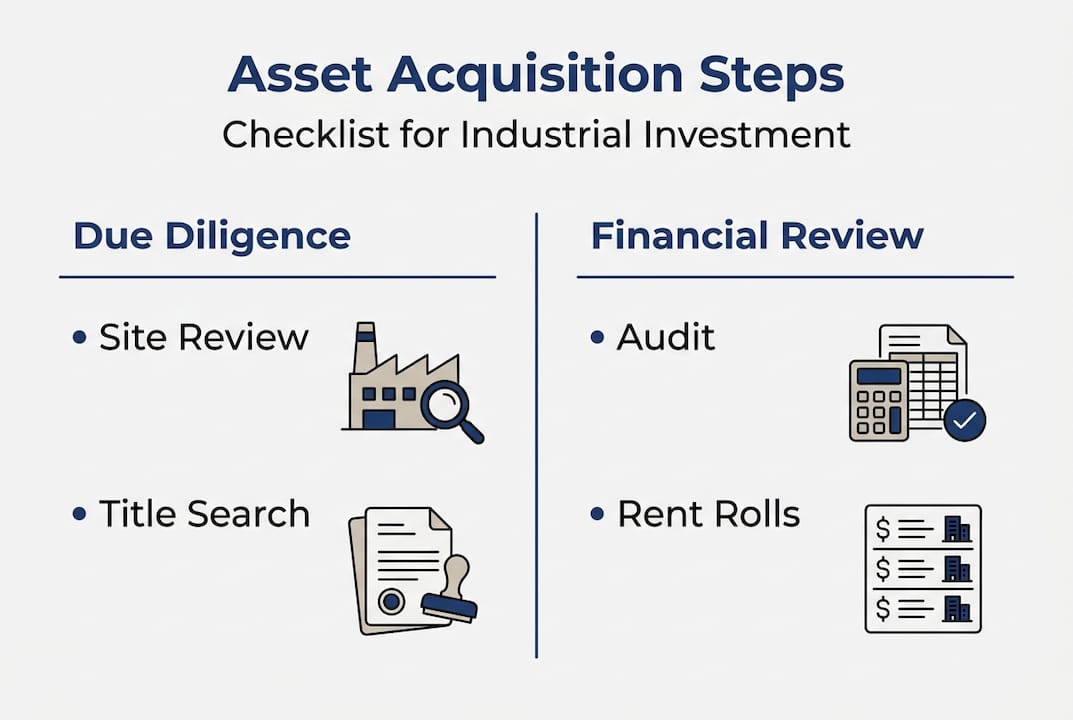
Pro Tip: Initiate due diligence processes immediately upon offer acceptance rather than waiting for formal due diligence periods to begin. Early starts on environmental assessments and structural inspections provide maximum flexibility to negotiate repairs, request price reductions, or walk away if major issues surface, avoiding rushed decisions as deadlines approach.
Step-by-step process for acquiring industrial assets
Executing an industrial acquisition requires methodical progression through offer submission, negotiation, financing, and closing phases. Each step builds on previous work and demands attention to contractual details, financing contingencies, and timeline coordination that keep transactions moving toward successful completion.
-
Submit a detailed offer outlining purchase price, deposit structure, conditions, and closing timeline. Include financing contingencies, due diligence periods, and specific conditions addressing environmental assessments, zoning confirmation, and tenant estoppel certificates. Clear, comprehensive offers reduce negotiation friction and demonstrate your seriousness to sellers.
-
Negotiate terms addressing price adjustments, repair credits, and assumption of existing leases or contracts. Use due diligence findings to justify price reductions or require seller-funded remediation of identified issues. Balance firmness on material concerns with flexibility on minor points to maintain productive negotiation dynamics.
-
Secure financing commitments from commercial lenders specialising in industrial properties. Commercial lenders require down payments of 20-35% with deposits of 5-10% on offer acceptance, reflecting higher risk profiles compared to residential lending. Prepare comprehensive financial documentation including personal net worth statements, business plans, property appraisals, and environmental reports to support your application.
-
Complete all due diligence investigations within agreed timelines, coordinating environmental assessments, structural inspections, zoning reviews, and financial audits simultaneously to avoid delays. Document findings systematically and communicate material concerns to sellers promptly, preserving your right to renegotiate or terminate if conditions warrant.
-
Finalise financing arrangements and review closing documents including purchase agreements, mortgage commitments, title insurance policies, and property transfer declarations. Engage legal counsel specialising in commercial real estate to review all documentation and identify potential issues before closing.
-
Close the transaction by executing final documents, transferring funds, and taking possession of the property. Coordinate with lawyers, lenders, and sellers to ensure smooth title transfer and immediate operational control.
Financing industrial acquisitions demands understanding available loan products and structuring optimal terms. Loan-to-value ratios can go up to 75-90% depending on financing programs, though higher ratios typically require stronger borrower profiles and property fundamentals. Standard commercial mortgages offer fixed or variable rates with amortisation periods of 20-25 years, providing predictable payments and long-term financing stability. Bridge loans deliver short-term capital for time-sensitive acquisitions or properties requiring repositioning before qualifying for conventional financing, albeit at higher interest rates reflecting increased lender risk.
Consider these financing strategies to secure favourable terms:
- Strengthen your application with substantial down payments exceeding minimum requirements, demonstrating financial capacity and reducing lender risk
- Present detailed business plans showing how the property supports your operational strategy and generates sufficient cash flow to service debt comfortably
- Leverage relationships with multiple lenders to compare terms and negotiate competitive rates, fees, and covenants
- Structure financing contingencies allowing adequate time for appraisals, environmental reviews, and underwriting processes without creating unrealistic closing pressures
- Explore industrial property offerings to understand market pricing and identify properties aligning with lender preferences for location, condition, and tenant quality
Pro Tip: Negotiate financing contingencies that protect your deposit if lenders decline your application or impose unacceptable terms, while also establishing clear timelines for removing contingencies once financing is secured. This balance protects your capital while assuring sellers of your commitment and ability to close, strengthening your competitive position in multiple-offer situations.
Verifying and optimising your industrial asset investment
Post-acquisition verification and optimisation determine whether your industrial asset delivers projected returns and operational performance. Due diligence periods typically last 30-75 days post-offer enabling thorough verification, providing critical windows to confirm property condition, tenant arrangements, and regulatory compliance before finalising purchases. This verification phase protects you from inheriting undisclosed problems and establishes baselines for ongoing asset management.
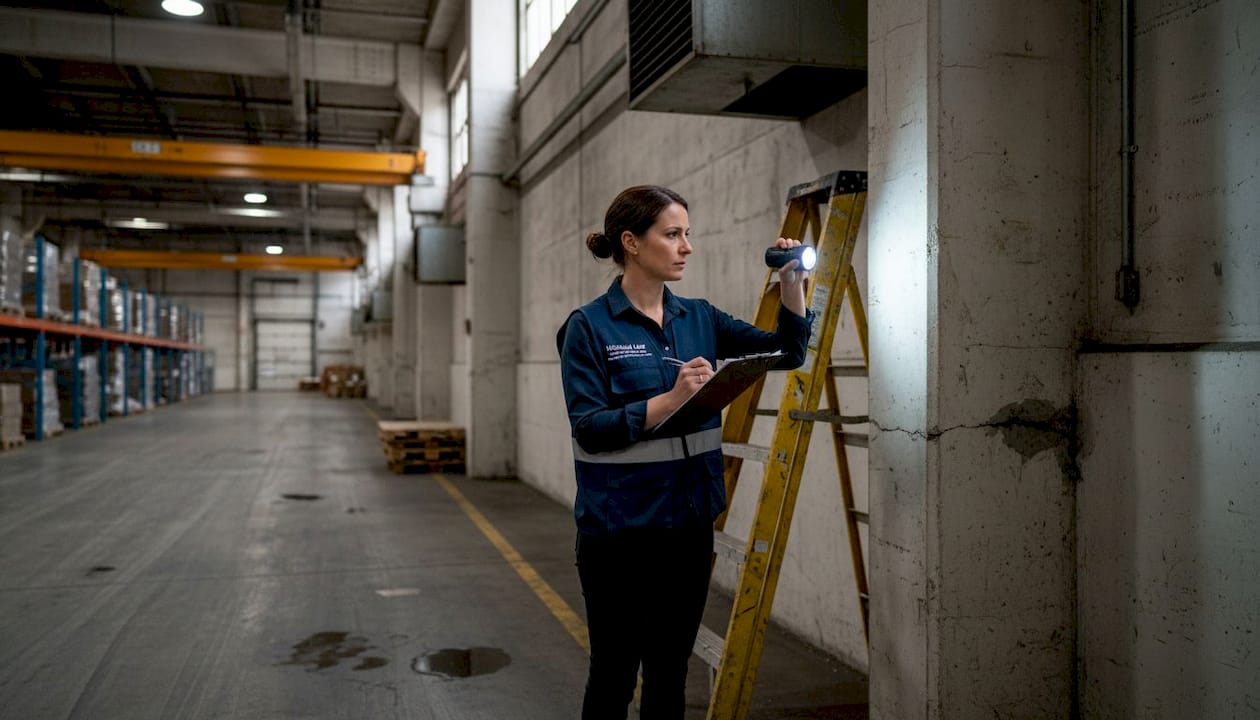
Conduct comprehensive final inspections covering structural integrity, mechanical systems, roof condition, and site infrastructure immediately before closing. Compare findings against seller representations and prior inspection reports to identify any deterioration or undisclosed changes occurring during the transaction period. Address material discrepancies through price adjustments, repair escrows, or closing delays until issues are resolved satisfactorily.
Verify tenant arrangements by reviewing executed leases, rent payment histories, and tenant estoppel certificates confirming lease terms, rental rates, and absence of landlord defaults. Discrepancies between landlord representations and tenant confirmations signal potential disputes or misrepresented income that could impact your investment returns. Confirm all tenants have valid occupancy permits and comply with lease requirements regarding insurance, maintenance, and permitted uses.
| Approach | Advantages | Disadvantages | Best for |
|---|---|---|---|
| Self-managed verification | Lower immediate costs, direct control, intimate property knowledge | Time-intensive, requires diverse expertise, potential oversight of technical issues | Experienced investors with in-house capabilities |
| Engaging specialists | Expert identification of issues, comprehensive reporting, risk mitigation | Higher upfront costs, coordination requirements, potential over-cautiousness | First-time industrial buyers, complex properties, risk-averse investors |
| Hybrid approach | Balanced cost and expertise, focused specialist engagement for critical areas | Requires judgment on specialist allocation, coordination complexity | Most industrial acquisitions balancing efficiency and thoroughness |
Implement these strategies to maximise your industrial asset value immediately post-acquisition:
- Optimise existing leases by reviewing rental rates against current market conditions and negotiating renewals or adjustments that align with prevailing terms while retaining quality tenants
- Develop proactive maintenance plans addressing deferred maintenance, scheduling preventive servicing, and budgeting capital improvements that preserve asset condition and tenant satisfaction
- Enhance property appeal through strategic improvements including upgraded lighting, improved signage, landscaping enhancements, and parking lot resurfacing that attract premium tenants
- Evaluate property evaluation strategies to benchmark your asset against comparable properties and identify competitive positioning opportunities
- Establish robust financial tracking systems monitoring income, expenses, occupancy rates, and capital expenditures that inform ongoing management decisions and support future refinancing or disposition
Regulatory compliance verification protects you from fines, operational disruptions, and liability exposure. Confirm all required permits, licences, and certificates of occupancy remain current and valid for intended uses. Review fire safety systems, accessibility compliance, environmental permits, and building code adherence to identify any gaps requiring immediate remediation. Non-compliance discovered after closing becomes your responsibility and can trigger enforcement actions, mandatory upgrades, and tenant disputes.
Pro Tip: Engage environmental consultants, structural engineers, and property managers early in your ownership to conduct baseline assessments and develop long-term asset management plans. Their expertise identifies optimisation opportunities and compliance risks that may not be apparent to general investors, enabling proactive strategies that enhance value and reduce operational surprises.
Explore professional industrial real estate services
Navigating industrial acquisitions successfully demands specialised knowledge of market dynamics, regulatory requirements, and transaction complexities that separate profitable investments from costly mistakes. Michael Law Commercial Real Estate delivers strategic guidance throughout acquisition processes, leveraging deep expertise in Greater Toronto Area industrial markets to help you identify opportunities, structure competitive offers, and execute transactions efficiently. Our team understands the nuances of environmental due diligence, zoning regulations, and financing options that impact industrial investments across Toronto, Mississauga, Brampton, Vaughan, and surrounding municipalities.
Professional commercial real estate services provide critical advantages including access to off-market properties, relationships with lenders and municipal officials, and transaction experience that anticipates problems before they derail deals. Our comprehensive approach covers site selection, due diligence coordination, financing support, and post-acquisition optimisation strategies tailored to your investment objectives. Whether you're acquiring your first industrial asset or expanding an existing portfolio, expert guidance accelerates timelines, reduces risks, and improves investment outcomes. Explore our industrial properties listings to discover current opportunities and connect with our team for personalised acquisition strategies that align with your goals.
Frequently asked questions
How much does due diligence typically cost when acquiring industrial properties?
Phase I ESA costs average $2,000-$3,500, while Phase II can range from $5,000 to $50,000 depending on contamination findings. Structural inspections add $3,000-$8,000, zoning reviews cost $1,500-$3,000, and title searches run $500-$1,500. Total due diligence budgets typically range from $10,000 to $70,000 depending on property complexity, size, and identified issues requiring deeper investigation.
What financing options are available for industrial asset acquisition?
Options include standard fixed mortgages, bridge loans, and secondary mortgages with down payments of 20-35%. Standard mortgages offer 20-25 year amortisation with competitive rates for qualified borrowers and stable properties. Bridge loans provide short-term capital at higher rates for time-sensitive acquisitions or properties requiring repositioning. Secondary mortgages fill financing gaps but carry higher interest rates reflecting subordinate lien positions and increased lender risk.
How long is the due diligence period for industrial properties?
The due diligence period typically ranges from 30 to 75 days post offer acceptance. Simpler properties with clean environmental histories and straightforward tenant arrangements may require only 30-45 days, while complex sites with contamination concerns, multiple tenants, or zoning complications often demand 60-75 days for thorough investigation. Negotiating adequate due diligence timelines prevents rushed decisions and allows comprehensive risk assessment before finalising purchases.
What should investors focus on during post-acquisition verification?
Prioritise structural integrity assessments confirming building condition matches representations and identifying any deterioration requiring immediate attention. Verify legal compliance including permits, occupancy certificates, fire safety systems, and accessibility standards to avoid enforcement actions. Review tenant agreements confirming lease terms, payment histories, and absence of disputes that could impact income stability. Develop comprehensive maintenance plans addressing deferred maintenance and scheduling preventive servicing that preserves asset value and tenant satisfaction over your ownership period.