
TL;DR:
- Most GTA businesses misunderstand industrial asset management as merely calling technicians when equipment breaks, leading to yearly losses. It is a systematic, lifecycle approach that aligns physical asset performance with business goals, involving cross-functional collaboration for optimizing reliability, safety, and costs. Implementing standards like ISO 55000 and utilizing EAM systems can improve decision-making, operational efficiency, and property value, but success ultimately depends on fostering an organizational culture that values strategic asset governance.
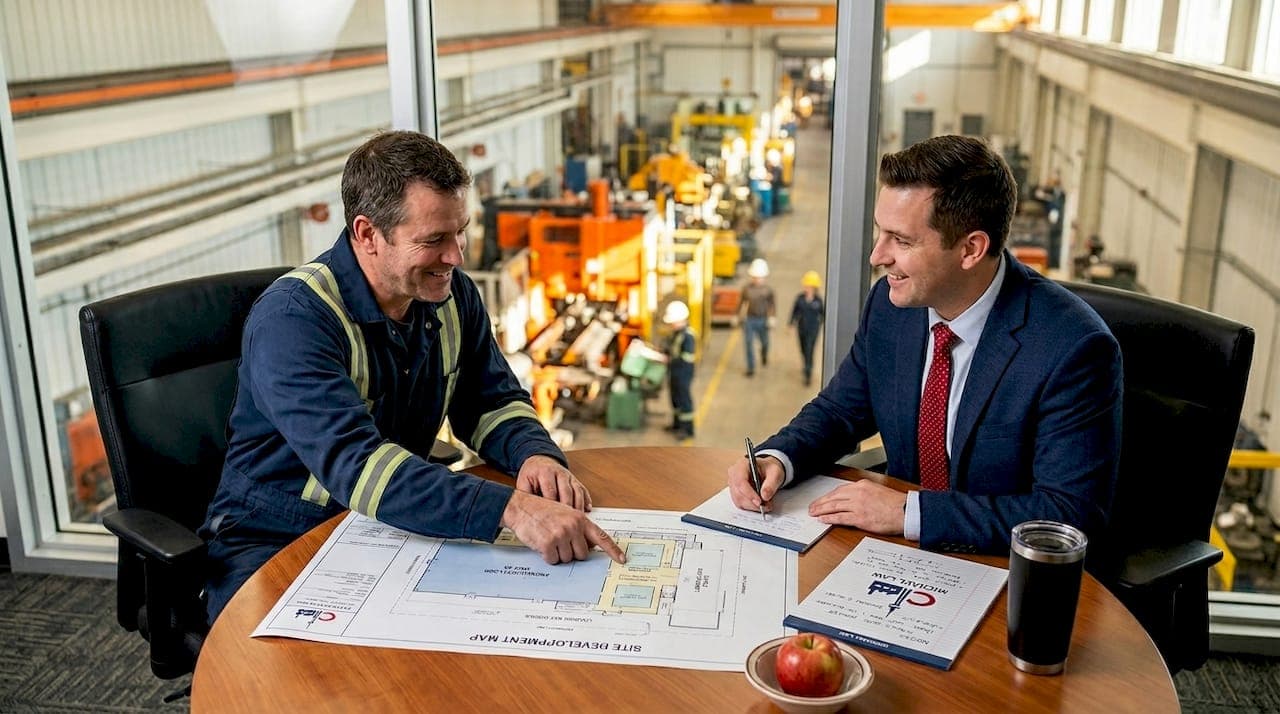
Most GTA businesses think industrial asset management means calling a technician when something breaks. That framing costs them money every year. What is industrial asset management, really? It is the coordinated process of realising value from physical assets across their entire lifecycle, from the day you acquire a piece of equipment to the day you retire it. For logistics operators in Brampton, manufacturers in Hamilton, or warehouse tenants in Mississauga, this distinction matters enormously. Done well, asset management is not a maintenance programme. It is a business strategy.
Table of Contents
- Defining industrial asset management: Scope and principles
- How industrial asset management delivers value
- Key components and systems: EAM, AMS, and ISO 55000/55001
- Asset management in action: Warehousing, logistics, and manufacturing
- Best practices for GTA industrial asset management
- A fresh perspective: Asset management isn't just software or checklists
- Get local guidance for industrial asset success
- Frequently asked questions
Key Takeaways
| Point | Details |
|---|---|
| Lifecycle approach | Industrial asset management covers assets from acquisition to disposal, not just repairs. |
| Drives business results | Effective management boosts uptime, lowers risks, and reduces costs for GTA industrial firms. |
| Standards matter | Adopting frameworks like ISO 55000 brings structure and aligns teams around asset value. |
| Logistics needs are unique | Warehousing and logistics demand real-time asset visibility, not just maintenance tracking. |
| Local expertise helps | GTA industrial businesses benefit from tailored strategies that reflect the regional market. |
Defining industrial asset management: Scope and principles
To understand why asset management matters, we need to demystify what it actually means for GTA businesses.
At its core, industrial asset management is a systematic process of developing, operating, maintaining, upgrading, and disposing of physical assets cost-effectively. That definition sounds tidy, but the scope is broader than most operators realise. It covers everything from a forklift in a Vaughan distribution centre to the HVAC system in a Markham manufacturing plant to the loading dock equipment at a Burlington fulfilment facility.
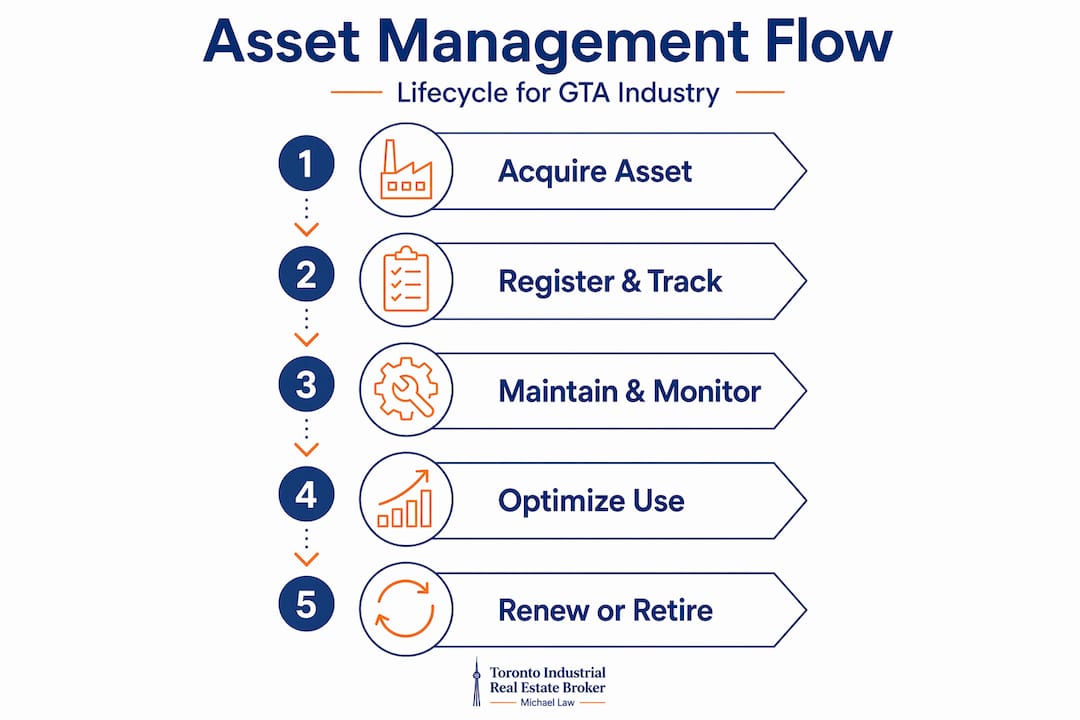
The asset lifecycle has five recognisable stages:
- Acquisition: Selecting and procuring the right assets for your operational goals
- Operation: Running assets at peak performance within defined parameters
- Maintenance: Scheduled and condition-based servicing to preserve reliability
- Improvement: Upgrades, retrofits, or reconfigurations that extend useful life or boost output
- Disposal: Retiring assets at the right time and recovering residual value where possible
What separates asset management from basic maintenance is the word systematic. Maintenance asks, "Is this machine working?" Asset management asks, "Is this machine delivering value relative to its cost, risk, and contribution to our business objectives?" Those are very different questions.
Industrial asset management covers end-to-end activities from tracking equipment condition through planning and executing maintenance in a cost-effective way. That end-to-end view pulls in people from operations, engineering, and finance. No single department owns it. That cross-functional nature is precisely why so many businesses underperform here.
"Industrial asset management is not a department. It is a discipline that cuts across every function that touches a physical asset."
The assets in scope typically include:
| Asset category | Examples in GTA industrial settings |
|---|---|
| Production machinery | CNC machines, conveyors, assembly lines |
| Material handling | Forklifts, pallet jacks, automated guided vehicles |
| Facility infrastructure | HVAC, electrical systems, loading docks, racking |
| Mobile fleets | Trucks, yard hostlers, delivery vehicles |
| Supporting resources | IT hardware tied to operations, sensors, meters |
For GTA industrial tenants specifically, understanding the basics of industrial assets in your market is the first step toward building a management approach that actually fits your operation.
How industrial asset management delivers value
Now that you know what industrial asset management is, let's look at the specific ways it can drive value for your operation.
The clearest value driver is uptime. Every hour a critical piece of equipment sits idle, you are paying for labour, lease space, and overhead while producing nothing. A distribution centre running preventive maintenance on its conveyor system, for example, schedules servicing during low-volume windows rather than reacting to a mid-shift breakdown. The cost difference between planned and unplanned downtime is rarely small. Unplanned failures typically cost three to five times more than scheduled maintenance when you account for emergency labour, expedited parts, and lost throughput.
Asset management connects asset performance decisions with business objectives: reliability, uptime, safety, and cost. That connection is what separates a formal asset management programme from ad hoc fixes. When your asset data feeds into capital planning, leadership can make informed decisions about whether to repair, replace, or reconfigure equipment before a crisis forces their hand.
Here is how the two approaches compare in practice:
| Factor | Ad hoc maintenance | Formal asset management |
|---|---|---|
| Trigger for action | Equipment failure | Condition data and schedule |
| Cost predictability | Low, reactive spending | Budgeted, planned expenditure |
| Safety risk | Higher, failures are sudden | Lower, risks identified early |
| Capital planning | Reactive replacement | Lifecycle-based renewal planning |
| Data availability | Minimal | Centralised, trackable |
| Regulatory compliance | Inconsistent | Documented and auditable |
Safety is another non-negotiable benefit. In manufacturing and logistics environments, equipment failures are not just costly. They are dangerous. A formal asset management programme creates documented inspection records, clear maintenance accountability, and condition-based alerts that reduce the likelihood of a failure reaching a worker.
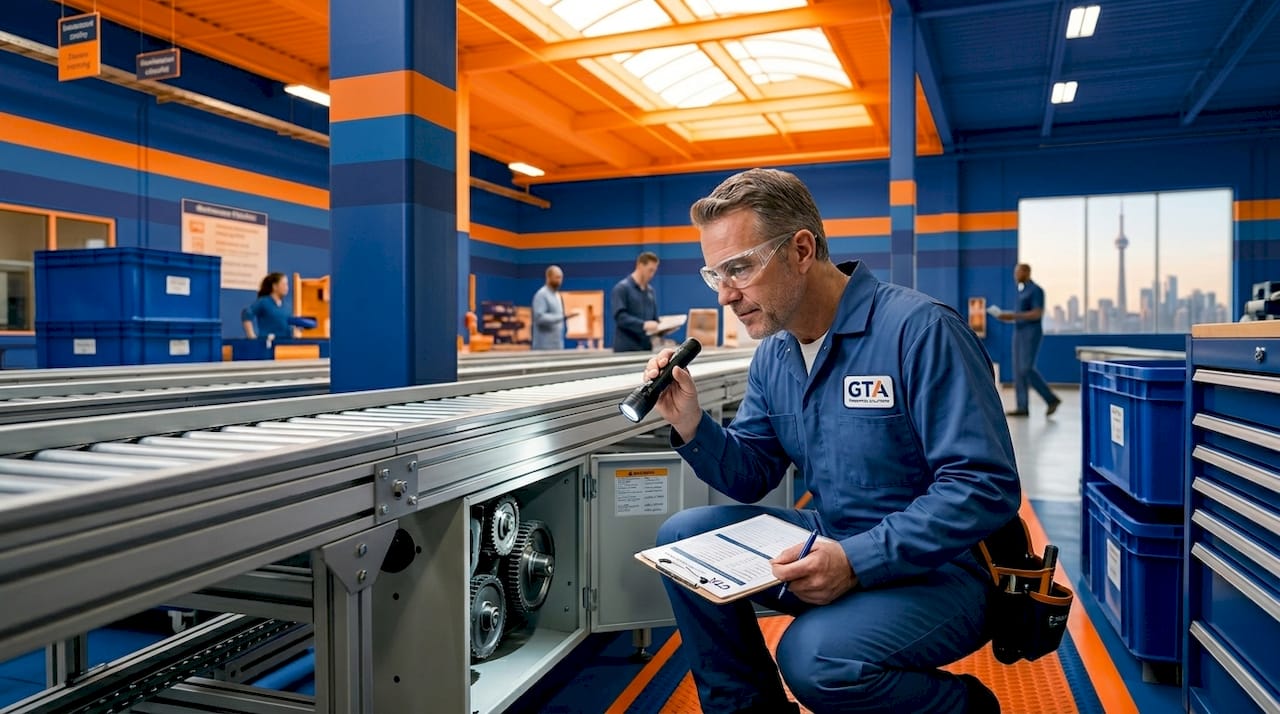
Pro Tip: If your operation does not have a documented asset register today, start there. A simple spreadsheet listing each asset, its age, condition rating, and last service date will immediately surface the gaps in your current approach and give you a baseline for improvement.
Industrial asset management is broader than maintenance: it is lifecycle governance linking asset data and work execution to reliability outcomes and cost and risk trade-offs. For GTA businesses, where industrial lease rates remain elevated and every square metre of operational space carries a real cost, that governance directly affects your returns on industrial property. Working with a real estate advisor who understands both the physical asset and the property context adds a layer of strategic value that most operators overlook.
Key components and systems: EAM, AMS, and ISO 55000/55001
Understanding the value delivered, let's explore the nuts and bolts of how industrial asset management is put into practice with industry standards and technology.
Two systems come up repeatedly in any serious conversation about industrial asset management: Enterprise Asset Management (EAM) software and Asset Management Systems (AMS). They are related but distinct.
EAM software is a digital platform that centralises asset data, work orders, maintenance schedules, parts inventory, and performance metrics. Think of it as the operating system for your physical assets. EAM platforms connect the shop floor to the boardroom by making asset performance visible and measurable. Popular platforms used by GTA industrial operators include IBM Maximo, SAP PM, and Infor EAM, though the right choice depends on the scale and complexity of your operation.
AMS refers to the broader organisational system, including policies, processes, roles, and objectives, that governs how you manage assets. Software is one component of an AMS, but the system also includes your maintenance philosophy, risk tolerance, performance targets, and improvement processes.
The international standard that defines best practice for both is ISO 55000/55001. ISO 55000 covers asset management overview, principles, and terminology, while ISO 55001 specifies the requirements for an Asset Management System. Together, they provide a globally recognised framework that GTA businesses can use to structure their approach.
Is ISO 55001 certification worth pursuing? For large manufacturers or logistics operators with complex, high-value asset portfolios, the answer is often yes. The certification process forces you to document your asset strategy, define performance indicators, and establish governance that survives staff turnover. For smaller operations, the framework is still useful even without formal certification.
The most common gap in implementation is not technology. It is change management. Many GTA businesses invest in EAM software and then fail to train their teams, integrate the system with finance, or connect asset data to operational decision-making. The software becomes a glorified work order tracker rather than a strategic tool.
- Define your asset management objectives before selecting software
- Involve operations, finance, and facility management from day one
- Map your existing asset data before migrating to a new system
- Set performance indicators that connect to business outcomes, not just maintenance metrics
- Plan for ongoing training, not just implementation
Pro Tip: If you are evaluating EAM software, ask vendors how their platform handles lifecycle cost analysis. If they cannot show you a clear path from maintenance data to capital renewal decisions, the system will not deliver its full value.
For businesses considering acquiring industrial assets in the GTA, understanding what EAM and AMS frameworks your target property already supports can significantly affect due diligence and post-acquisition planning.
Asset management in action: Warehousing, logistics, and manufacturing
With the theory and frameworks in place, let's turn to real-world scenarios GTA industrial tenants face.
The asset management priorities in a Mississauga e-commerce fulfilment centre look very different from those in an Oshawa auto parts manufacturer. Both need reliability and cost control. But the assets, failure modes, and operational rhythms are distinct.
Warehousing and logistics operations live and die by equipment availability. Warehouse-specific asset management focuses on equipment availability and controlled workflows, including real-time asset location and status tracking for fleets of handling tools. A forklift that cannot be located wastes time. A pallet jack with a failing battery causes a bottleneck at the receiving dock. Real-time asset tracking, often using RFID or barcode systems, gives warehouse managers visibility into where every piece of equipment is, what condition it is in, and when it last received service.
"In a high-throughput warehouse, an untracked asset is an invisible liability. You do not know its condition, its location, or its next service date until something goes wrong."
Manufacturing operations face a different challenge: process uptime and critical equipment reliability. A single failed CNC machine or press can halt an entire production line. Asset management in manufacturing leans heavily on planned preventive maintenance, condition monitoring (vibration analysis, thermal imaging), and formal renewal planning for high-value capital equipment.
Common challenges across both sectors in the GTA include:
- Asset tracking: Knowing what you own, where it is, and what condition it is in
- Preventive maintenance scheduling: Moving from reactive to planned servicing without disrupting operations
- Regulatory documentation: Maintaining records for equipment inspections, certifications, and compliance audits
- Mixed asset fleets: Managing assets of different ages, manufacturers, and maintenance requirements under one system
- Spare parts management: Balancing parts inventory costs against the risk of extended downtime
A practical example: a logistics operator in Ajax tracking its forklift fleet through a basic EAM system reduced unplanned downtime by scheduling battery replacements and tyre (yes, tyre) changes during overnight shifts rather than reacting to failures during peak receiving hours. The operational change was modest. The impact on throughput was not.
For GTA industrial tenants, the physical property itself plays a role in asset management effectiveness. Facilities with adequate ceiling height, proper electrical capacity, and well-designed dock configurations make it easier to operate and maintain equipment. Reviewing industrial property upgrades that support operational efficiency is part of a complete asset strategy.
Best practices for GTA industrial asset management
Finally, here is how you can apply these insights to your operation, starting today.
The gap between knowing what industrial asset management is and actually practising it is where most GTA businesses lose value. These steps close that gap.
-
Build a documented asset inventory. List every asset, its location, age, condition, and maintenance history. This is your foundation. Without it, every decision about maintenance, capital spending, or disposal is a guess.
-
Tie your asset strategy to business objectives. Your asset management goals should reflect what your business actually needs: uptime targets for critical equipment, cost-per-unit benchmarks, safety incident targets. Abstract goals produce abstract results.
-
Engage stakeholders across functions. Operations knows which assets are critical. Finance controls the capital budget. Facility management handles the building infrastructure. All three need to be part of your asset management conversations from the start.
-
Use ISO 55000 as a structural guide. You do not need formal certification to benefit from the framework. ISO 55001-style implementations shift organisations from ad hoc maintenance toward a documented, risk- and performance-driven Asset Management System. Even adopting the vocabulary and structure informally raises the quality of your programme.
-
Review your property strategy alongside your asset strategy. The building you occupy directly affects what assets you can run, how efficiently you can maintain them, and what your total occupancy cost looks like. GTA industrial tenants who align their lease terms and facility specifications with their asset lifecycle plans avoid costly mismatches between operational needs and physical space.
Pro Tip: Before your next lease renewal, map your critical asset renewal schedule against your lease expiry date. If a major capital investment in equipment is due in year three of a five-year lease, that timing should inform your renewal negotiation, not be discovered after you sign.
For GTA businesses ready to build a more deliberate approach, exploring industrial investment strategies and connecting with GTA advisory services that understand both the operational and real estate dimensions will accelerate your progress considerably.
A fresh perspective: Asset management isn't just software or checklists
Here is the uncomfortable truth that most asset management consultants will not tell you: the technology and the frameworks are the easy part.
EAM and industrial asset management are lifecycle governance approaches that link asset data and work execution to reliability outcomes, uptime, availability, and cost and risk trade-offs. That is a technically correct description. But in practice, the reason most asset management programmes underdeliver is not a software gap or a missing ISO clause. It is a culture gap.
In too many GTA industrial operations, asset management lives in the maintenance department. The operations team focuses on throughput. Finance focuses on budget lines. Leadership focuses on revenue. Nobody is connecting the dots between a failing compressor, a rising maintenance cost trend, and a capital renewal decision that should have been made 18 months ago. The data exists. The conversation never happens.
Real asset management value comes from breaking those silos. It requires someone in the organisation, whether that is a facilities manager, an operations director, or an outside advisor, to translate asset performance data into language that finance and leadership can act on. A maintenance report full of work order numbers does not move a capital budget conversation. A clear statement that "our three oldest conveyor systems are generating 60% of our unplanned downtime and will cost more to repair than replace within 24 months" does.
The GTA industrial market adds another layer of complexity. With lease rates still elevated across Mississauga, Brampton, and Vaughan, the cost of occupying space is a significant variable in total asset cost. Businesses that treat their real estate and their physical assets as separate decisions are leaving money on the table. The facility is part of the asset portfolio. Its configuration, condition, and lease terms affect what you can do with every other asset inside it.
Finding value in Toronto industrial properties increasingly means understanding how the building itself supports or constrains your asset management programme. That is a conversation worth having before you sign a lease, not after.
Get local guidance for industrial asset success
If you are putting these principles into practice, local expertise makes all the difference between a plan that looks good on paper and one that actually works in your operation.
At Michael Law Real Estate, we work with logistics operators, manufacturers, and warehouse tenants across the GTA to align their real estate decisions with their operational and asset management goals. Whether you are evaluating a new facility, renegotiating a lease, or looking for space that genuinely supports your equipment and workflow requirements, we bring the market intelligence and transactional experience to guide you. Browse available industrial properties across the GTA, including options in high-demand nodes like Caledon, and connect with our team through Lennard Commercial Realty to start a conversation grounded in real data and local knowledge.
Frequently asked questions
Does industrial asset management include digital assets or only equipment?
Industrial asset management focuses primarily on physical and supporting assets like machinery, infrastructure, and operational equipment. The coordinated process covers physical and supporting assets across their lifecycle, though some EAM systems also track digital assets directly tied to physical operations, such as control software and sensor networks.
What is the difference between EAM and CMMS?
EAM covers the full asset lifecycle including capital planning, risk management, and business strategy, while a Computerised Maintenance Management System (CMMS) focuses mainly on scheduling and tracking maintenance work orders. EAM connects asset work to business outcomes, while CMMS is primarily a maintenance execution tool.
Is ISO 55000 certification required for asset management in Canada?
ISO 55000 certification is not legally required in Canada, but following its principles helps GTA businesses formalise best practices and support risk management. ISO 55001 specifies requirements for an Asset Management System that organisations can adopt formally or use as an internal improvement framework.
What unique asset management challenges exist in logistics or warehousing?
Warehouse and logistics operations need real-time tracking of equipment location, condition, and readiness, which goes well beyond standard maintenance scheduling. Warehouse asset management introduces real-time location requirements for fleets of handling tools that traditional maintenance systems are not designed to address.