

TL;DR:
- Commercial brokers protect tenants from complex lease terms and hidden costs in GTA industrial markets.
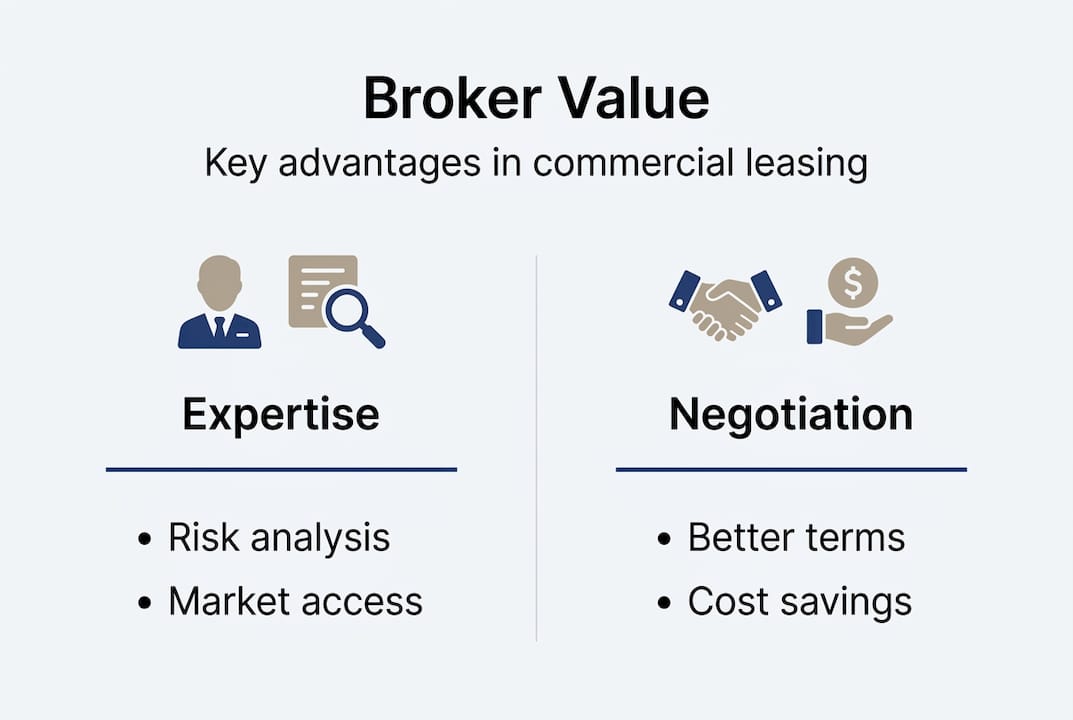
- Their expertise enables better negotiation of rent, operating costs, guarantees, and renewal rights.
- Using a broker can save tenants significant money and mitigate risks over the lease term.
Many GTA business owners assume that signing a commercial lease is straightforward. Read the document, negotiate the rent, shake hands. The reality is far more layered. Industrial leases in the Greater Toronto Area routinely run five to ten years, carry complex operating cost structures, and contain clauses that can shift thousands of dollars in annual liability onto an unprepared tenant. A skilled commercial broker does not simply find you a space. They protect your business from risks you may not even know exist, and they often pay for themselves many times over through smarter deal terms.
Table of Contents
- Why expertise matters in commercial leasing
- Core broker responsibilities during lease negotiations
- Brokers' use of market intelligence and data
- Mitigating risk and maximising value in lease agreements
- The real upside to professional leasing guidance
- Get tailored commercial leasing support in the GTA
- Frequently asked questions
Key Takeaways
| Point | Details |
|---|---|
| Broker expertise prevents losses | Professional brokers spot hidden costs and risky clauses that most tenants miss. |
| Market data drives negotiation | Advanced market intelligence helps secure the best lease terms for industrial properties in the GTA. |
| Brokers add long-term value | Representation brings not just better terms but smarter risk management and future flexibility. |
| Fees are typically landlord-paid | Tenants rarely pay broker fees, making expert help an easy win. |
Why expertise matters in commercial leasing
The GTA industrial market is one of the most competitive in Canada. Vacancy rates across key corridors like Mississauga, Brampton, and Vaughan have remained historically tight, putting landlords in a strong position at the negotiating table. For a business owner without deep market knowledge, that imbalance is a serious problem.
Unrepresented tenants frequently encounter challenges that go well beyond the base rent figure. Why broker expertise matters in this market comes down to three core areas: understanding operating cost structures, verifying zoning compliance, and catching lease language that shifts financial risk onto the tenant.
Here are the most common pain points for unrepresented tenants in GTA industrial leasing:
- Operating cost surprises: Triple-net leases pass property taxes, insurance, and maintenance costs to the tenant, and these figures are rarely disclosed upfront in full.
- Zoning mismatches: A space may look ideal but be zoned in a way that prohibits your specific use, creating compliance issues after you have already signed.
- Square footage discrepancies: Rentable versus usable square footage can differ significantly, meaning you may be paying for space you cannot actually use.
- Personal guarantee exposure: Many landlords request unlimited personal guarantees, which can put your personal assets at risk for the full lease term.
- Escalation clauses: Annual rent increases tied to CPI or fixed percentages can dramatically raise your occupancy cost over a long lease.
Pro Tip: Before you tour a single property, have a broker confirm the zoning permits your intended use. Zoning issues discovered after lease signing can be extremely costly to resolve.
The commercial lease negotiation process involves due diligence on operating costs, zoning, and square footage verification, alongside market comps research, financial analysis, and coordinating with lawyers. These are not tasks most business owners have time to master. Missing even one of these steps can cost a GTA tenant tens of thousands of dollars over the life of a lease.

Core broker responsibilities during lease negotiations
A skilled broker's involvement begins long before any offer is drafted. Their work follows a structured process designed to protect your interests at every stage.
- Property search and shortlisting: Brokers filter available listings against your operational requirements, budget, and location needs, saving you weeks of unproductive searching.
- Due diligence: They verify operating costs, confirm zoning compliance, and check that advertised square footage matches actual usable space.
- Market analysis: Using market reports and comps, brokers benchmark the landlord's asking rate against recent comparable transactions to determine whether the price is fair.
- Offer structuring: They draft and present offers with favourable terms, including free rent periods, tenant improvement allowances, and renewal options.
- Negotiation: Brokers push back on unfavourable clauses, cap personal guarantees, and negotiate flexibility provisions like sublease rights.
- Legal coordination: They work alongside your lawyer to ensure the final lease document reflects everything agreed upon during negotiations.
The broker advantages in the GTA are especially pronounced in the negotiation phase. Landlords and their agents negotiate leases every day. Most tenants do it once every five to ten years. That experience gap is significant.
| Stage | Without a broker | With a broker |
|---|---|---|
| Property search | Time-consuming, limited access | Efficient, full market access |
| Due diligence | Often skipped or incomplete | Systematic and thorough |
| Rate benchmarking | Based on asking price only | Validated against market comps |
| Guarantee negotiation | Typically unlimited | Capped or time-limited |
| Legal review | Reactive, post-signing issues | Proactive, pre-signing protection |
Pro Tip: Ask your broker to provide a written comparison of at least three comparable lease transactions in the same submarket before you make an offer. This gives you real leverage at the table.
As market comps research and financial analysis show, coordinating with lawyers and using structured methodologies is what separates a good lease outcome from a costly one.
Brokers' use of market intelligence and data
One of the most valuable things a broker brings to your lease negotiation is access to data you simply cannot get on your own. Publicly available listings show asking rates. Brokers know what deals actually closed at, and on what terms.
In the GTA industrial market, that distinction matters enormously. GTA market intelligence strategies allow brokers to identify where landlords are under pressure to fill space, which submarkets are softening, and where you have genuine negotiating leverage.
Here is a general illustration of how lease rates and conditions can vary across GTA industrial zones:
| Submarket | Typical net rent range (per sq ft) | Tenant improvement allowance | Landlord flexibility |
|---|---|---|---|
| Mississauga Airport | $18 to $22 | Moderate | Low (high demand) |
| Brampton North | $16 to $20 | Moderate to high | Moderate |
| Vaughan / Woodbridge | $17 to $21 | Low to moderate | Low |
| Durham Region (Ajax, Whitby) | $14 to $18 | High | Higher |
| Hamilton / Burlington | $13 to $17 | High | Higher |
These figures shift with market conditions, which is precisely why real-time broker intelligence matters. Advisory services and value are most evident when a broker uses current data to show a landlord that their asking rate is above market, creating room to negotiate.
Brokers also track broader trends that affect your negotiating position:
- New supply coming to market in specific corridors
- Changes in absorption rates that signal shifting demand
- Landlord portfolio pressures that create motivation to deal
- Sublease availability that provides alternative options and pricing pressure
"In a market where landlords have historically held the upper hand, data is the great equaliser. A broker armed with real transaction data can shift the conversation from 'take it or leave it' to a genuine negotiation."
As market comps research confirms, financial analysis and coordinating with legal counsel are the methodologies that convert raw data into tangible lease savings.
Mitigating risk and maximising value in lease agreements
Once market intelligence is applied, brokers turn their attention to preventing risk and maximising your upside. This is where many unrepresented tenants leave the most money on the table.
The most overlooked risks in GTA industrial leases include:
- Operating expense (OPEX) ambiguity: Vague language around what is included in operating costs can expose you to unexpected charges for capital repairs or management fees.
- Escalation clauses: Fixed annual increases of three to four per cent compound significantly over a ten-year lease. A broker negotiates caps or ties increases to CPI with a ceiling.
- Unlimited personal guarantees: Without broker intervention, many tenants sign guarantees covering the full lease term with no limit on personal liability.
- Lack of renewal rights: Without a negotiated renewal option, you may face displacement or a sharp rent increase at the end of your term.
- No sublease or assignment rights: If your business changes, you need the flexibility to sublease or assign the space without landlord approval delays.
Understanding net lease and cost structures is essential before signing any industrial lease in the GTA. Brokers use this knowledge to flag risky language before it becomes your problem.
Personal guarantees can be capped or limited to early years through skilled negotiation, which is one of the most financially significant protections a broker can secure for you. Similarly, subleasing clauses explained in clear terms give tenants the flexibility to adapt as business needs evolve.
Pro Tip: Always negotiate a cap on your personal guarantee. Limiting it to the first two years of the lease rather than the full term can protect hundreds of thousands of dollars in personal liability.
The real upside to professional leasing guidance
Here is something most articles will not tell you: the biggest mistake GTA tenants make is not signing a bad clause. It is focusing entirely on the monthly rent number while ignoring everything else.
We have seen businesses negotiate a modest reduction in base rent, only to sign leases with uncapped OPEX, unlimited guarantees, and no renewal rights. Over five years, those overlooked terms cost them far more than the rent savings delivered. That is a false economy, and it is surprisingly common.
The myth that you save money by avoiding a broker is exactly that: a myth. In commercial leasing, the landlord's agent is paid by the landlord regardless. There is no financial penalty for having your own representation. What you lose without it is the expertise to identify value others miss.
A skilled broker often uncovers renewal options, upgrade provisions, or subleasing flexibility that fundamentally changes the long-term value of a lease. These are not small details. Over a ten-year term, they can represent hundreds of thousands of dollars in real business value. Generalist approaches and DIY leasing simply do not surface these opportunities.
Get tailored commercial leasing support in the GTA
Navigating GTA industrial leasing without expert guidance is a risk no business owner needs to take. The complexity of operating cost structures, guarantee exposure, and market timing makes professional representation not just useful but genuinely valuable.

Michael Law | Commercial Real Estate provides dedicated tenant representation across all major GTA industrial corridors, from Mississauga and Brampton to Durham Region and Hamilton. Whether you are entering a new lease, approaching renewal, or exploring your options, the team brings institutional-grade market data and hands-on negotiation expertise to every transaction. Browse featured GTA properties or reach out for a no-obligation consultation to discuss your specific leasing needs.
Frequently asked questions
What does a commercial broker do that I can't do myself?
A commercial broker brings market expertise, access to real transaction data, and negotiation skills that prevent costly lease mistakes. Due diligence on operating costs, zoning, and square footage verification alone can save tenants significant money.
How are broker fees paid in commercial leasing?
In most GTA commercial leasing transactions, the landlord pays the broker's commission, not the tenant. This means you receive expert representation at no direct cost to your business.
What risks can a broker help me avoid?
Brokers identify and address risky lease language before you sign. Personal guarantees can be capped or limited to early lease years, and hidden operating costs can be clarified and controlled through careful negotiation.
Is working with a broker worth it for smaller industrial tenants?
Absolutely. Even a modest industrial lease in the GTA carries significant financial exposure over its full term. Broker representation ensures smaller tenants receive the same protections and market intelligence as large corporate users.