
TL;DR:
- Effective tenant improvements focus on operational needs, compliance, and measurable ROI.
- Lighting retrofits and layout optimizations deliver significant safety and productivity benefits.
- Proper planning and expert guidance ensure improvements maximize value and long-term operational flexibility.
Customising an industrial space in the Greater Toronto Area involves more than picking a paint colour or adding shelving. GTA tenants face a layered set of decisions balancing safety regulations, operational efficiency, capital costs, and what their lease actually allows. Get it wrong and you're stuck with improvements that don't move the needle. Get it right and you unlock genuine competitive advantage. This article walks you through proven tenant improvement (TI) examples with real GTA numbers, case studies, and a clear framework to help you choose upgrades that deliver measurable results.
Table of Contents
- How to choose the right tenant improvements
- Lighting retrofits: Dramatic safety and productivity gains
- Warehouse layout optimisation: Smart racking and workflow solutions
- Power upgrades and MEP customisation: Enabling advanced operations
- Cost breakdown and decision comparison: Warehouse vs. light manufacturing improvements
- Why the right TI strategy trumps the flashy upgrade
- Ready for better tenant improvements? Connect with an expert
- Frequently asked questions
Key Takeaways
| Point | Details |
|---|---|
| Define your TI goals | Focus on operational needs and compliance when planning improvements. |
| Lighting and layout matter | Upgrading lighting and optimizing workflow offer immediate productivity and safety gains. |
| Budget for MEP complexity | Major mechanical and electrical upgrades drive TI costs in industrial properties. |
| Compare before investing | Use real GTA benchmarks to choose tenant improvements that best fit your business. |
How to choose the right tenant improvements
Not every upgrade is worth the investment. The difference between a TI that pays for itself and one that drains your budget often comes down to how well you evaluate it before signing anything.
Start with five core criteria when assessing any potential improvement:
- Operational need: Does this upgrade directly solve a workflow, safety, or compliance problem?
- Compliance impact: Will it bring your facility up to Ontario building code or industry-specific standards?
- Total cost vs. return: Factor in construction, permits, downtime, and ongoing savings.
- Timeline: Will the work disrupt operations? Can it be phased?
- Landlord incentives: Is a tenant improvement allowance (TIA) available, and what does the lease say about who owns the improvements?
There's a meaningful difference between capital-intensive upgrades like HVAC overhauls or electrical service upgrades and quick-win improvements like adding dock levellers or repainting dock bay markings. Both have their place, but mixing them up in your planning creates budget chaos.
The TI process requires you to negotiate TIA terms in the lease, clarify whether the landlord will build out the space or you fund it directly, and then develop a detailed scope with architects and engineers to cover MEP (mechanical, electrical, and plumbing) requirements and compliance. Get multiple bids and build in a 10% contingency. Industrial facilities often need hygienic surfaces or process piping, which adds complexity most office-focused TI guides ignore.
For a step-by-step approach specific to Ontario facilities, the GTA tenant fit-out planning guide covers this process in detail.
Pro Tip: Bring architects and engineers in at the start, not after you've budgeted. MEP surprises are the number one reason GTA industrial TI projects run over cost.
Lighting retrofits: Dramatic safety and productivity gains
Lighting is one of the fastest ROI improvements available to GTA industrial tenants. It's often underestimated because it sounds mundane, but the operational and financial impact is significant.
Here's what a real GTA warehouse lighting retrofit looks like in practice. A 216,377 sq ft facility replaced its fluorescent highbay fixtures with LED units, pushing illuminance from 8–10 foot-candles to over 100 foot-candles throughout the space. The result was safer manufacturing conditions, fewer errors on the floor, and a $53,420 rebate through an IESO energy efficiency programme.
| Metric | Before retrofit | After retrofit |
|---|---|---|
| Illuminance level | 8–10 foot-candles | 100+ foot-candles |
| Fixture type | Fluorescent highbay | LED highbay |
| Energy cost trend | Baseline | Significantly reduced |
| IESO rebate available | $0 | $53,420 |
Beyond the rebate, facilities report fewer workplace accidents, improved order-picking accuracy, and better employee morale. Workers in well-lit environments make fewer mistakes. That translates directly to reduced waste and lower insurance claims over time.
The benefits of lighting retrofits include:
- Compliance with Ontario workplace illuminance standards
- Energy savings of 50–70% compared to older fluorescent systems
- Improved CCTV and security camera image quality
- Reduced maintenance costs from longer-lasting LED fixtures
For more on how upgrades like this affect industrial property value, it's worth understanding the long-term asset impact alongside the operational gains.
Pro Tip: Check both IESO and your local utility's rebate programmes before starting. Rebates can offset a significant portion of upfront costs, sometimes enough to make the decision straightforward.
Warehouse layout optimisation: Smart racking and workflow solutions
Once your lighting is sorted, the next level of improvement is how people, products, and equipment move through your space. Poor layout quietly kills productivity every single day.
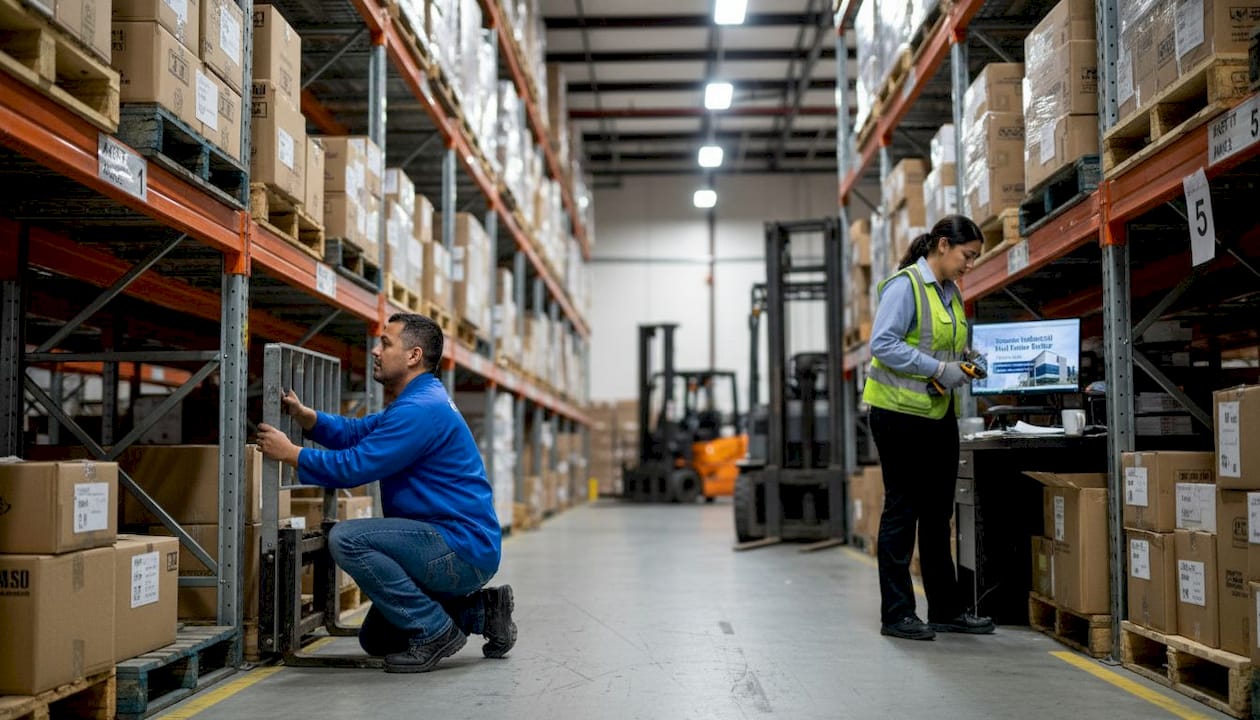
A Brampton food packaging facility operating in approximately 38,000 sq ft illustrates this well. The warehouse layout optimisation process analysed shipping volumes and product flow, then implemented a tailored racking and aisle configuration that cut time losses and improved order fulfilment speed.
Here's a straightforward process for assessing and redesigning your own layout:
- Map your current workflow from receiving to shipping.
- Identify the three biggest time-loss points in daily operations.
- Analyse SKU velocity to determine which products need prime pick locations.
- Engage a racking vendor for a turnkey design that accounts for column spacing and floor load ratings.
- Build in clear emergency egress paths from the start.
- Pilot changes in one zone before committing to a full reconfiguration.
| Layout metric | Traditional layout | Optimised layout |
|---|---|---|
| Average travel time per pick | High | Reduced by up to 30% |
| Order processing speed | Baseline | Measurably faster |
| Floor space utilisation | 55–65% | 80–90% |
| Accident risk zones | Multiple | Minimised |
Involving racking vendors early gives you turnkey results and avoids costly retrofits after installation. See how GTA industrial spaces handle varying configurations across different submarkets.
Power upgrades and MEP customisation: Enabling advanced operations
For any tenant moving beyond basic warehousing into light manufacturing, food processing, or e-commerce fulfilment with automated equipment, MEP upgrades are not optional. They're the foundation.
Common MEP tenant improvements in GTA facilities include:
- Electrical service upgrades: Increasing amperage to support CNC equipment, robotics, or EV charging stations
- Process piping: Compressed air lines, gas supply, and water lines for manufacturing equipment
- HVAC additions: Climate control for temperature-sensitive goods or clean manufacturing environments
- Hygienic surface systems: Epoxy flooring, sealed walls, and drainage for food-grade or pharmaceutical operations
- Sprinkler system upgrades: Required when storage height or commodity class changes
The cost context matters here. GTA industrial TI costs for light manufacturing and assembly range from $160 to $300 per square foot, driven primarily by mechanical and electrical complexity. Standard warehouse shell improvements run $115 to $175 per square foot. These are Q3 2025 benchmarks and remain relevant for 2026 planning.
The gap between those two ranges is almost entirely explained by MEP scope. A basic shell fit-out might involve painting, dock equipment, and LED lighting. A manufacturing fit-out adds electrical panels, specialised HVAC, process piping, and compliance-driven finishes.
Understanding types of industrial properties in Toronto helps you match your MEP needs to the right building class before you sign a lease.
Pro Tip: Always scope MEP requirements before negotiating TIA amounts. Many tenants underestimate MEP costs and find their TIA covers less than half of what the project actually needs.
Cost breakdown and decision comparison: Warehouse vs. light manufacturing improvements
Pulling together the real numbers helps you make a confident decision about which improvements to prioritise and how to structure your TIA negotiation.
| Improvement type | Typical GTA cost range | Key cost drivers |
|---|---|---|
| LED lighting retrofit | $8–$18/sf | Fixture count, ceiling height, electrical work |
| Warehouse layout/racking | $12–$35/sf | Racking type, floor load, column layout |
| Standard warehouse TI (shell) | $115–$175/sf | Dock equipment, basic HVAC, flooring |
| Light manufacturing/assembly TI | $160–$300/sf | MEP complexity, hygienic finishes, power upgrades |
Factors that push costs higher include older buildings with outdated electrical, tight urban sites with limited staging area, phased work around active operations, and food-grade or pharmaceutical compliance requirements.
Factors that bring costs down include new-build shells with modern electrical, longer lease terms that justify larger TIAs, and modular racking solutions over custom builds.
For light manufacturing fit-outs, the $160–$300/sf range reflects real variation in project scope. Don't assume your project sits at the low end without getting quotes.
A phased approach works well for many GTA tenants. Start with lighting and layout in year one, plan MEP upgrades for year two when cash flow allows and after you've confirmed operational needs in the new space. This approach also gives you leverage in future lease renewal negotiations, since you can point to capital invested in the building.
The fit-out planning guide and industrial tenant examples both offer useful context for structuring your improvement plan across multiple phases.
Why the right TI strategy trumps the flashy upgrade
Here's a view that might surprise you: the tenants who achieve the best outcomes from their improvements are rarely the ones chasing the most impressive-looking features. They're the ones who match every dollar spent to a specific operational or compliance need.
We've seen GTA facilities invest heavily in showpiece mezzanines or architectural finishes that look great but contribute almost nothing to throughput or retention. Meanwhile, a targeted LED retrofit or a racking redesign in the right zone delivers measurable ROI within twelve months.
Long-term operational flexibility outlasts any showpiece feature. The facilities that hold their value, attract strong staff, and maintain lease optionality are those where every improvement was chosen because it matched the process, not because it impressed a visitor.
Lean on local experts who know Ontario's incentive landscape, building code pitfalls, and which landlords will negotiate meaningful TIAs. That knowledge is worth more than any single upgrade. Working with a GTA industrial real estate expert keeps your TI strategy grounded in what actually works in this market.
Ready for better tenant improvements? Connect with an expert
If you're planning tenant improvements for a GTA industrial space, the decisions you make in the next few months will shape your operations for the length of your lease.
Michael Law Real Estate provides hands-on advisory for industrial tenants across Mississauga, Brampton, Vaughan, Markham, and the broader GTA, helping clients negotiate meaningful TIAs, select the right properties, and plan improvements that align with their operational goals. Whether you're assessing a new facility or optimising your current space, explore GTA industrial real estate services or see available GTA properties to find spaces already positioned for the improvements your business needs.
Frequently asked questions
What are typical costs for industrial tenant improvements in the GTA?
Standard warehouse TIs range from $115 to $175/sf and light manufacturing from $160 to $300/sf in 2025 and into 2026, depending on mechanical and electrical complexity.
Which tenant improvements qualify for rebates in Ontario?
Lighting retrofits such as replacing fluorescent fixtures with LED often qualify for IESO energy efficiency incentives, with rebates reaching $53,420 or more depending on facility size.
Do landlords or tenants pay for industrial tenant improvements?
Responsibility depends on the lease: some TIs are covered by tenant improvement allowances negotiated upfront, while others are entirely tenant-funded beyond the agreed scope.
What are the most impactful tenant improvements for productivity?
Lighting retrofits and optimised layouts are consistently the highest-impact improvements for GTA industrial facilities, with measurable gains in safety, order speed, and floor utilisation.