

Acquiring industrial property in the Greater Toronto Area demands precision, regulatory insight, and strategic planning. Investors face complex zoning regulations, environmental compliance requirements, and lease obligations that can derail deals or erode returns. This guide breaks down the essential stages of the property acquisition process in 2026, from initial legal preparation through closing, helping you navigate due diligence, regulatory standards, and post-acquisition management with confidence. You'll learn how to protect your investment, avoid hidden liabilities, and position your industrial assets for long-term success in one of Canada's most dynamic commercial real estate markets.
Table of Contents
- Prepare For Acquisition: Key Prerequisites And Legal Considerations
- Execute Thorough Due Diligence: Assessing Condition, Compliance, And Risks
- Navigate Zoning, Official Plans, And Regulatory Standards In The GTA
- Final Steps: Closing, Verification, And Post-Acquisition Considerations
- Explore Expert Industrial Real Estate Solutions With Michael Law
- Frequently Asked Questions
Key takeaways
| Point | Details |
|---|---|
| Due diligence timeline | Due diligence typically spans 30 to 75 days after offer acceptance, allowing thorough property assessment. |
| Earnest money protection | Deposits held in trust secure your offer and remain refundable if you terminate during due diligence. |
| Lease inheritance | Ontario buyers assume all existing tenant obligations under the Commercial Tenancies Act, making lease review critical. |
| Green standards compliance | Mandatory Industrial Green Development Standard Tier 1 applies to new developments from March 2025 onward. |
| Zoning verification | Understanding GTA land use designations and zoning bylaws prevents costly delays and operational restrictions. |
Prepare for acquisition: key prerequisites and legal considerations
Before you submit an offer on industrial property in the GTA, establish a solid legal and financial foundation. Start by understanding how earnest money deposits work in Ontario transactions. This deposit, held in trust by a title company or attorney, demonstrates your commitment while protecting your interests during the due diligence process in property acquisition GTA. If concerns arise during your investigation period, you can recover these funds.
Gather essential documentation early. Request title records, current zoning maps, environmental site assessments, and existing lease agreements from the seller. These documents form the backbone of your evaluation and help identify potential obstacles before you commit capital. Title records reveal ownership history and registered liens, while zoning maps clarify permissible uses under municipal bylaws.
Ontario's Commercial Tenancies Act governs your responsibilities as a new landlord. When you purchase commercial property with existing tenants, you inherit all lease obligations, including renewal options, maintenance responsibilities, and tenant rights. Review each lease carefully to understand rent escalation clauses, termination provisions, and any special tenant concessions the previous owner granted.
Pro Tip: Request estoppel certificates from all tenants before closing. These documents confirm lease terms, rent payment status, and any verbal agreements that might not appear in written leases, protecting you from unexpected claims after acquisition.
The GTA's regulatory landscape includes specific requirements for industrial developments. Tier 1 green standards became mandatory on March 1, 2025, affecting new construction and major renovations. These standards require energy efficiency measures, stormwater management systems, and sustainable site design elements. Budget for compliance costs during your initial financial analysis.
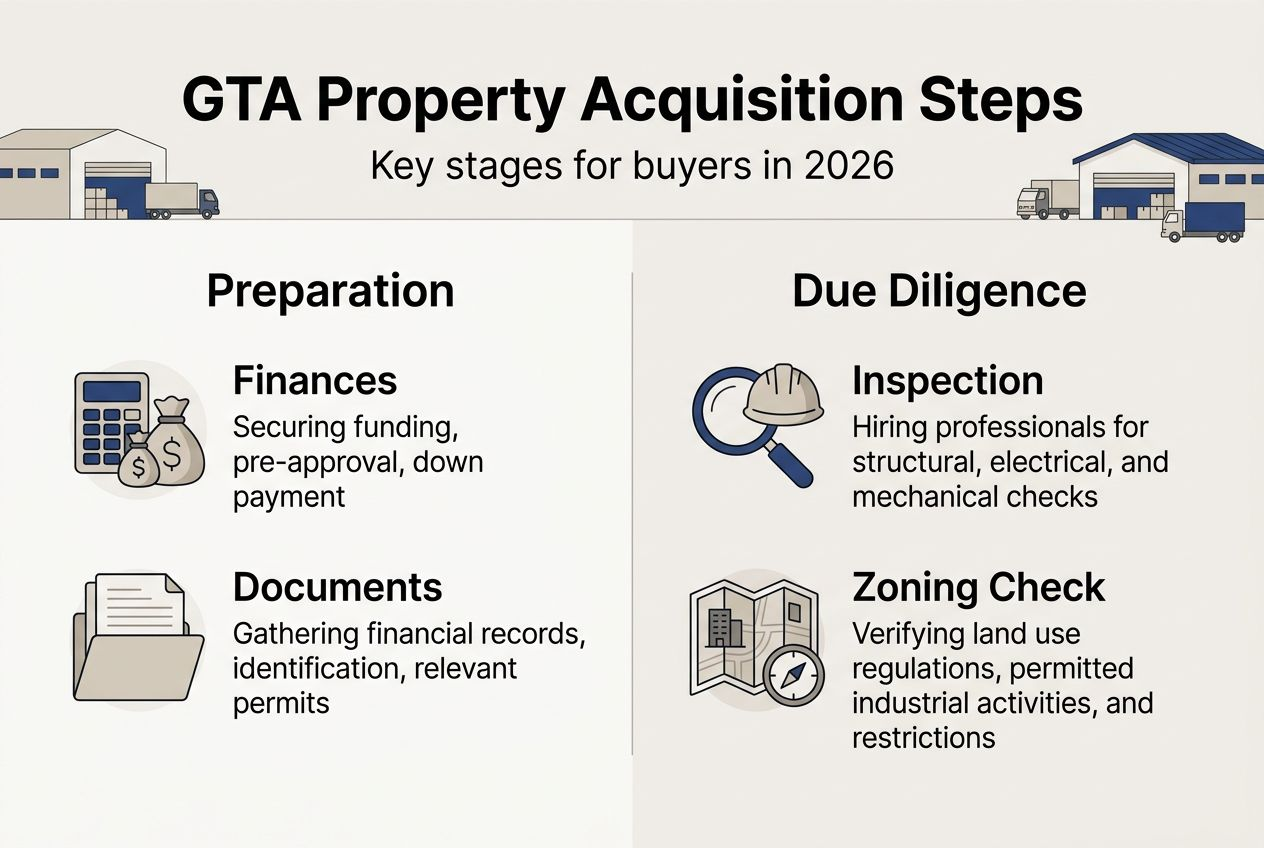
Zoning regulations vary significantly across GTA municipalities. Toronto's Official Plan designates specific areas for employment uses, while neighbouring cities like Mississauga and Brampton maintain their own zoning frameworks. Verify that your intended use aligns with current zoning before proceeding. Some properties carry site-specific zoning exceptions or require minor variance applications for certain operational activities.
Consider these preparation steps:
- Confirm financing pre-approval and deposit availability
- Engage a commercial real estate lawyer familiar with GTA industrial transactions
- Identify qualified environmental consultants for Phase I and Phase II assessments
- Review municipal official plans and zoning bylaws for your target property
- Calculate total acquisition costs including legal fees, land transfer tax, and due diligence expenses
Execute thorough due diligence: assessing condition, compliance, and risks
Once your offer receives acceptance, due diligence typically spans 30 to 75 days, providing time to verify every aspect of the property's condition, financial performance, and legal status. This investigation period protects your investment by uncovering issues that could affect value or operational viability. You maintain the right to terminate the agreement and recover your earnest money if significant concerns emerge.

Environmental assessments rank among the most critical due diligence tasks. Phase I Environmental Site Assessments review historical property uses, identifying potential contamination risks from previous industrial activities. If Phase I findings raise concerns, commission a Phase II assessment involving soil and groundwater testing. Environmental liabilities can exceed property value in severe cases, making thorough investigation essential before closing.
Financial due diligence examines the property's income and expense history. Request three years of operating statements, property tax records, utility bills, and capital expenditure documentation. Compare actual operating costs against industry benchmarks to identify unusual expenses or deferred maintenance issues. For income-producing properties, verify tenant payment histories and analyse lease expiry schedules to assess rollover risk.
Effective due diligence safeguards against unexpected liabilities and facilitates strategic planning for commercial real estate acquisitions.
Structure your due diligence process systematically:
- Order title insurance and survey within the first week
- Schedule building inspections for structural, mechanical, and electrical systems
- Commission environmental assessments immediately, as these often require extended timelines
- Review all service contracts, including property management, security, and maintenance agreements
- Verify zoning compliance and identify any outstanding municipal orders or violations
- Analyse traffic patterns and accessibility for industrial operations
- Assess utility capacity for your intended use, particularly electrical service and water supply
Lease review demands particular attention in the GTA market. Examine each tenant agreement for hidden obligations like landlord-funded improvements, below-market rents, or unusual termination clauses. Some leases include co-tenancy provisions or exclusive use clauses that limit your flexibility with vacant space. Understanding these commitments helps you model accurate cash flows and avoid post-closing disputes.
Pro Tip: Create a due diligence checklist with specific deadlines for each task. This systematic approach ensures nothing falls through the cracks during the compressed investigation period, and helps coordinate multiple professionals working on your behalf.
Title and survey verification confirms property boundaries, easements, and encroachments. Survey discrepancies occasionally reveal that buildings encroach on setback requirements or that neighbouring properties have access rights affecting your plans. Address these issues before closing or negotiate price adjustments reflecting the reduced utility.
Your commercial real estate expertise team should include specialists familiar with industrial property nuances. Structural engineers assess roof conditions, foundation integrity, and loading dock functionality. Mechanical consultants evaluate HVAC systems, while electrical engineers verify power distribution capacity. These technical reviews identify capital expenditure requirements that affect your investment returns and help negotiate repairs or price reductions with the seller.
Navigate zoning, official plans, and regulatory standards in the GTA
The GTA's planning framework shapes every industrial property acquisition through official plans, zoning bylaws, and environmental standards. Land use designations direct growth by defining permitted uses and development intensity for specific areas. Understanding these regulations prevents costly surprises and helps you evaluate a property's redevelopment potential.
Toronto's Official Plan establishes several key land use designations affecting industrial properties:
| Designation | Primary Purpose | Industrial Relevance |
|---|---|---|
| Employment Areas | Protect and promote economic activity | Core industrial and warehouse uses permitted |
| Regeneration Areas | Support mixed-use redevelopment | May allow industrial conversion to other uses |
| Utility Corridors | Accommodate infrastructure | Limited development rights, easement considerations |
Zoning bylaws implement official plan policies with specific regulations on building height, lot coverage, parking requirements, and setbacks. Each municipality maintains its own zoning bylaw, creating variation across the GTA. A property zoned for general industrial use in one city might face more restrictive regulations than a similar designation elsewhere. Review site-specific zoning carefully, as many properties carry unique provisions from previous development applications.
Environmental compliance extends beyond contamination issues. The Industrial Green Development Standard Tier 1 became mandatory in Mississauga on March 1, 2025, requiring new industrial buildings to meet specific sustainability benchmarks. These include enhanced building envelope performance, electric vehicle charging infrastructure, and green roof or cool roof systems. Similar standards are spreading across GTA municipalities, affecting development costs and timelines.
Consider these regulatory factors during acquisition:
- Verify conformity with current zoning or identify required variance applications
- Review any Section 37 agreements or development charges affecting the property
- Confirm compliance with accessibility standards under the Ontario Building Code
- Assess stormwater management requirements for your intended operations
- Identify any heritage designations or archaeological potential that could limit modifications
Non-compliance with zoning regulations creates significant risks. Municipalities can issue orders requiring property modifications, impose fines, or restrict occupancy until violations are corrected. Some zoning infractions constitute legal non-conforming uses, grandfathered under previous bylaws but unable to expand or intensify. If you plan operational changes, confirm that your intended use aligns with current zoning or budget for the variance application process.
Official plans undergo periodic reviews, potentially affecting long-term property value. Areas designated for employment uses today might transition to mixed-use designations in future plan updates, creating redevelopment opportunities or threatening industrial land supply. Monitor municipal planning initiatives to anticipate regulatory changes affecting your investment strategy.
Pro Tip: Request a zoning verification letter from the municipality early in due diligence. This official document confirms current zoning, identifies any registered non-compliance issues, and reveals pending bylaw amendments that could affect your property rights.
Final steps: closing, verification, and post-acquisition considerations
Closing an industrial property acquisition requires meticulous verification that all contractual conditions are satisfied and regulatory requirements are met. This final stage transforms months of preparation into legal ownership, but rushing through closing procedures can expose you to avoidable risks. Approach this phase with the same diligence you applied during property investigation.
Verify that all contingencies in your purchase agreement are fulfilled or waived. Common conditions include satisfactory environmental assessments, acceptable financing terms, and landlord consent for lease assignments. Your lawyer should confirm that title insurance is in place, covering you against undiscovered defects in ownership or registered encumbrances. During due diligence, buyers can terminate for any reason and recover earnest money, but this protection expires at closing.
Lease transition requires careful coordination under Ontario's Commercial Tenancies Act. Prepare notices to all tenants announcing the ownership change and providing updated contact information for rent payments and maintenance requests. Confirm that security deposits are properly transferred and documented. Some leases require formal assignment agreements signed by the tenant, seller, and buyer, particularly for anchor tenants or those with special provisions.
Green development standard compliance documentation must be submitted to the municipality before occupancy permits are issued for new construction or major renovations. Ensure that your development team has completed all required submissions and received municipal approval. Missing documentation can delay your ability to occupy or lease the property, affecting your investment timeline and cash flow projections.
Complete these essential closing tasks:
- Review the final statement of adjustments for property taxes, utilities, and rent proration
- Confirm that all required insurance policies are active from the closing date
- Obtain keys, security codes, and access cards for the property
- Collect all building operation manuals, warranties, and service contracts
- Verify that agreed-upon repairs or credits have been completed or funded
Arrange for title and fund transfers through your real estate lawyer or a qualified title company. Ontario requires land transfer tax payment at closing, calculated as a percentage of purchase price. Toronto imposes an additional municipal land transfer tax, effectively doubling this cost for properties within city limits. Budget for these taxes plus legal fees, title insurance premiums, and registration costs in your closing calculations.
Post-acquisition success depends on transitioning smoothly from buyer to owner, establishing effective property management systems, and executing your investment strategy.
Develop a comprehensive asset management plan immediately after closing. This plan should address tenant relations, preventive maintenance schedules, capital improvement priorities, and financial reporting systems. For vacant properties, finalise leasing strategies and engage qualified brokers to market available space. Properties requiring repositioning need detailed renovation budgets and contractor selection.
Consider these post-acquisition priorities:
- Establish relationships with existing tenants and address any outstanding maintenance concerns
- Review all service contracts and renegotiate terms where appropriate
- Implement property management software for financial tracking and reporting
- Schedule regular property inspections to identify maintenance issues early
- Monitor market conditions and lease comparable data to inform renewal negotiations
- Evaluate opportunities for operational improvements that enhance property value
Your industrial real estate solutions strategy should evolve as market conditions change. Regular property valuations help you track investment performance and identify optimal timing for disposition or refinancing. Strong tenant relationships reduce vacancy costs and support stable cash flows, while proactive maintenance preserves asset value and prevents expensive emergency repairs.
Explore expert industrial real estate solutions with Michael Law
Navigating the complexities of industrial property acquisition in the GTA requires specialised knowledge of local markets, regulatory frameworks, and investment strategies. Michael Law commercial real estate offers tailored expertise across the Greater Toronto Area, helping investors identify opportunities, conduct thorough due diligence, and execute successful acquisitions. Access comprehensive commercial property listings featuring detailed market intelligence and property analytics. Leverage professional commercial real estate services to streamline your acquisition process and optimise investment returns.
Whether you're acquiring your first industrial property or expanding an existing portfolio, partnering with experienced advisors who understand GTA market dynamics helps you avoid costly mistakes and capitalise on emerging opportunities. Professional guidance through zoning complexities, environmental assessments, and lease negotiations protects your investment while positioning your assets for long-term appreciation.
Frequently asked questions
How long does the due diligence process take for industrial property acquisitions in the GTA?
Due diligence typically spans 30 to 75 days after offer acceptance, providing sufficient time to assess environmental conditions, review financial performance, and verify regulatory compliance. Complex properties with multiple tenants or environmental concerns may require extended investigation periods. Use this time systematically to coordinate inspections, assessments, and legal reviews.
What is earnest money and how does it protect buyers?
Earnest money is a deposit held in trust by a title company or attorney during the due diligence period, demonstrating your commitment to the transaction. This deposit remains refundable if you terminate the agreement during due diligence for any reason. Once due diligence concludes and you proceed to closing, earnest money typically applies toward your down payment.
Are purchasers responsible for existing leases after buying commercial property in Ontario?
In Ontario, purchasers assume the landlord role and inherit all obligations under existing leases as per the Commercial Tenancies Act. You become bound by lease terms, including renewal options, rent concessions, and maintenance responsibilities. Thorough lease review during due diligence helps you understand these commitments and avoid unexpected liabilities after closing.
What are the key zoning considerations for industrial property in the GTA?
Verify that current zoning permits your intended use and understand any site-specific exceptions or restrictions. Employment area designations generally support industrial operations, while other land use categories may limit permissible activities. Review setback requirements, parking ratios, and building height restrictions that could affect your development or expansion plans.
How do green development standards affect industrial property acquisitions in 2026?
Mandatory sustainability standards now apply to new industrial construction and major renovations across several GTA municipalities. These requirements include enhanced energy efficiency, stormwater management systems, and sustainable site design elements. Budget for compliance costs during acquisition planning and verify that existing properties meet current environmental standards to avoid retrofit expenses.